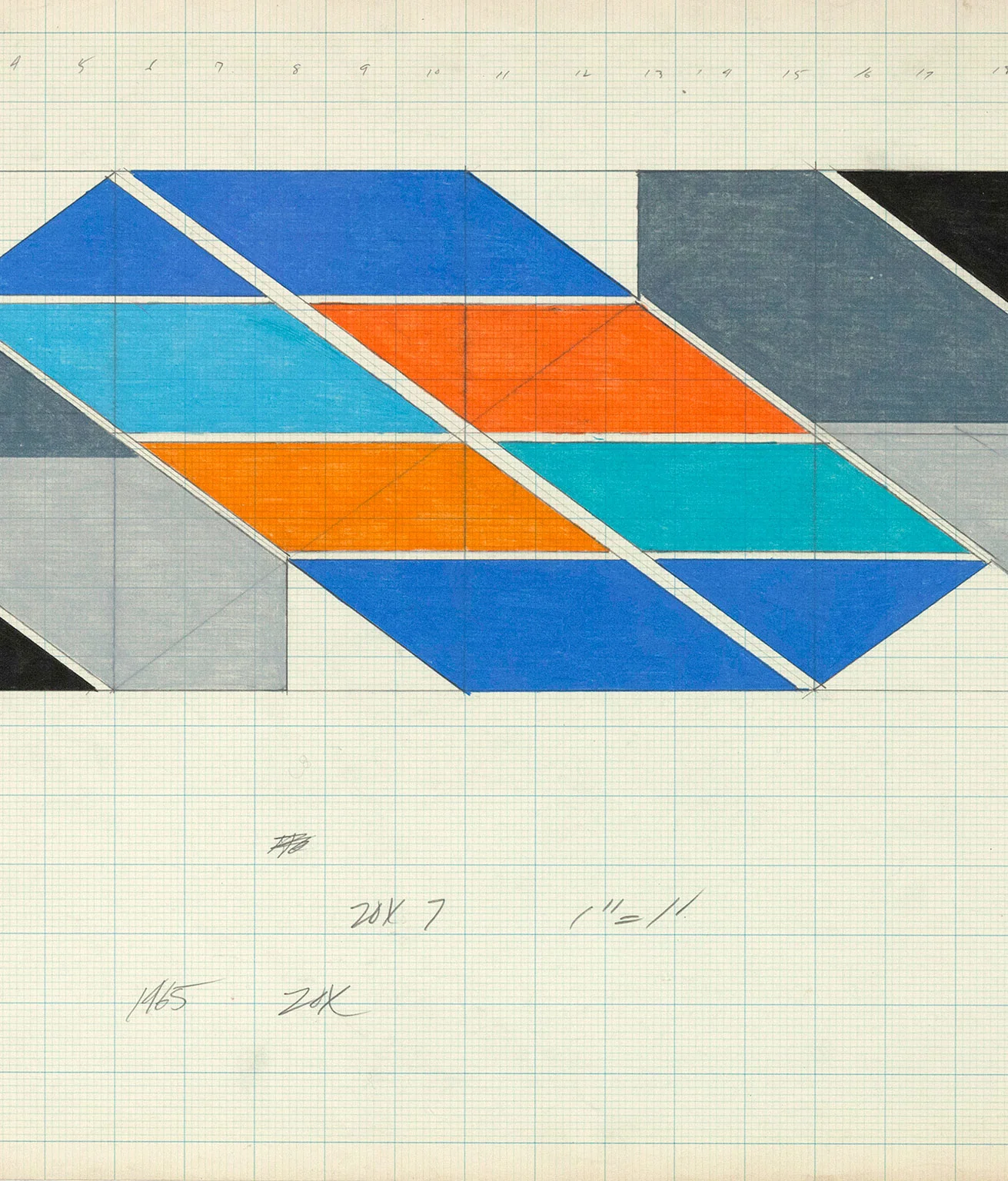
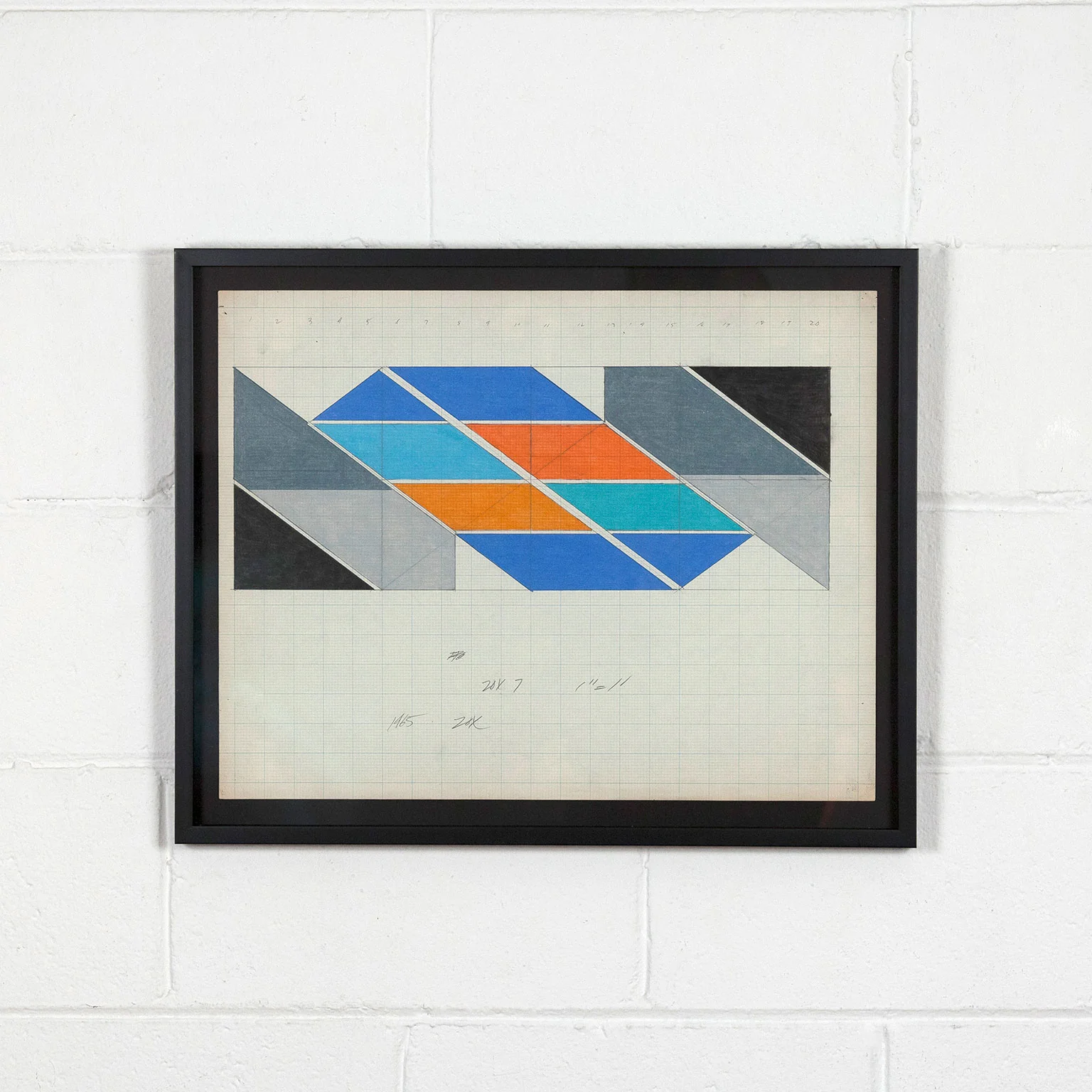
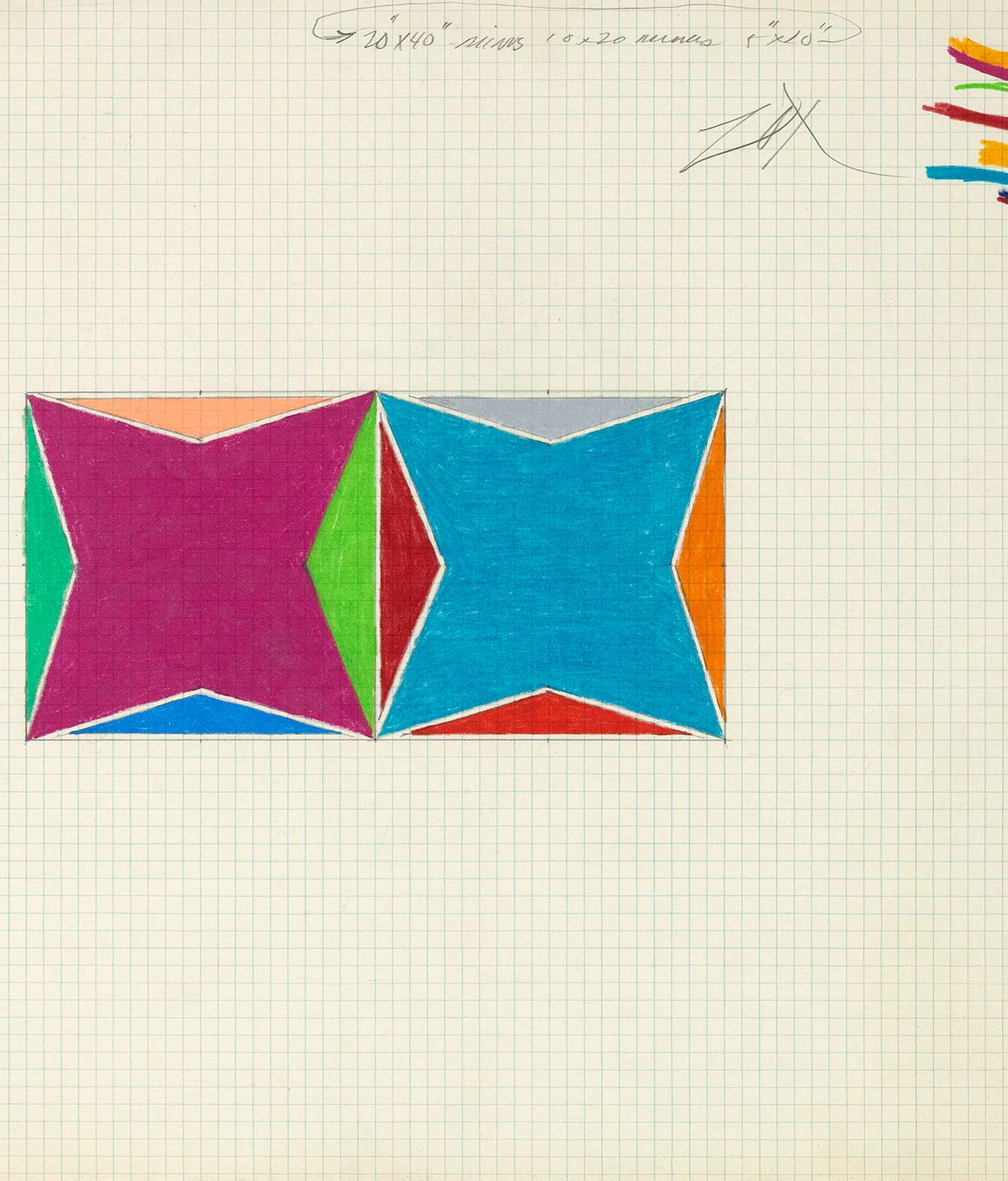
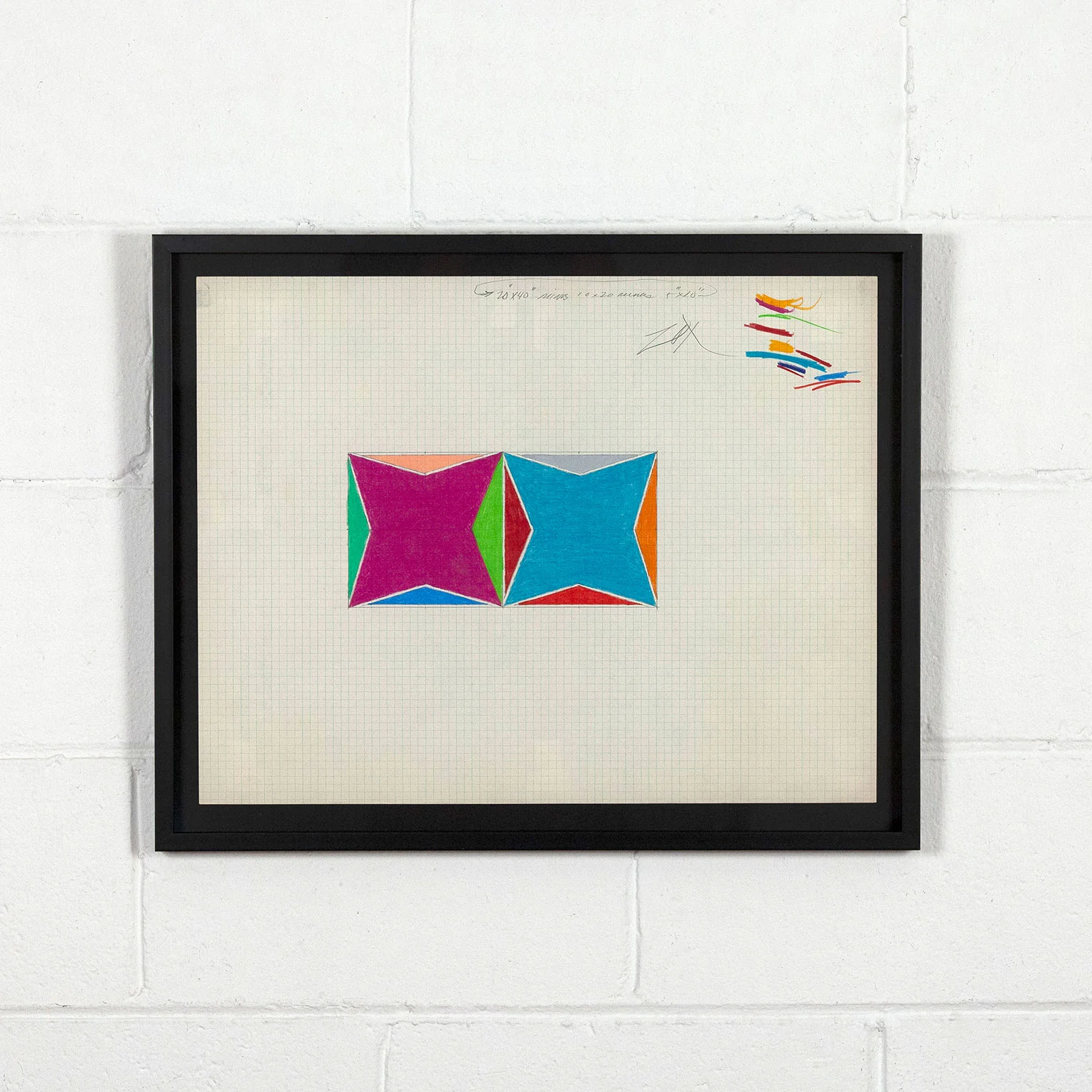
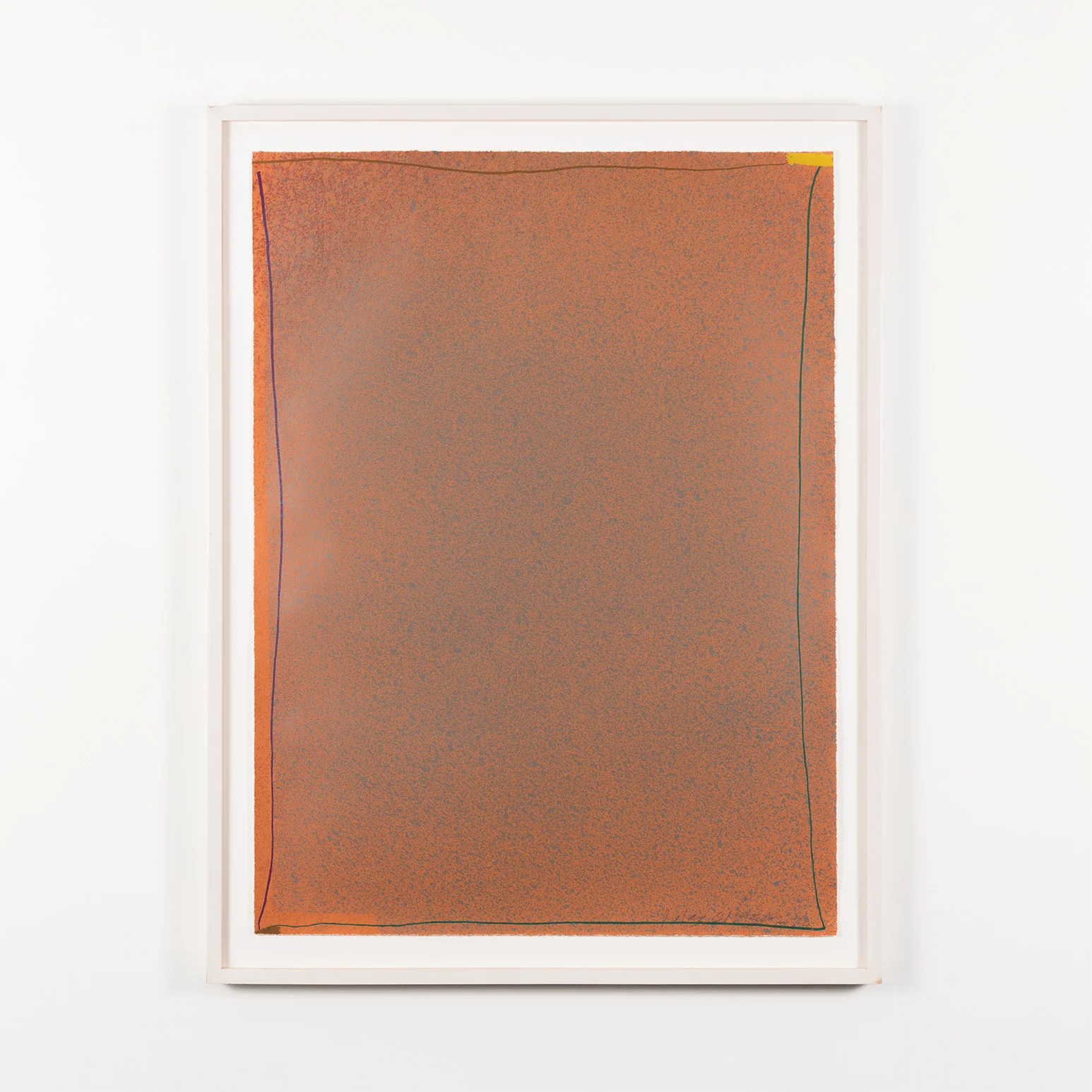
GERSHON ISKOWITZ "INDIGO" WATERCOLOR, 1968
It is hard to reconcile Gershon Iskowitz's (1921-1988) aesthetic with his personal history. He survived the darkest side of humanity and built a life dedicated to creating beautiful art.
Born to a religious family in Poland, Iskowitz was allowed to leave Yeshiva (Jewish religious studies) in order to study art independently. The outbreak of war forced him to return to his hometown where he was conscripted to forced labor, then transferred to Buchenwald in 1944, one of the first and most notorious Nazi concentration camps. Upon liberation, Iskowitz spent nearly 9 months recuperating in the hospital. He then studied at the Academy of Fine Art in Munich before immigrating to Canada.
For most of the 1950s, he incorporated representation into his art. By the 60's he had established a modest reputation in Toronto and beyond, joining the Gallery Moos stable in 1964. The legend goes that in 1967 thanks to a Canadian Council grant, Iskowitz took a helicopter tour of the north. The experience of seeing the massive expanse of trees from above inspired a major redirection of his aesthetic and material and approach.
Iskowitz embraced watercolors during two distinct chapters of his career; in 1968-69 as his career gained significant momentum and about a decade later, during 1977-78, as a major monograph of his work was being published and a touring retrospective began.
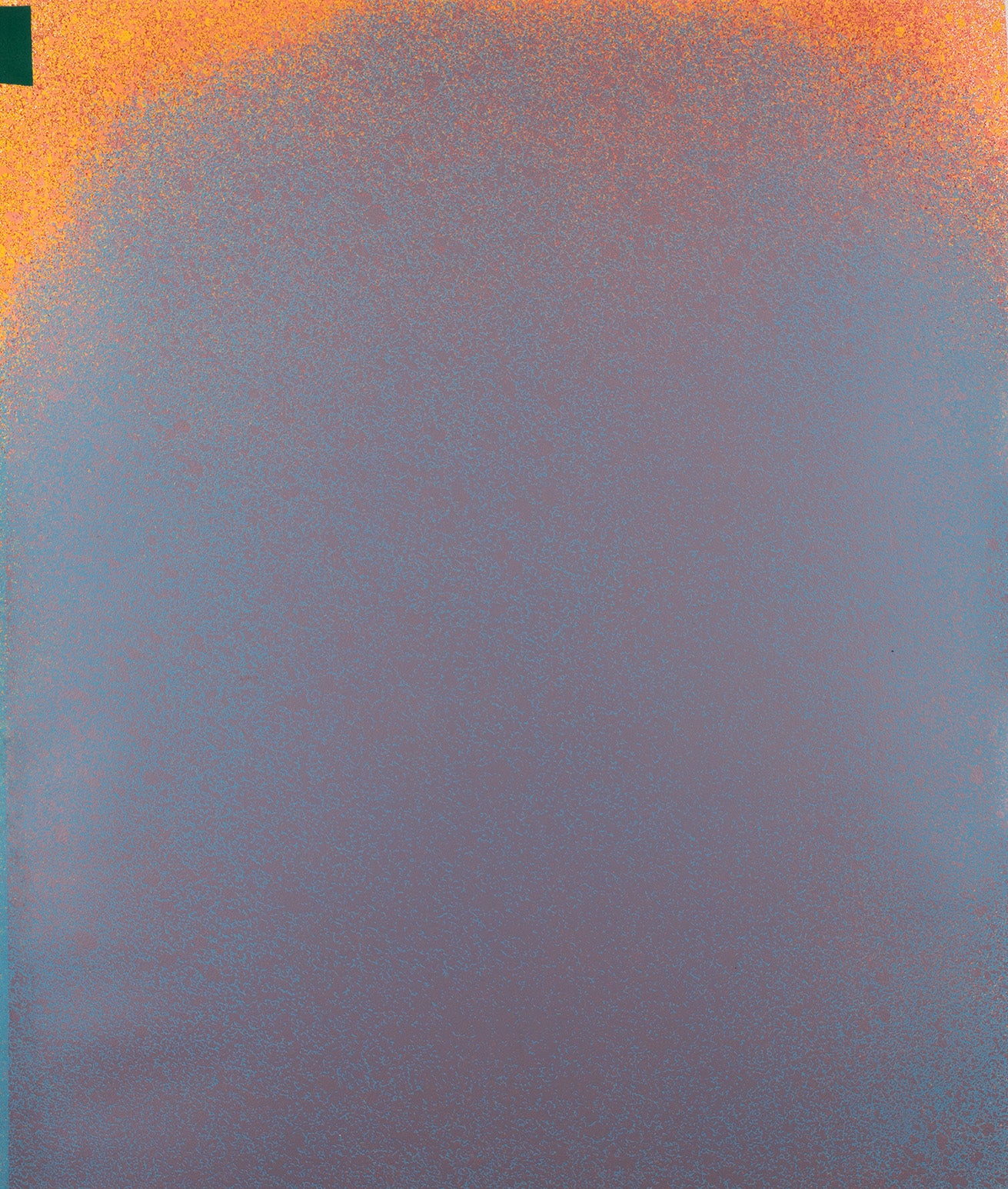
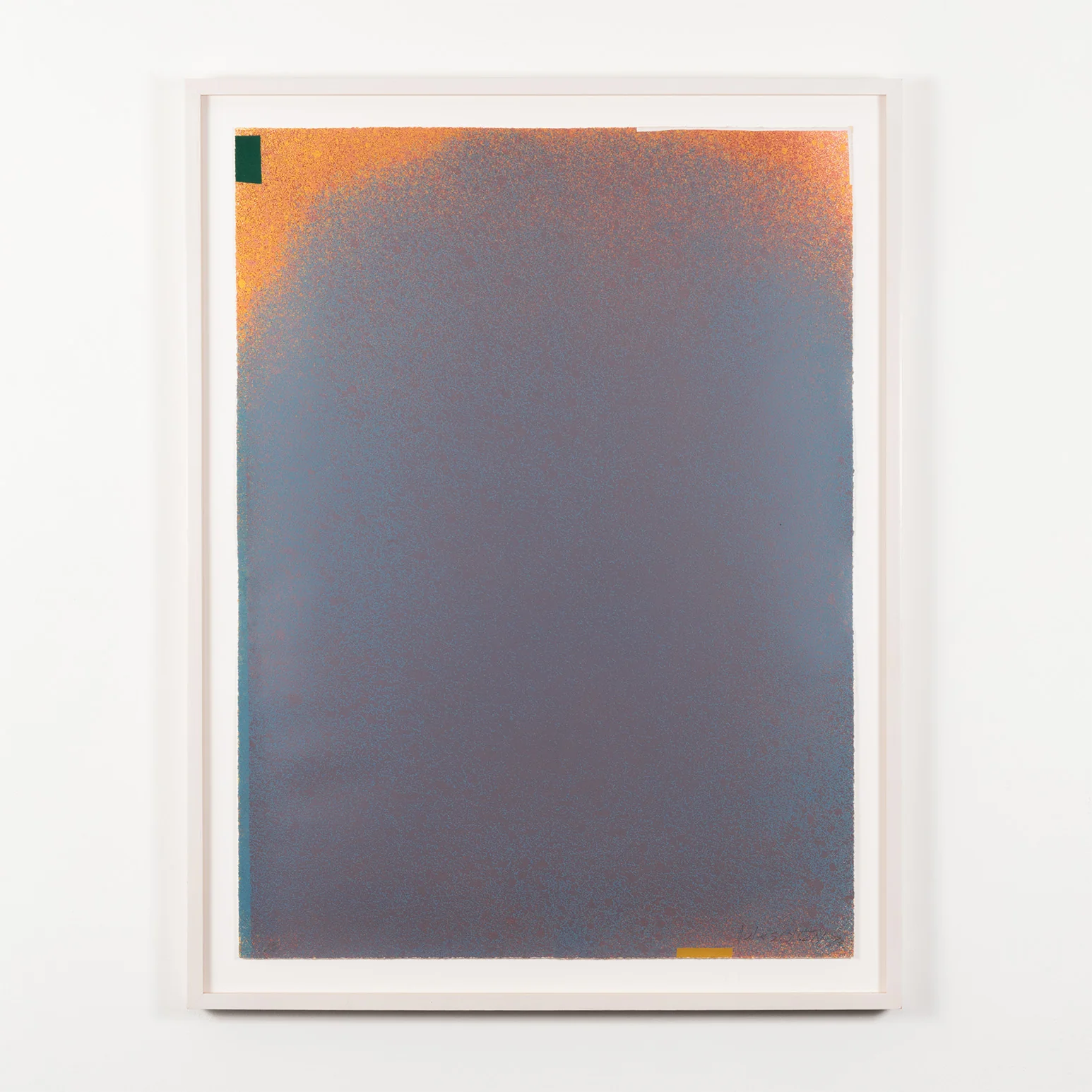
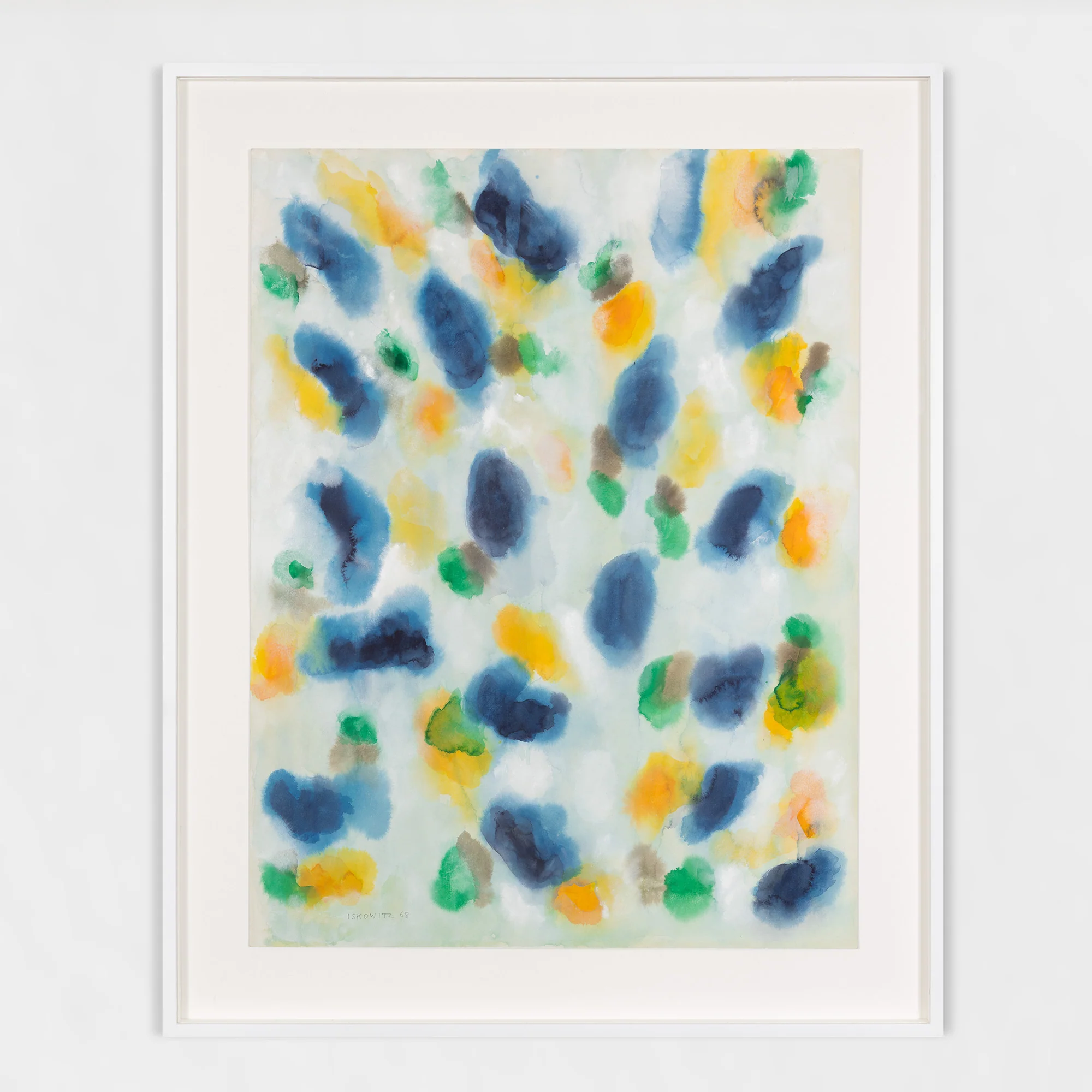
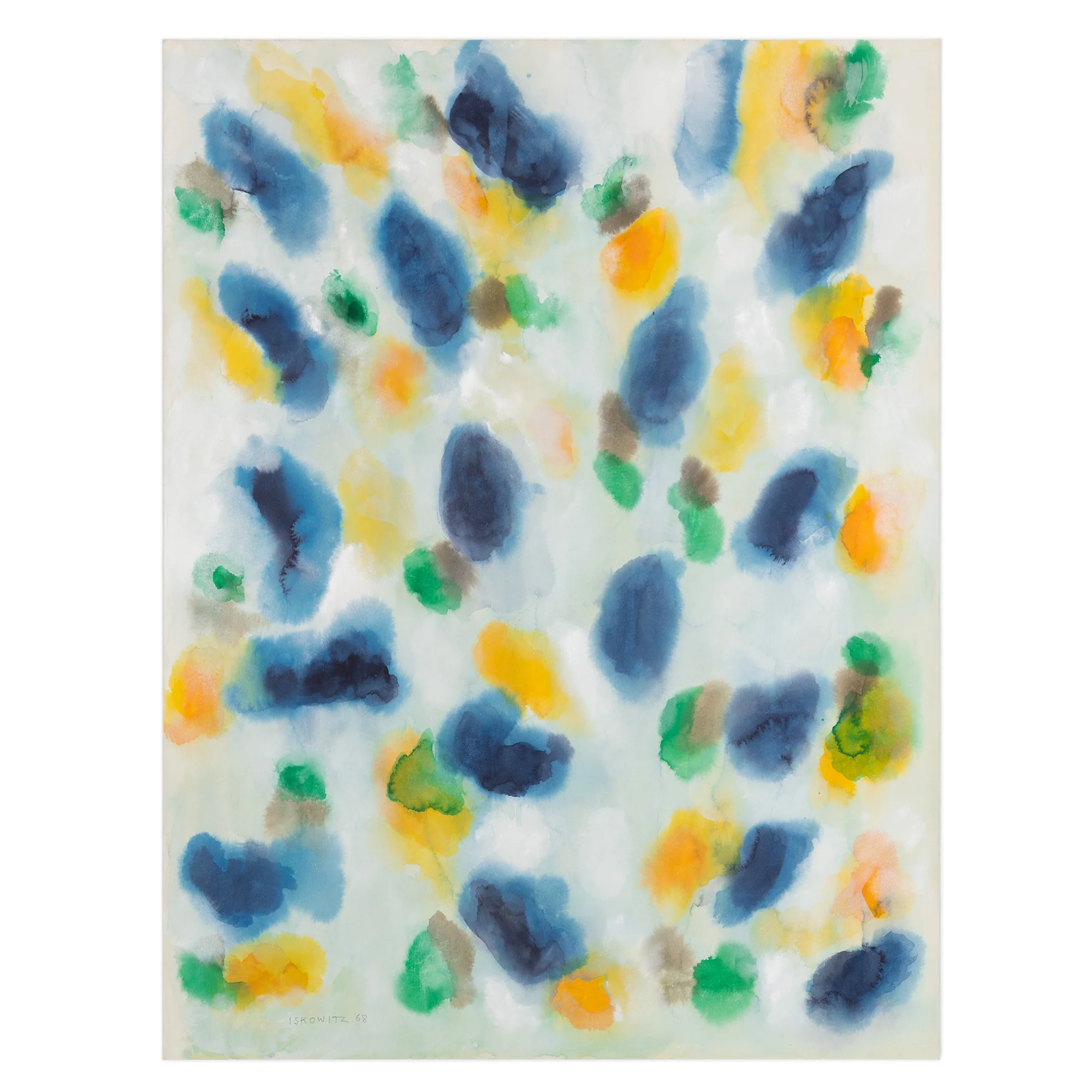
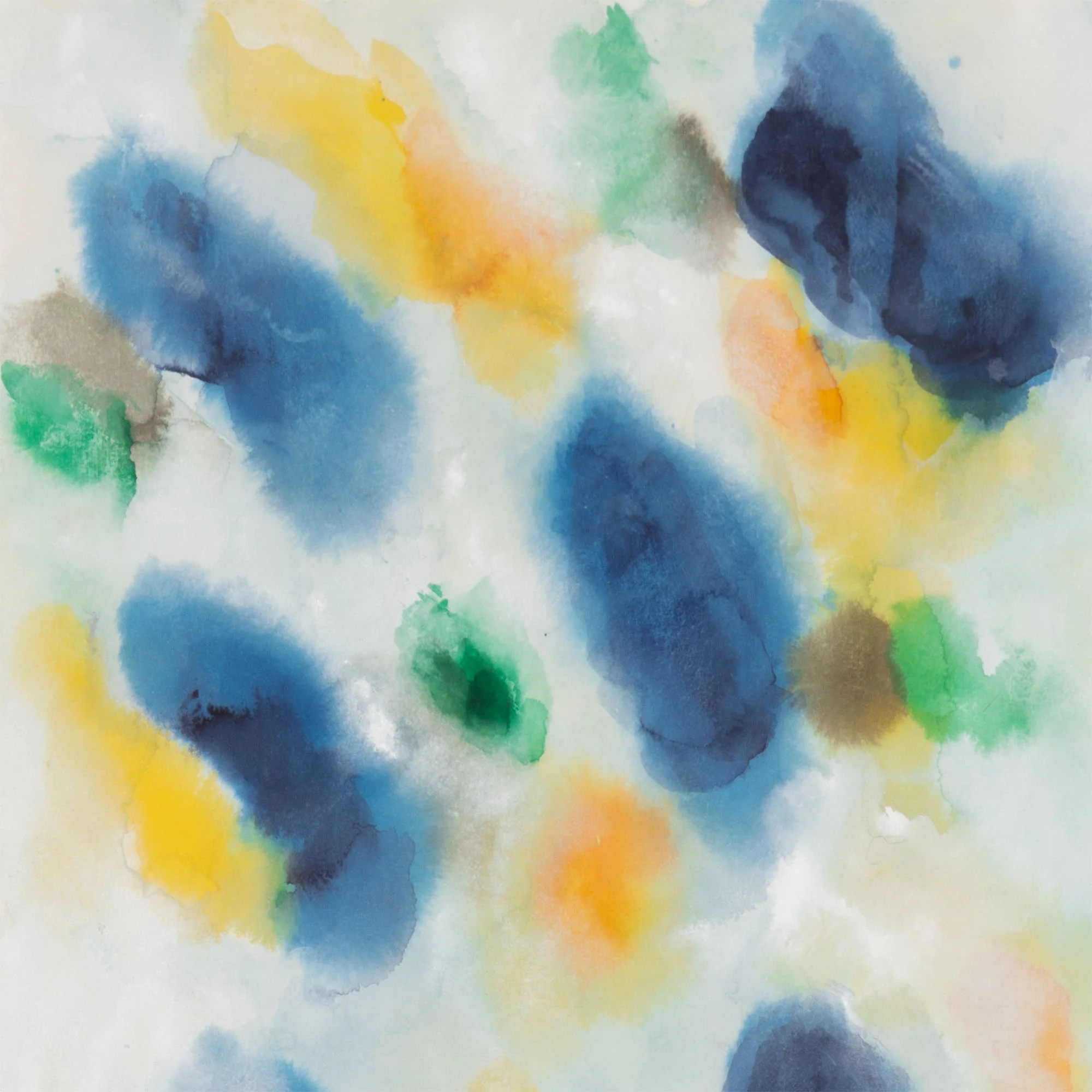
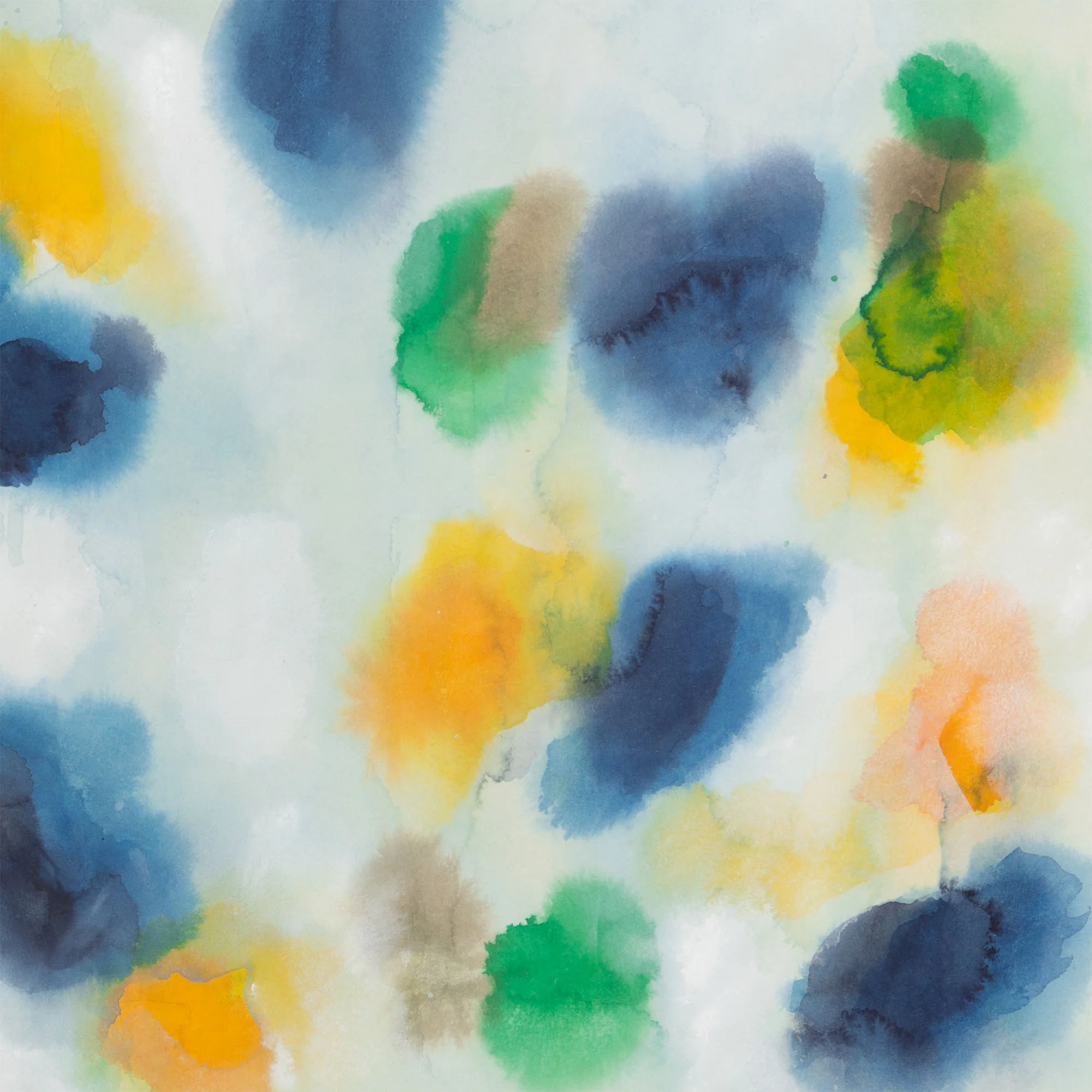
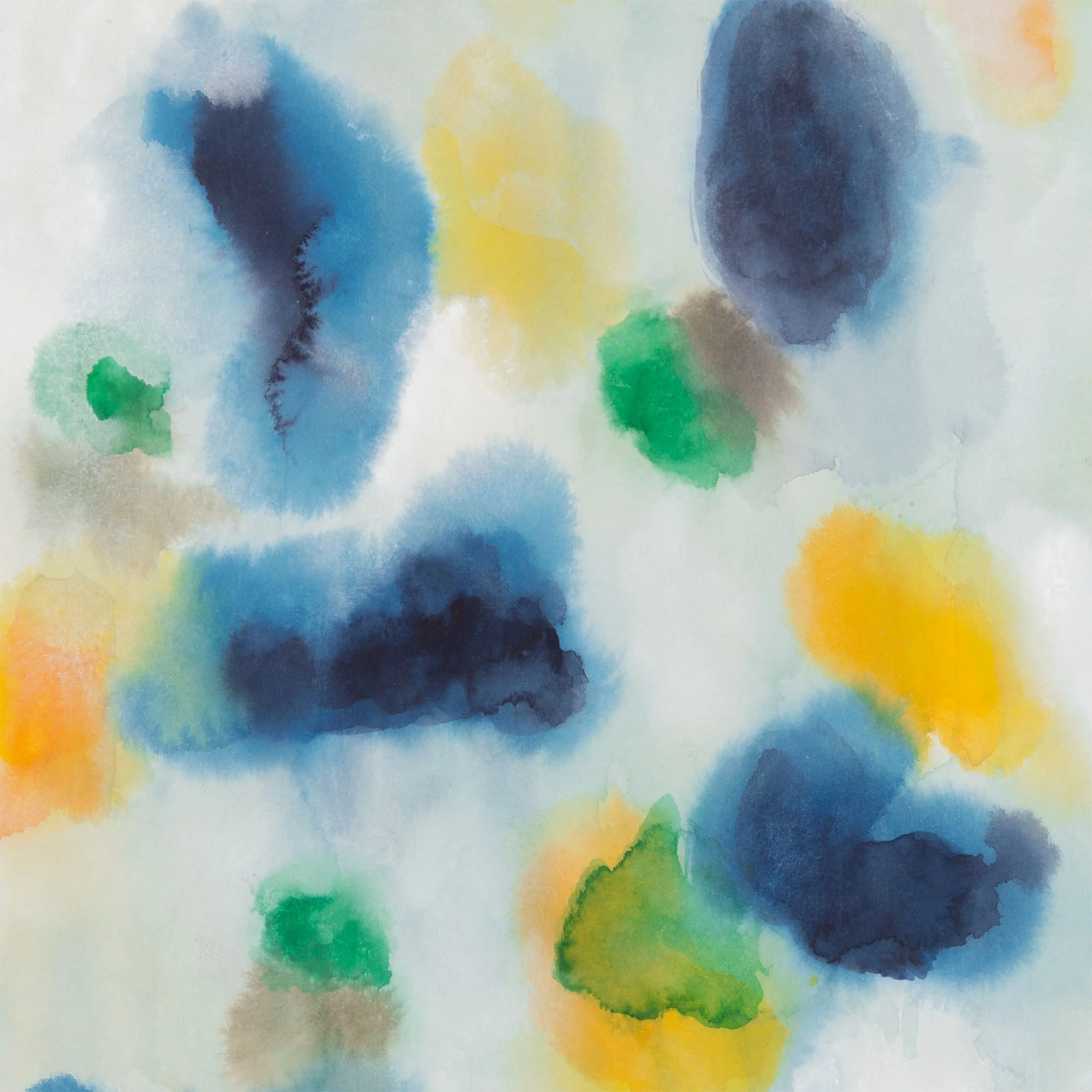
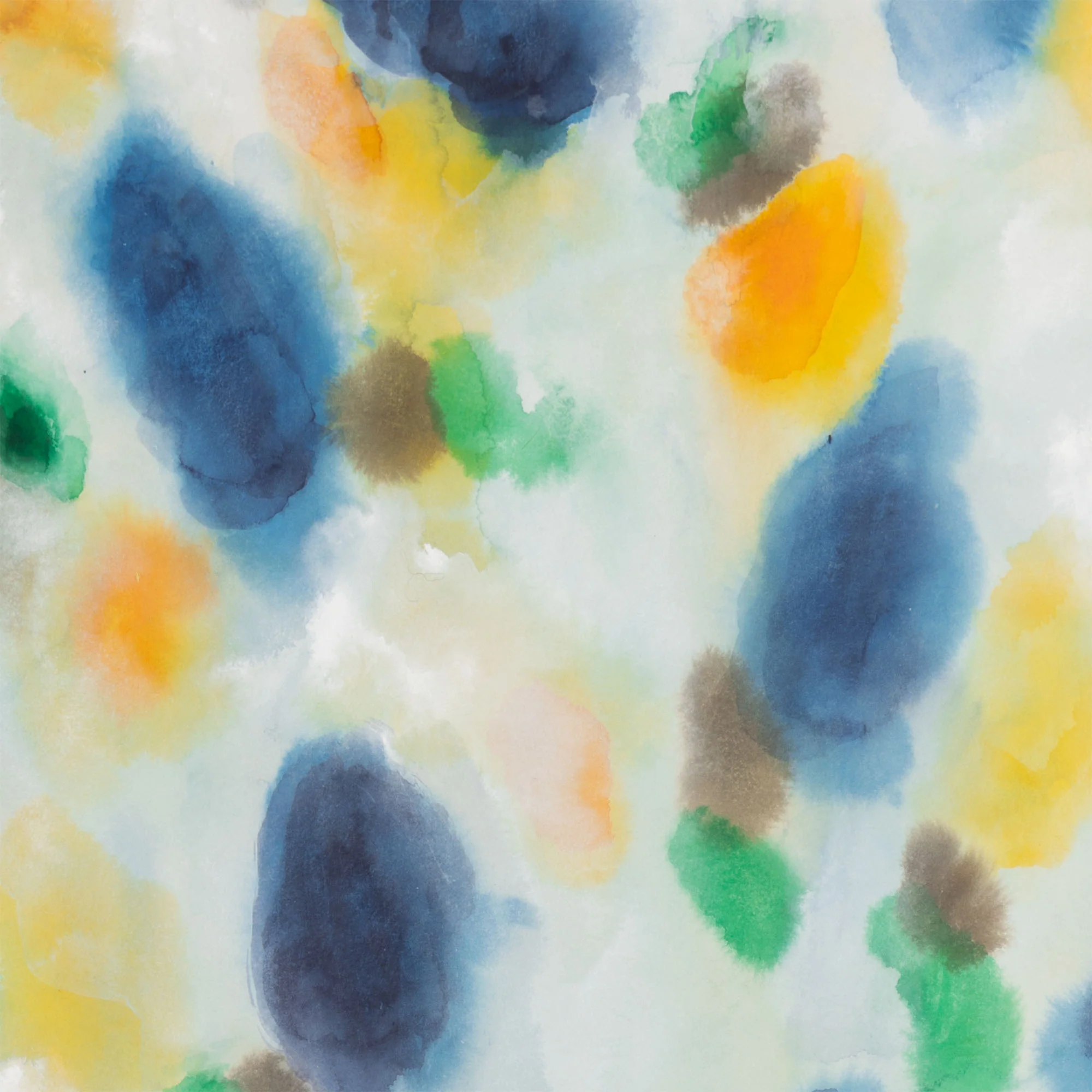
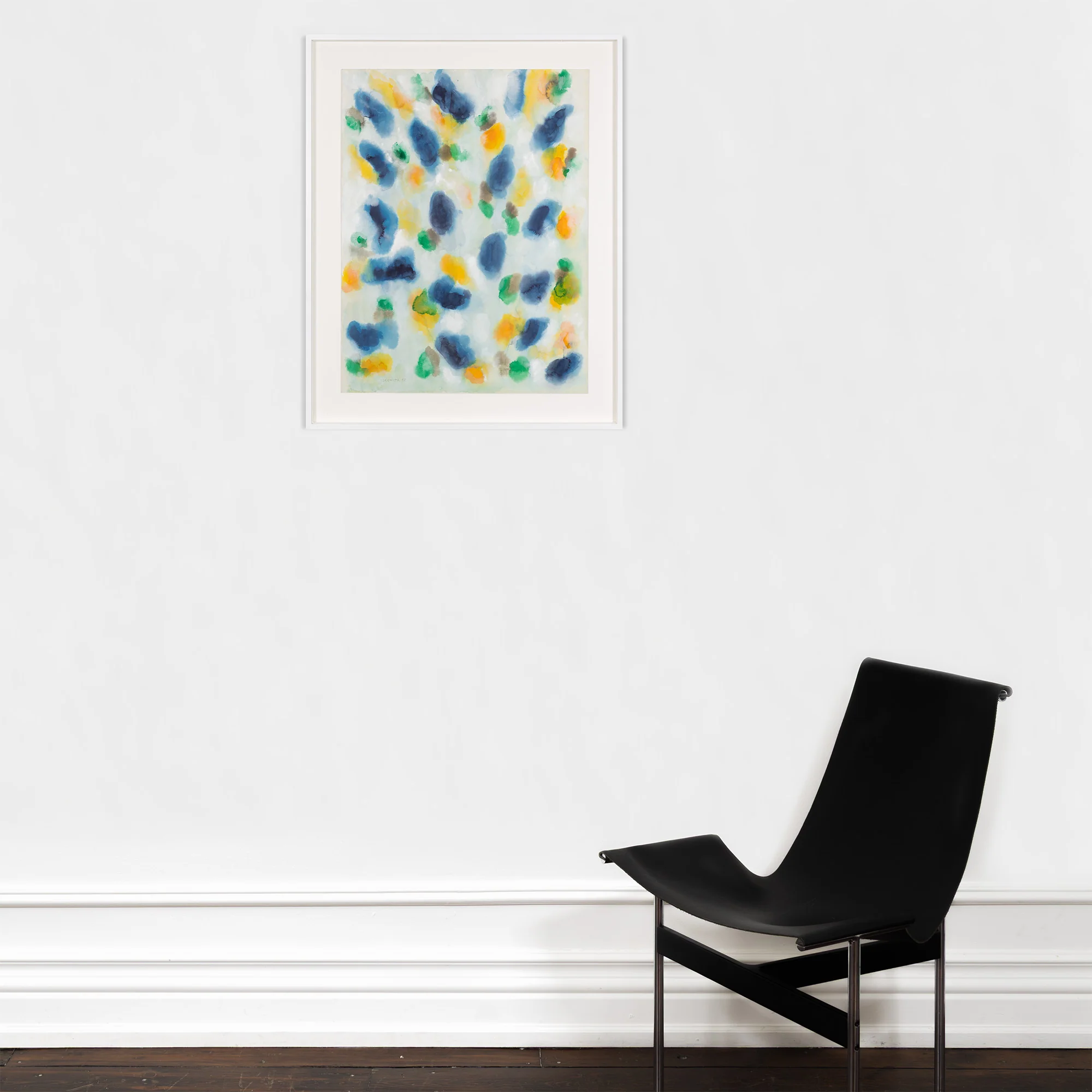
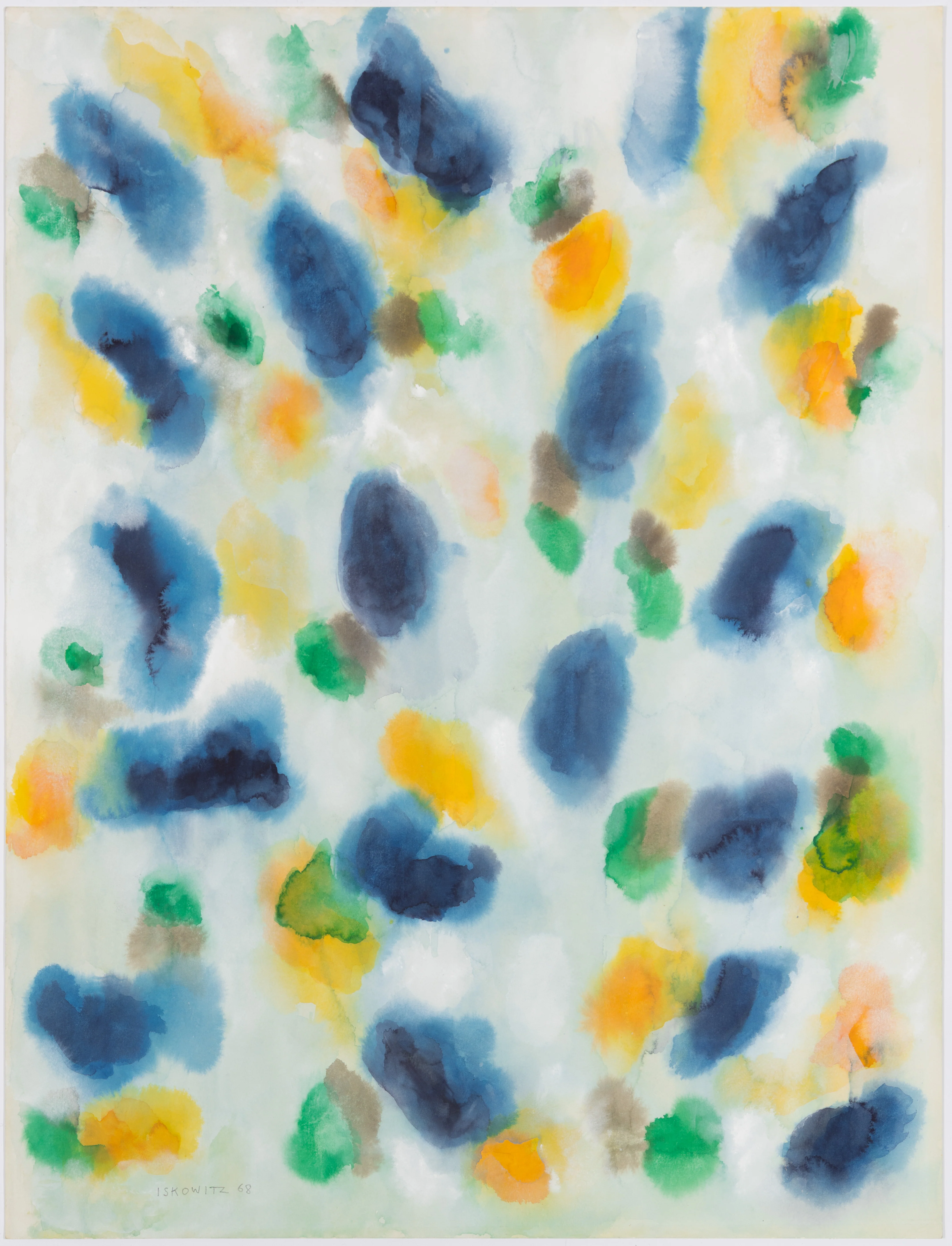
Made by dropping paint onto dampened paper, his watercolours offer floating blips and colourful clusters that vibrate across the page. Iskowitz was measured in his process so that each chromatic patch came across clearly, not muddied with one another.
Here, Iskowitz applies complimentary shades of indigo, green, and marigold--one of his favorite colors of the era. The result is a thoughtful cacophony of colour, shape, and process. Despite its fullness, the composition is quite meditative and soothing.
Iskowitz received six Canada Council grants for his work, establishing him as a Canadian painter in his own right. He represented Canada at the Venice Biennial in 1972. A retrospective of his work was held in 1984 at the Art Gallery of Ontario, AGO, travelling through Canada as well as to Canada House in London, England. His work remains in the permanent collections of the AGO and the National Gallery of Canada, among others.
Questions about this piece? Contact us or call +1.416.704.1720.
Visit our Toronto gallery on Thursdays or by appointment.
Untitled (Indigo)
Canada, 1977
Watercolour
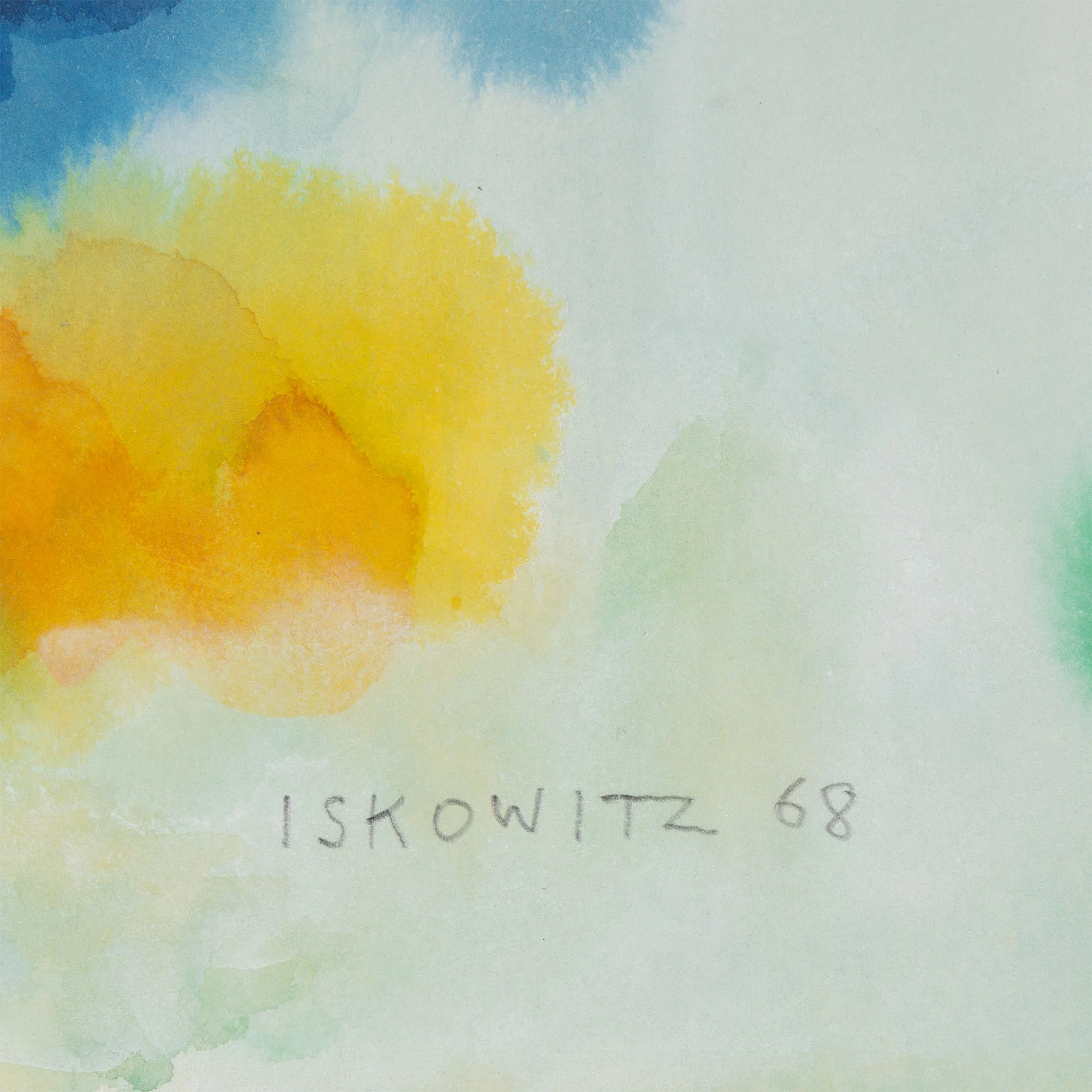
Signed and dated by artist, lower right
24.5"H 18.5"W (work)
30.25"H 24.25"W (framed)
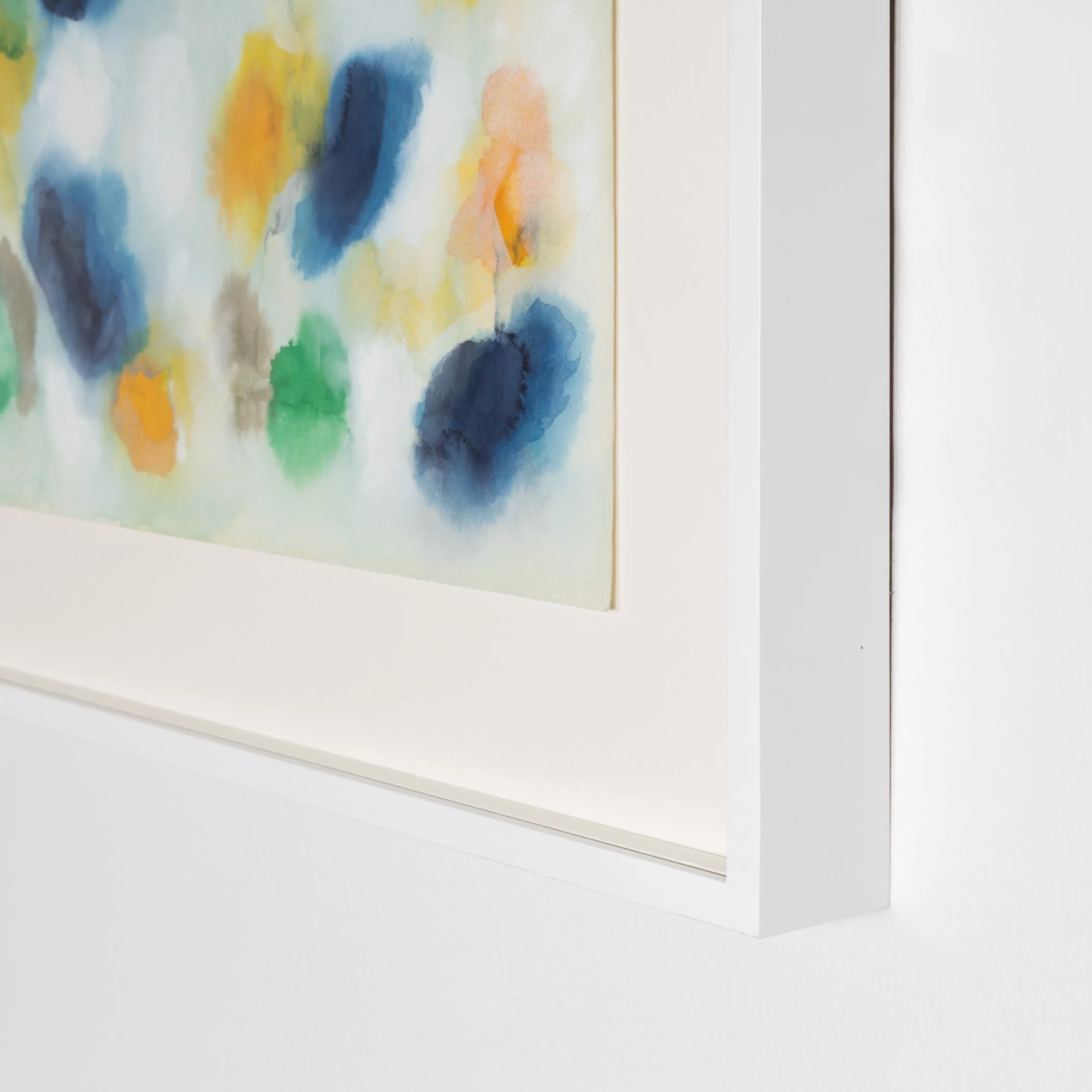
Framed with Museum Glass
Very good condition
More Images
GERSHON ISKOWITZ "INDIGO" WATERCOLOR, 1968
It is hard to reconcile Gershon Iskowitz's (1921-1988) aesthetic with his personal history. He survived the darkest side of humanity and built a life dedicated to creating beautiful art.
Born to a religious family in Poland, Iskowitz was allowed to leave Yeshiva (Jewish religious studies) in order to study art independently. The outbreak of war forced him to return to his hometown where he was conscripted to forced labor, then transferred to Buchenwald in 1944, one of the first and most notorious Nazi concentration camps. Upon liberation, Iskowitz spent nearly 9 months recuperating in the hospital. He then studied at the Academy of Fine Art in Munich before immigrating to Canada.
For most of the 1950s, he incorporated representation into his art. By the 60's he had established a modest reputation in Toronto and beyond, joining the Gallery Moos stable in 1964. The legend goes that in 1967 thanks to a Canadian Council grant, Iskowitz took a helicopter tour of the north. The experience of seeing the massive expanse of trees from above inspired a major redirection of his aesthetic and material and approach.
Iskowitz embraced watercolors during two distinct chapters of his career; in 1968-69 as his career gained significant momentum and about a decade later, during 1977-78, as a major monograph of his work was being published and a touring retrospective began.
Made by dropping paint onto dampened paper, his watercolours offer floating blips and colourful clusters that vibrate across the page. Iskowitz was measured in his process so that each chromatic patch came across clearly, not muddied with one another.
Here, Iskowitz applies complimentary shades of indigo, green, and marigold--one of his favorite colors of the era. The result is a thoughtful cacophony of colour, shape, and process. Despite its fullness, the composition is quite meditative and soothing.
Iskowitz received six Canada Council grants for his work, establishing him as a Canadian painter in his own right. He represented Canada at the Venice Biennial in 1972. A retrospective of his work was held in 1984 at the Art Gallery of Ontario, AGO, travelling through Canada as well as to Canada House in London, England. His work remains in the permanent collections of the AGO and the National Gallery of Canada, among others.
Questions about this piece? Contact us or call +1.416.704.1720.
Visit our Toronto gallery on Thursdays or by appointment.
Untitled (Indigo)
Canada, 1977
Watercolour
Signed and dated by artist, lower right
24.5"H 18.5"W (work)
30.25"H 24.25"W (framed)
Framed with Museum Glass
Very good condition
Product Information
Product Information
Shipping & Returns
Shipping & Returns
Description
It is hard to reconcile Gershon Iskowitz's (1921-1988) aesthetic with his personal history. He survived the darkest side of humanity and built a life dedicated to creating beautiful art.
Born to a religious family in Poland, Iskowitz was allowed to leave Yeshiva (Jewish religious studies) in order to study art independently. The outbreak of war forced him to return to his hometown where he was conscripted to forced labor, then transferred to Buchenwald in 1944, one of the first and most notorious Nazi concentration camps. Upon liberation, Iskowitz spent nearly 9 months recuperating in the hospital. He then studied at the Academy of Fine Art in Munich before immigrating to Canada.
For most of the 1950s, he incorporated representation into his art. By the 60's he had established a modest reputation in Toronto and beyond, joining the Gallery Moos stable in 1964. The legend goes that in 1967 thanks to a Canadian Council grant, Iskowitz took a helicopter tour of the north. The experience of seeing the massive expanse of trees from above inspired a major redirection of his aesthetic and material and approach.
Iskowitz embraced watercolors during two distinct chapters of his career; in 1968-69 as his career gained significant momentum and about a decade later, during 1977-78, as a major monograph of his work was being published and a touring retrospective began.
Made by dropping paint onto dampened paper, his watercolours offer floating blips and colourful clusters that vibrate across the page. Iskowitz was measured in his process so that each chromatic patch came across clearly, not muddied with one another.
Here, Iskowitz applies complimentary shades of indigo, green, and marigold--one of his favorite colors of the era. The result is a thoughtful cacophony of colour, shape, and process. Despite its fullness, the composition is quite meditative and soothing.
Iskowitz received six Canada Council grants for his work, establishing him as a Canadian painter in his own right. He represented Canada at the Venice Biennial in 1972. A retrospective of his work was held in 1984 at the Art Gallery of Ontario, AGO, travelling through Canada as well as to Canada House in London, England. His work remains in the permanent collections of the AGO and the National Gallery of Canada, among others.
Questions about this piece? Contact us or call +1.416.704.1720.
Visit our Toronto gallery on Thursdays or by appointment.
Untitled (Indigo)
Canada, 1977
Watercolour
Signed and dated by artist, lower right
24.5"H 18.5"W (work)
30.25"H 24.25"W (framed)
Framed with Museum Glass
Very good condition