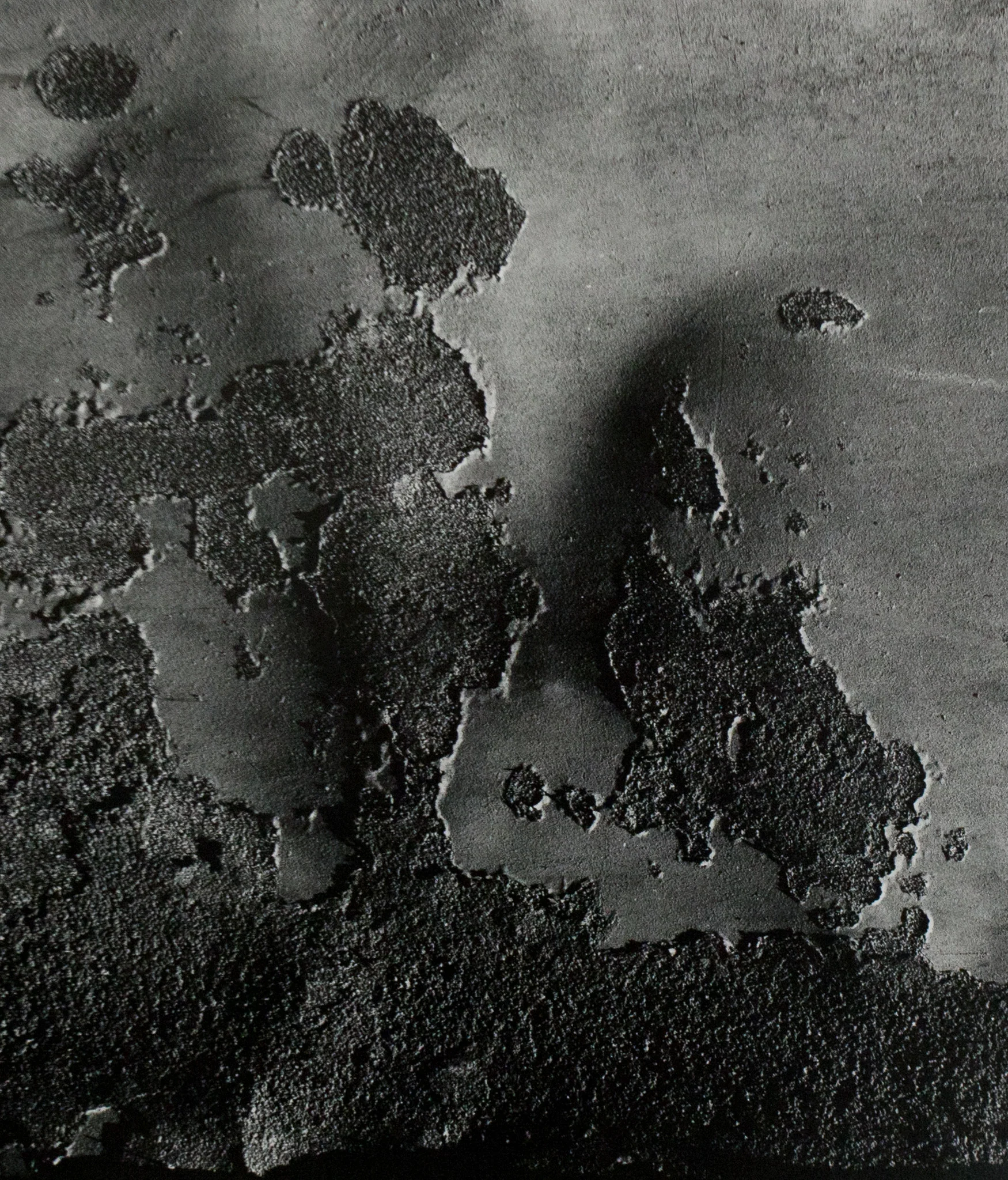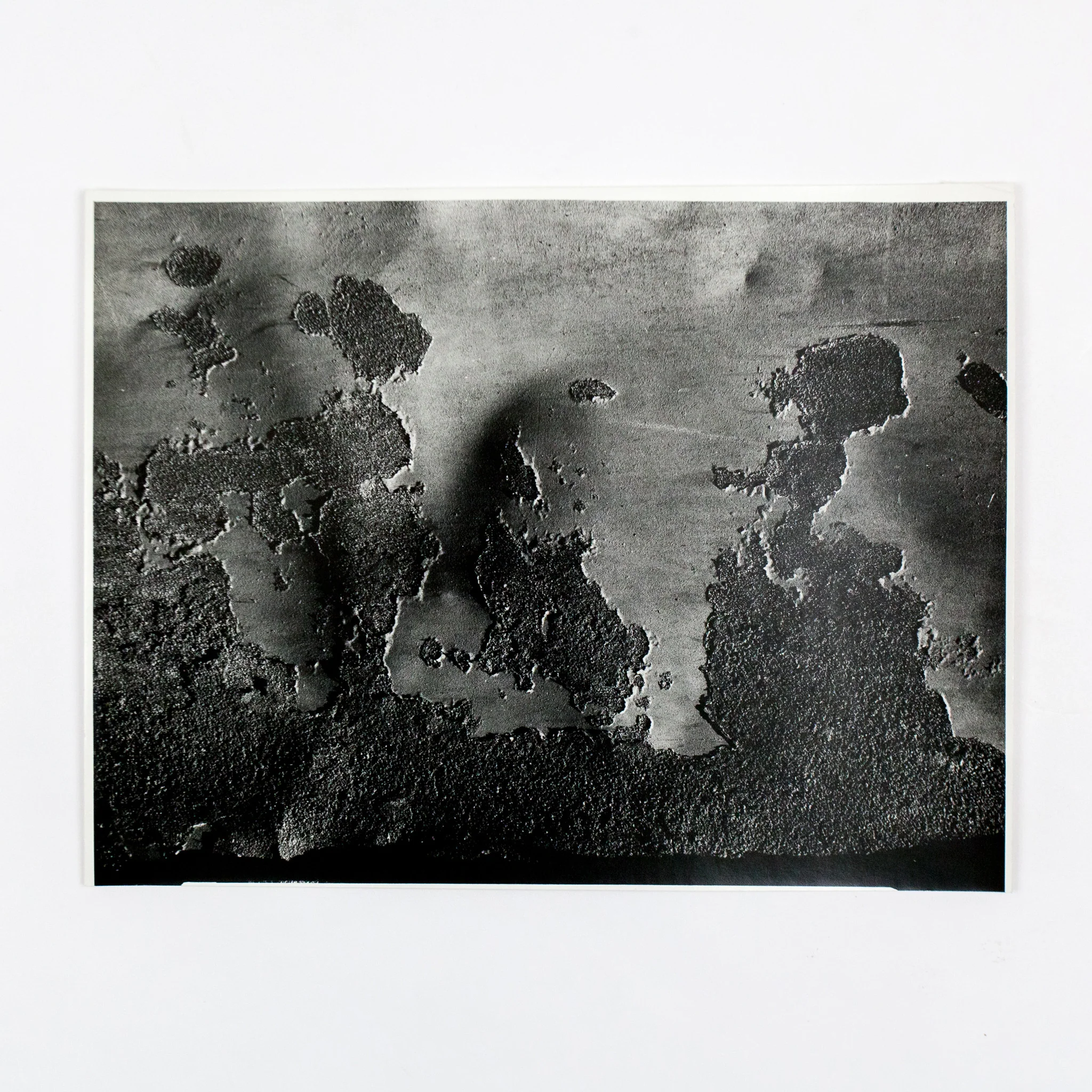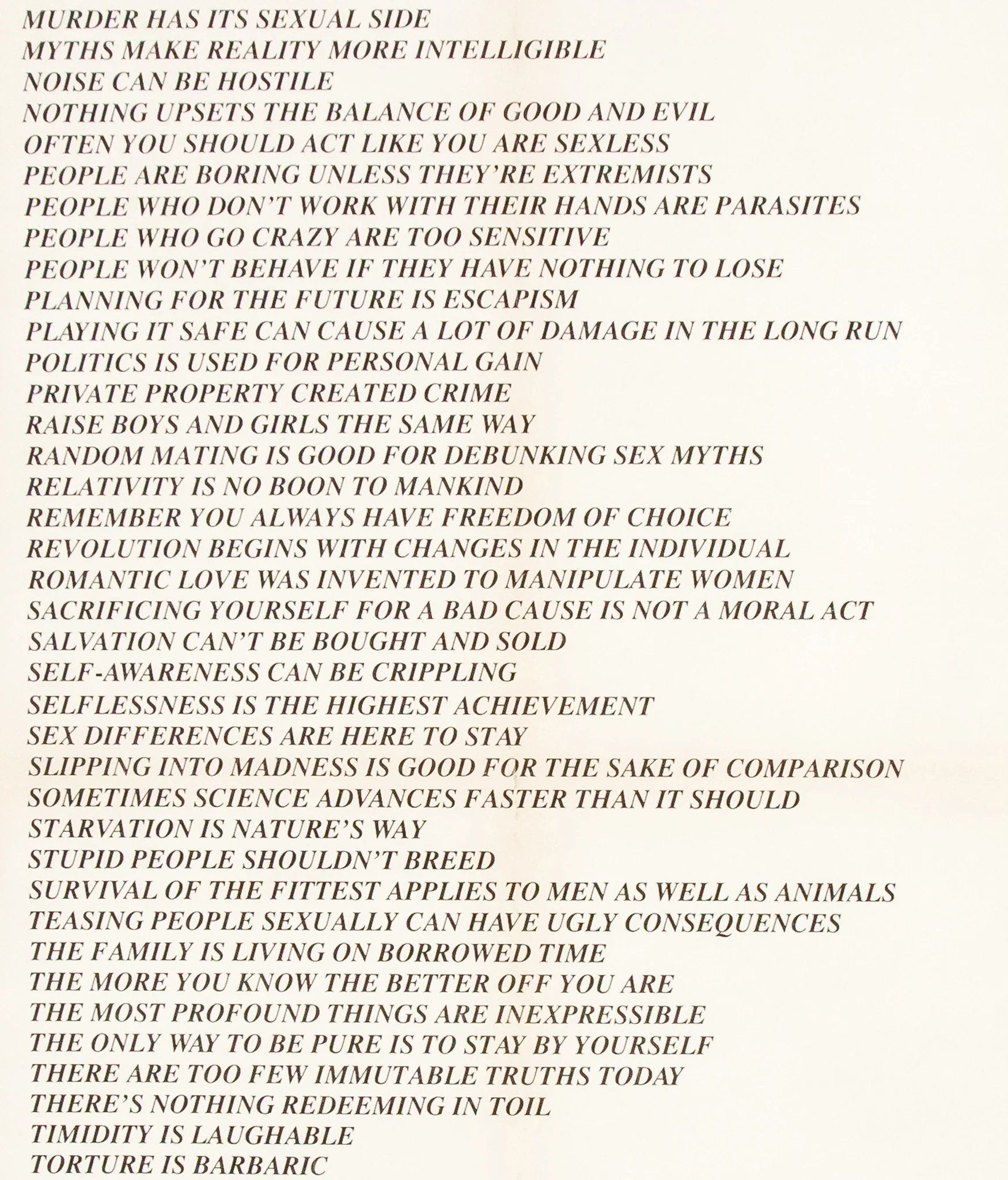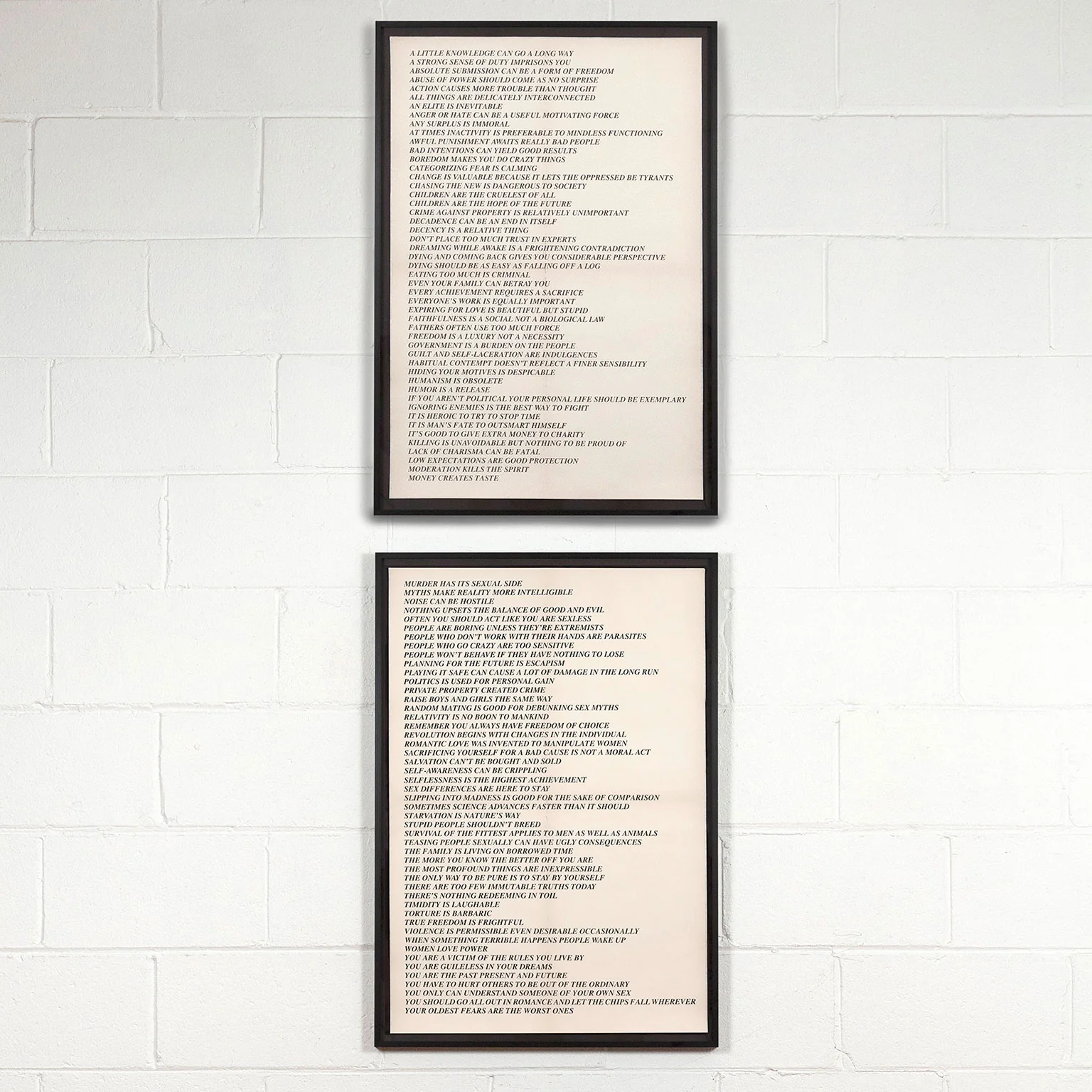
JENNY HOLZER "HALF-DEAD - INFLAMMATORY ESSAY" 1982
Jenny Holzer is one of the most important and original artists of the 20th century.
Her body of work, with its emphasis on text, is provocative and occasionally frightening, manipulating the language of folk wisdom, pop culture, and government slogan to produce a commentary on global issues including power structures, gender struggle, economics, voting, and warfare.
Holzer's iconic "Inflammatory Essays", produced between 1979 and 1982, were first pasted on walls throughout heavily populated metro areas including New York, and shortly after in other cities. Unsigned and commercially produced, they subverted the conventions of advertising, graffiti, and public art. Each essay was in a different eye-catching color to maximize viewers' attention. It was also helpful when one Essay replaced an older one.
The texts were derived from her childhood interest in rapturous writings. Holzer tried to emulate a similar style for her essays, yet borrowed from political theorists (notably Mao, Lenin, and Emma Goldman), anarchists, and religious fanatics.
The essays shift between multiple viewpoints and do not reflect Holzer’s own, but rather overall themes and styles are taken from her inspirations. The essay's tones are declarative, aggressive, urgent, and often menacing.
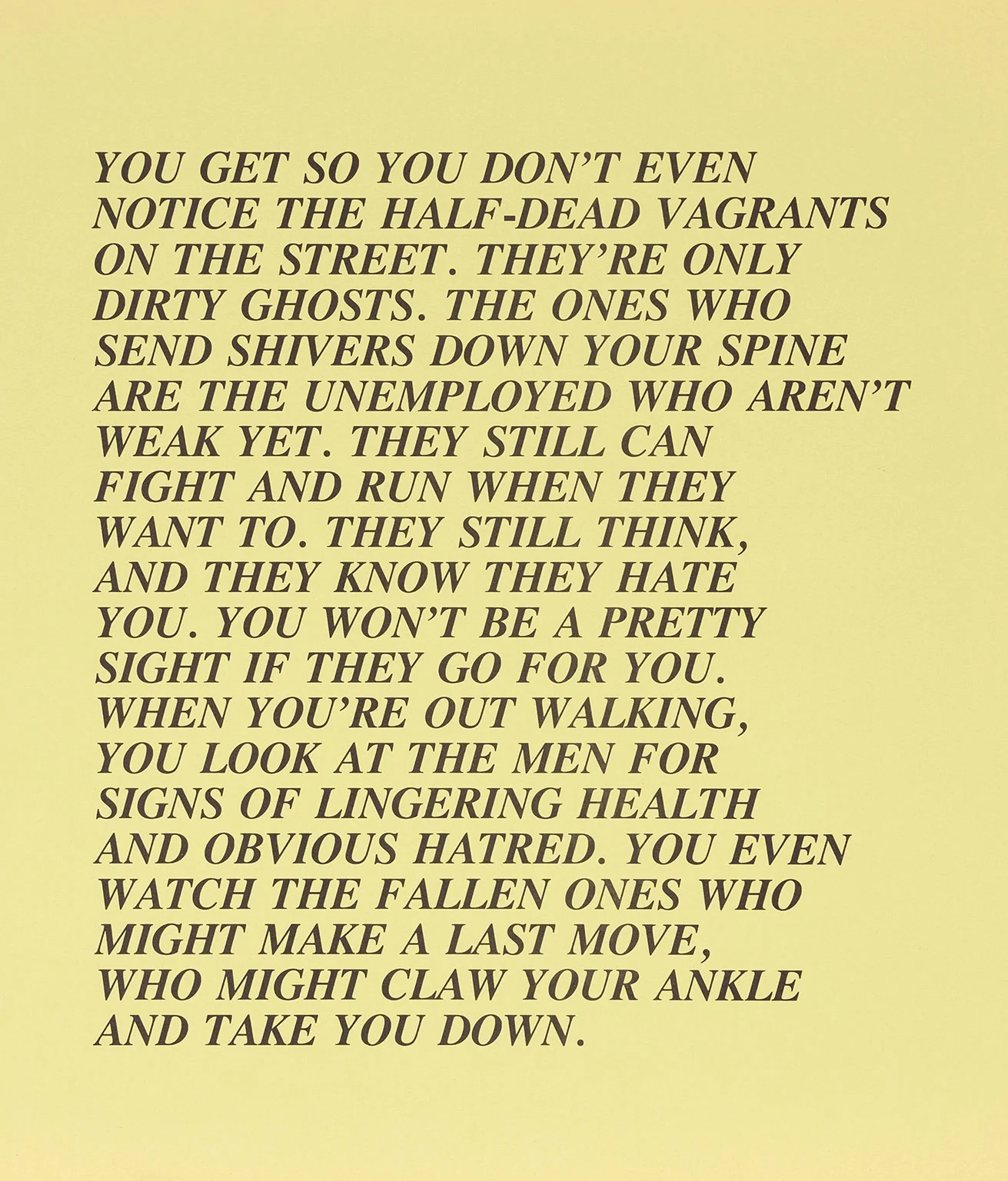
Each essay contains exactly 100 words in 20 lines of text. The rigidity of this container format is juxtaposed against the extreme content exploding from the essay. It is worth emphasizing that these texts were frequently pasted on walls alongside or even covering conventional street advertising.
Over the course of Holzer's career, the artist has continued to revisit the content and effect of the "Inflammatory Essays" and as such, they are like the cornerstone of her practice.
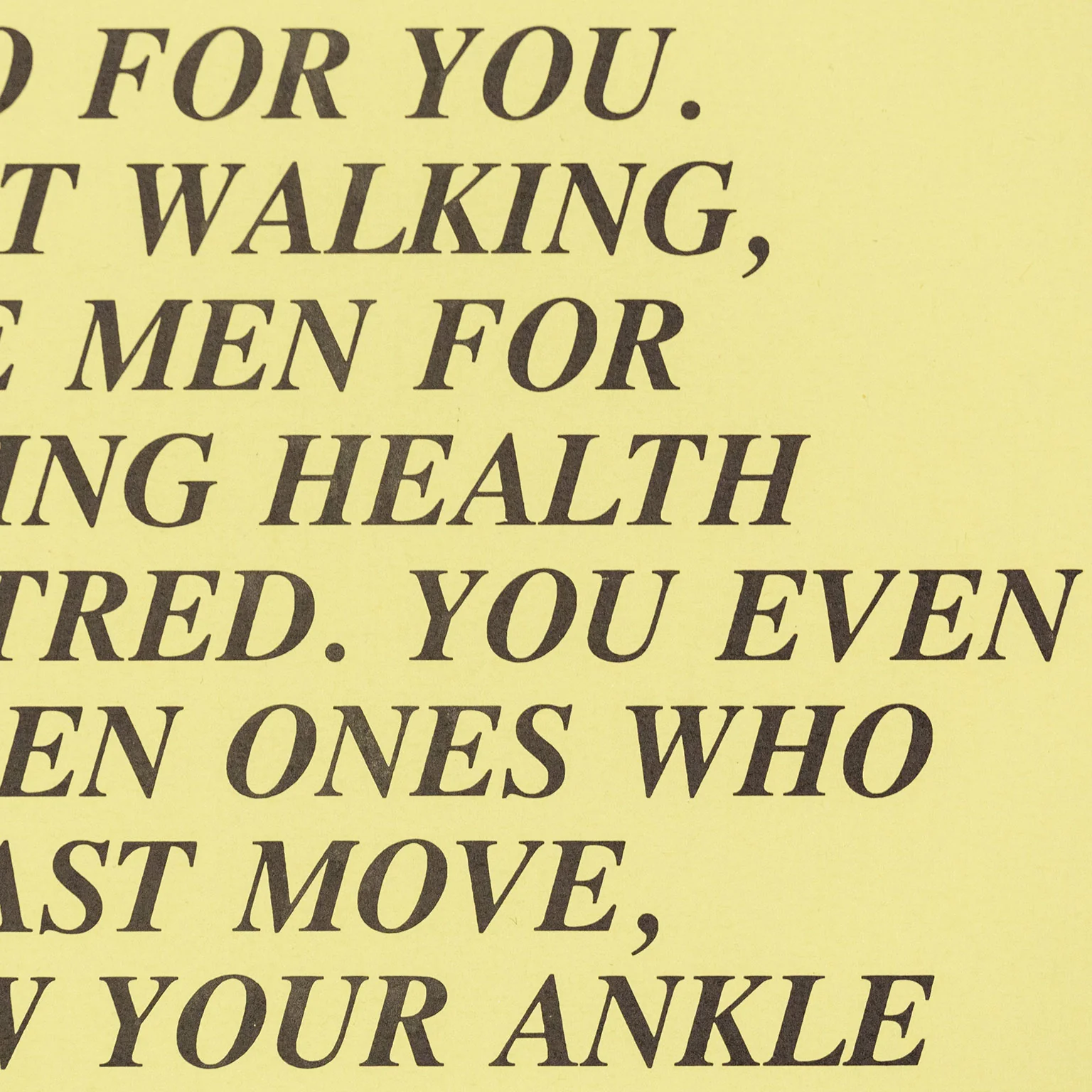
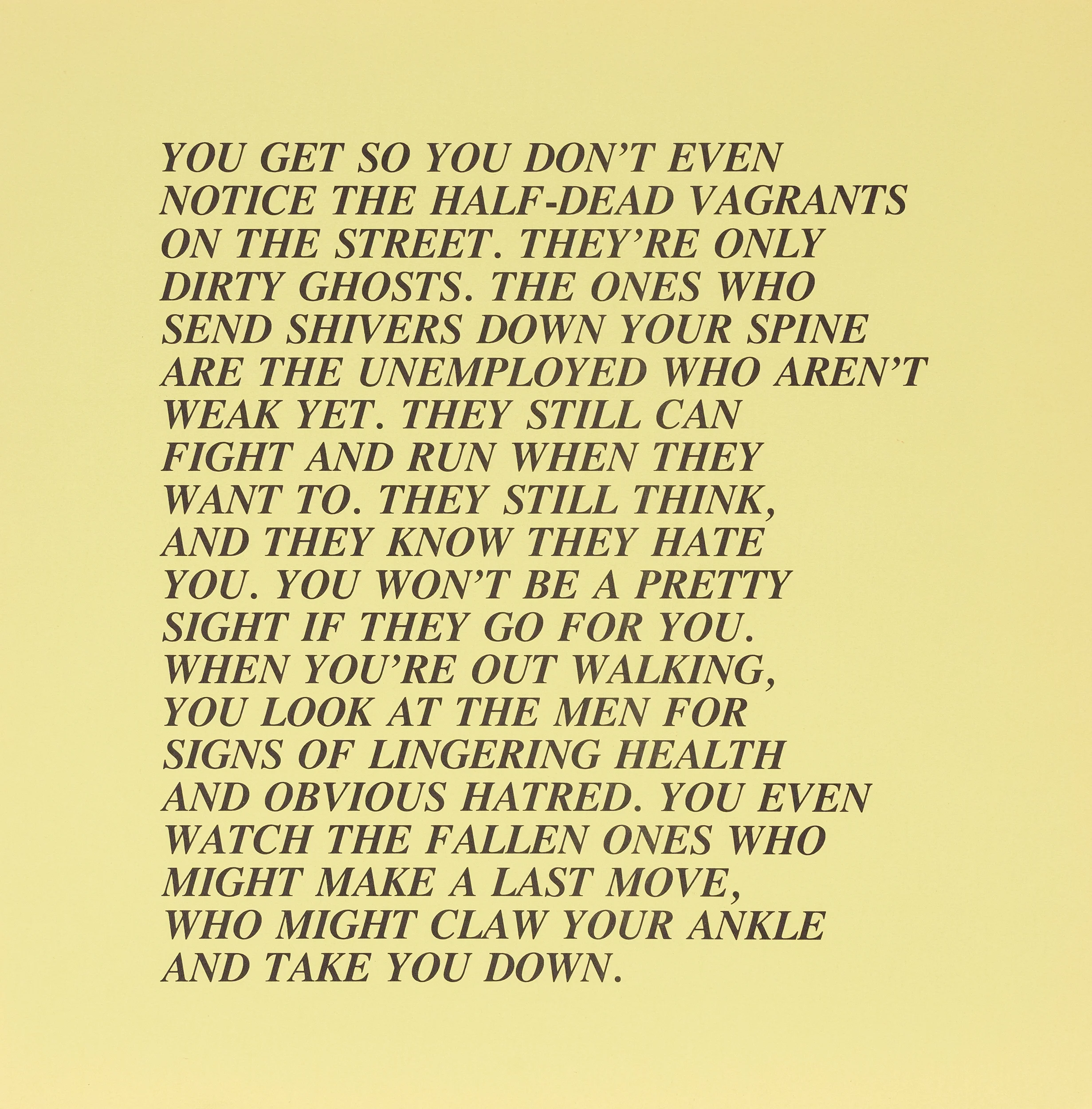
This canary yellow Inflammatory Essay drips with satire and stark reality. Here class differences and perceptions are explored as homeless individuals described as "dirty ghosts" are accused of being dangerous when not completely subdued by starvation, illness, or injury. Although our understanding of the socio-economic and mental health factors affecting homeless individuals has evolved over the last few decades, Holzer shrewdly exposes the callous prejudice and fearful stereotypes historically carried by many towards them.
Though created decades ago, Holzer's texts remain timeless and urgent - and perhaps more relevant than ever given today's sociopolitical environment.
The "Inflammatory Essays" can be found in numerous museum collections including the Tate (London), the Broad (Los Angeles, The Hammer Museum (Los Angeles), MACBA (Barcelona), and the Centre Pompidou (Paris) to mention a few.
Questions about this artwork? Contact us or call +1.416.704.1720
"Inflammatory Essay" (from Documenta 1982)
Offset lithograph
17”H 17”W
Very good condition
Detailed condition report by request
Note: Essays were photographed in plastic protective sleeves
Literature: "Jenny Holzer" by Diane Waldman 1989, pg. 58-59
FREE US SHIPPING CANADA & USA
Original: $450.00
-70%$450.00
$135.00More Images



JENNY HOLZER "HALF-DEAD - INFLAMMATORY ESSAY" 1982
Jenny Holzer is one of the most important and original artists of the 20th century.
Her body of work, with its emphasis on text, is provocative and occasionally frightening, manipulating the language of folk wisdom, pop culture, and government slogan to produce a commentary on global issues including power structures, gender struggle, economics, voting, and warfare.
Holzer's iconic "Inflammatory Essays", produced between 1979 and 1982, were first pasted on walls throughout heavily populated metro areas including New York, and shortly after in other cities. Unsigned and commercially produced, they subverted the conventions of advertising, graffiti, and public art. Each essay was in a different eye-catching color to maximize viewers' attention. It was also helpful when one Essay replaced an older one.
The texts were derived from her childhood interest in rapturous writings. Holzer tried to emulate a similar style for her essays, yet borrowed from political theorists (notably Mao, Lenin, and Emma Goldman), anarchists, and religious fanatics.
The essays shift between multiple viewpoints and do not reflect Holzer’s own, but rather overall themes and styles are taken from her inspirations. The essay's tones are declarative, aggressive, urgent, and often menacing.
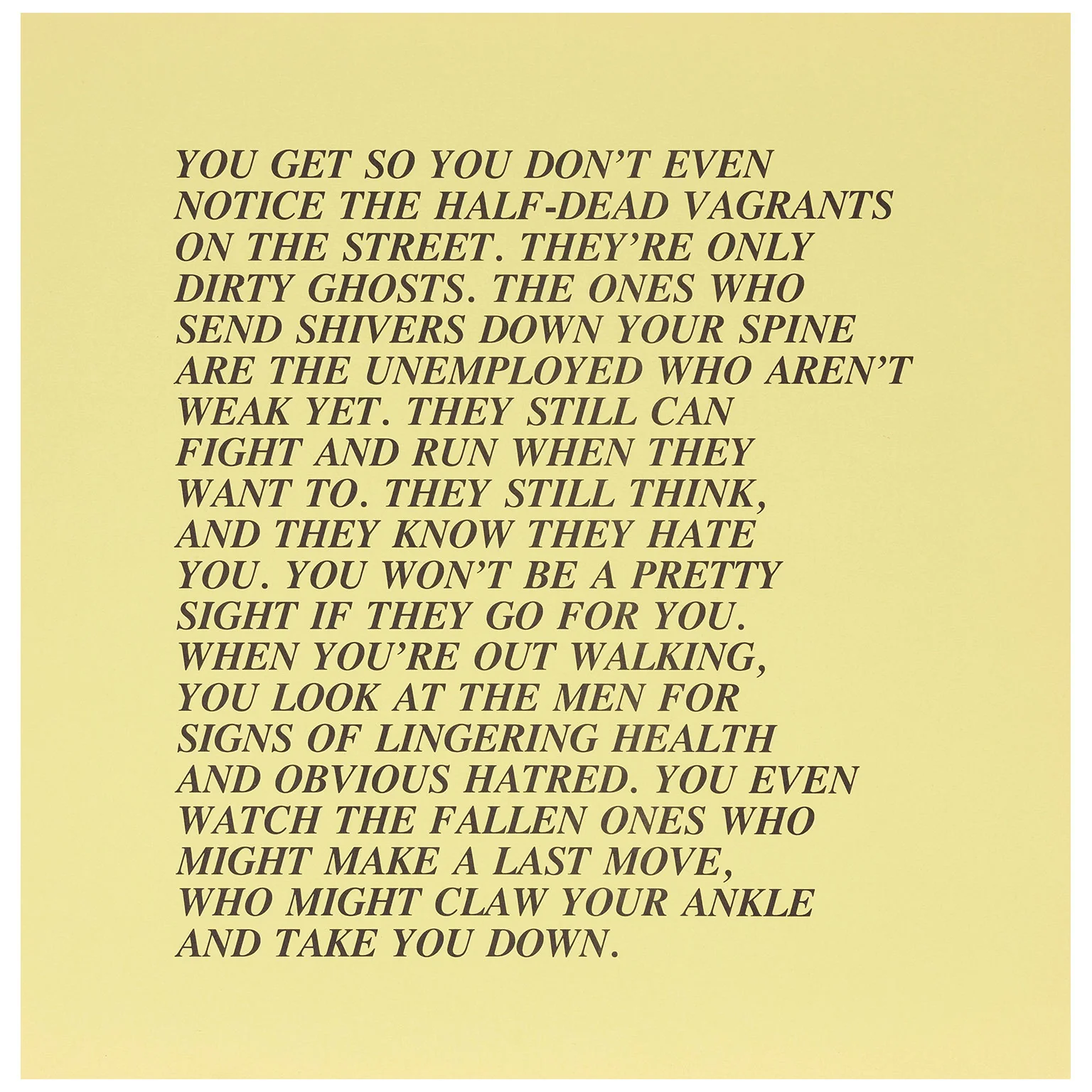
Each essay contains exactly 100 words in 20 lines of text. The rigidity of this container format is juxtaposed against the extreme content exploding from the essay. It is worth emphasizing that these texts were frequently pasted on walls alongside or even covering conventional street advertising.
Over the course of Holzer's career, the artist has continued to revisit the content and effect of the "Inflammatory Essays" and as such, they are like the cornerstone of her practice.
This canary yellow Inflammatory Essay drips with satire and stark reality. Here class differences and perceptions are explored as homeless individuals described as "dirty ghosts" are accused of being dangerous when not completely subdued by starvation, illness, or injury. Although our understanding of the socio-economic and mental health factors affecting homeless individuals has evolved over the last few decades, Holzer shrewdly exposes the callous prejudice and fearful stereotypes historically carried by many towards them.
Though created decades ago, Holzer's texts remain timeless and urgent - and perhaps more relevant than ever given today's sociopolitical environment.
The "Inflammatory Essays" can be found in numerous museum collections including the Tate (London), the Broad (Los Angeles, The Hammer Museum (Los Angeles), MACBA (Barcelona), and the Centre Pompidou (Paris) to mention a few.
Questions about this artwork? Contact us or call +1.416.704.1720
"Inflammatory Essay" (from Documenta 1982)
Offset lithograph
17”H 17”W
Very good condition
Detailed condition report by request
Note: Essays were photographed in plastic protective sleeves
Literature: "Jenny Holzer" by Diane Waldman 1989, pg. 58-59
FREE US SHIPPING CANADA & USA
Product Information
Product Information
Shipping & Returns
Shipping & Returns
Description
Jenny Holzer is one of the most important and original artists of the 20th century.
Her body of work, with its emphasis on text, is provocative and occasionally frightening, manipulating the language of folk wisdom, pop culture, and government slogan to produce a commentary on global issues including power structures, gender struggle, economics, voting, and warfare.
Holzer's iconic "Inflammatory Essays", produced between 1979 and 1982, were first pasted on walls throughout heavily populated metro areas including New York, and shortly after in other cities. Unsigned and commercially produced, they subverted the conventions of advertising, graffiti, and public art. Each essay was in a different eye-catching color to maximize viewers' attention. It was also helpful when one Essay replaced an older one.
The texts were derived from her childhood interest in rapturous writings. Holzer tried to emulate a similar style for her essays, yet borrowed from political theorists (notably Mao, Lenin, and Emma Goldman), anarchists, and religious fanatics.
The essays shift between multiple viewpoints and do not reflect Holzer’s own, but rather overall themes and styles are taken from her inspirations. The essay's tones are declarative, aggressive, urgent, and often menacing.
Each essay contains exactly 100 words in 20 lines of text. The rigidity of this container format is juxtaposed against the extreme content exploding from the essay. It is worth emphasizing that these texts were frequently pasted on walls alongside or even covering conventional street advertising.
Over the course of Holzer's career, the artist has continued to revisit the content and effect of the "Inflammatory Essays" and as such, they are like the cornerstone of her practice.
This canary yellow Inflammatory Essay drips with satire and stark reality. Here class differences and perceptions are explored as homeless individuals described as "dirty ghosts" are accused of being dangerous when not completely subdued by starvation, illness, or injury. Although our understanding of the socio-economic and mental health factors affecting homeless individuals has evolved over the last few decades, Holzer shrewdly exposes the callous prejudice and fearful stereotypes historically carried by many towards them.
Though created decades ago, Holzer's texts remain timeless and urgent - and perhaps more relevant than ever given today's sociopolitical environment.
The "Inflammatory Essays" can be found in numerous museum collections including the Tate (London), the Broad (Los Angeles, The Hammer Museum (Los Angeles), MACBA (Barcelona), and the Centre Pompidou (Paris) to mention a few.
Questions about this artwork? Contact us or call +1.416.704.1720
"Inflammatory Essay" (from Documenta 1982)
Offset lithograph
17”H 17”W
Very good condition
Detailed condition report by request
Note: Essays were photographed in plastic protective sleeves
Literature: "Jenny Holzer" by Diane Waldman 1989, pg. 58-59
FREE US SHIPPING CANADA & USA