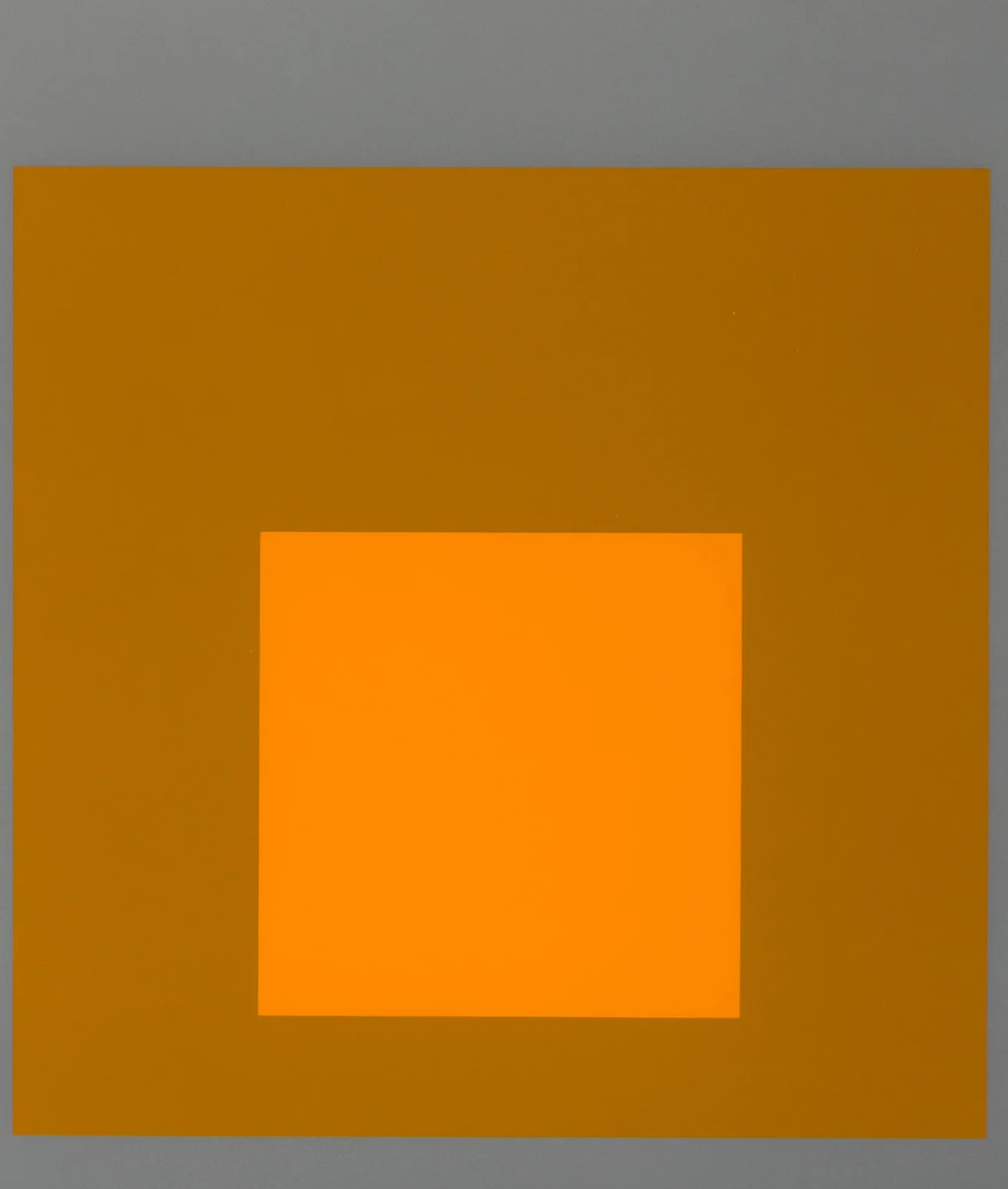
JOSEF ALBERS "CADMIUM ORANGE" SERIGRAPH, 1968
Josef Albers (1888-1976) is affiliated with numerous defining movements of 20th century art. Historians credit Albers with fusing elements of American and European abstraction while influencing minimalism, hard-edge painting, and Op art.
Albers was both a student and professor at the Bauhaus in Germany. After the prestigious academy was closed by the Nazis, Albers and his wife Anni (a fantastically talented textile artist in her own right) emigrated to the United States.
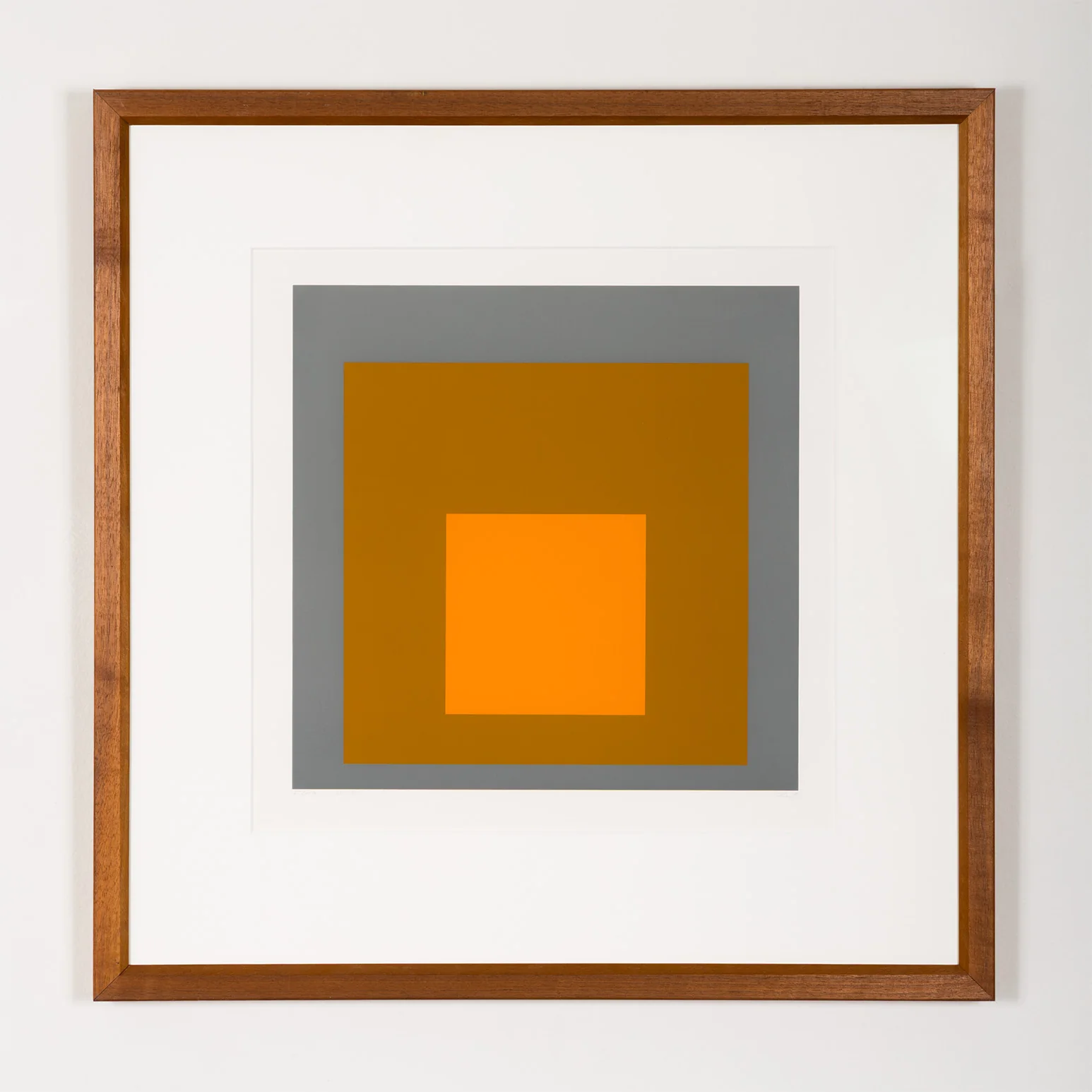
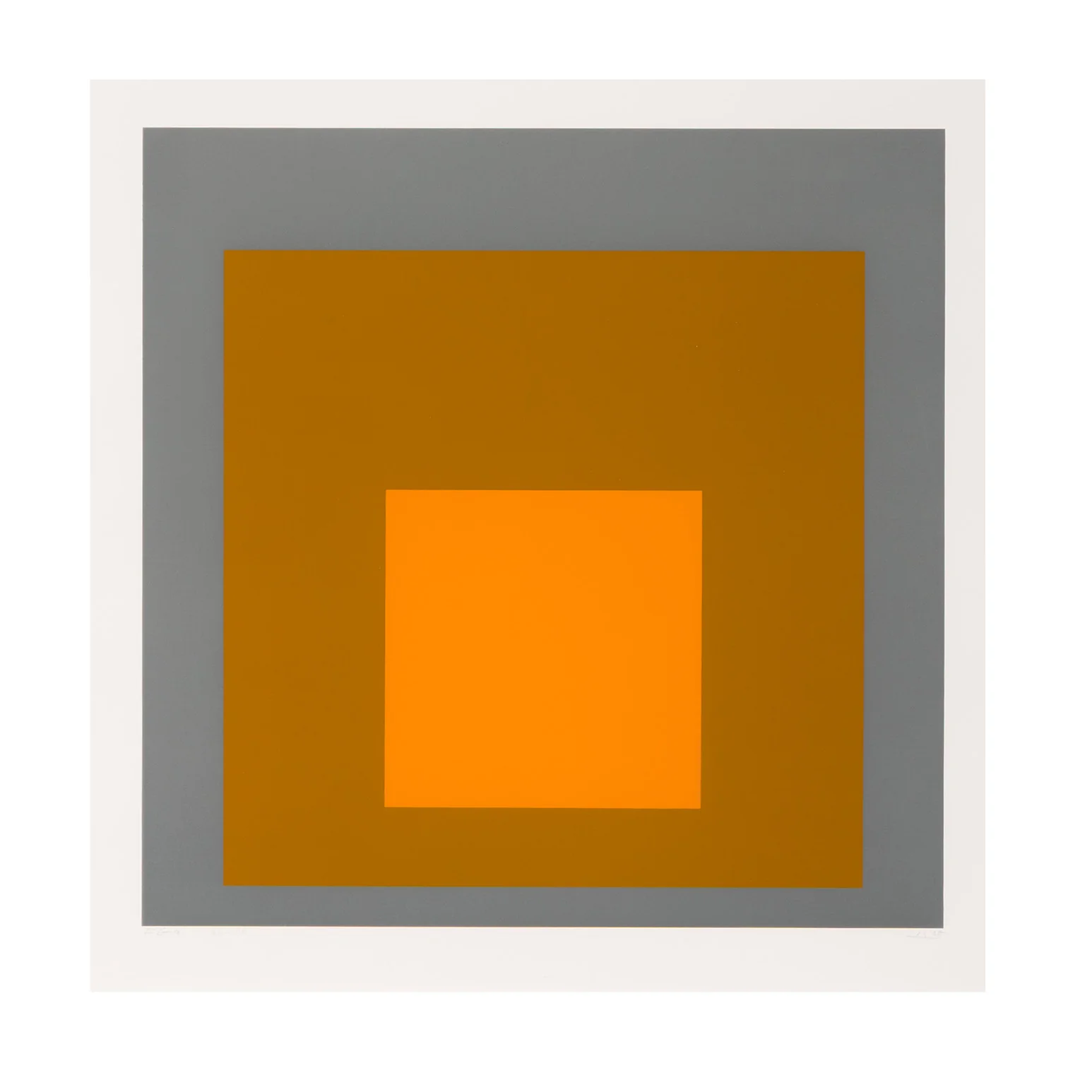
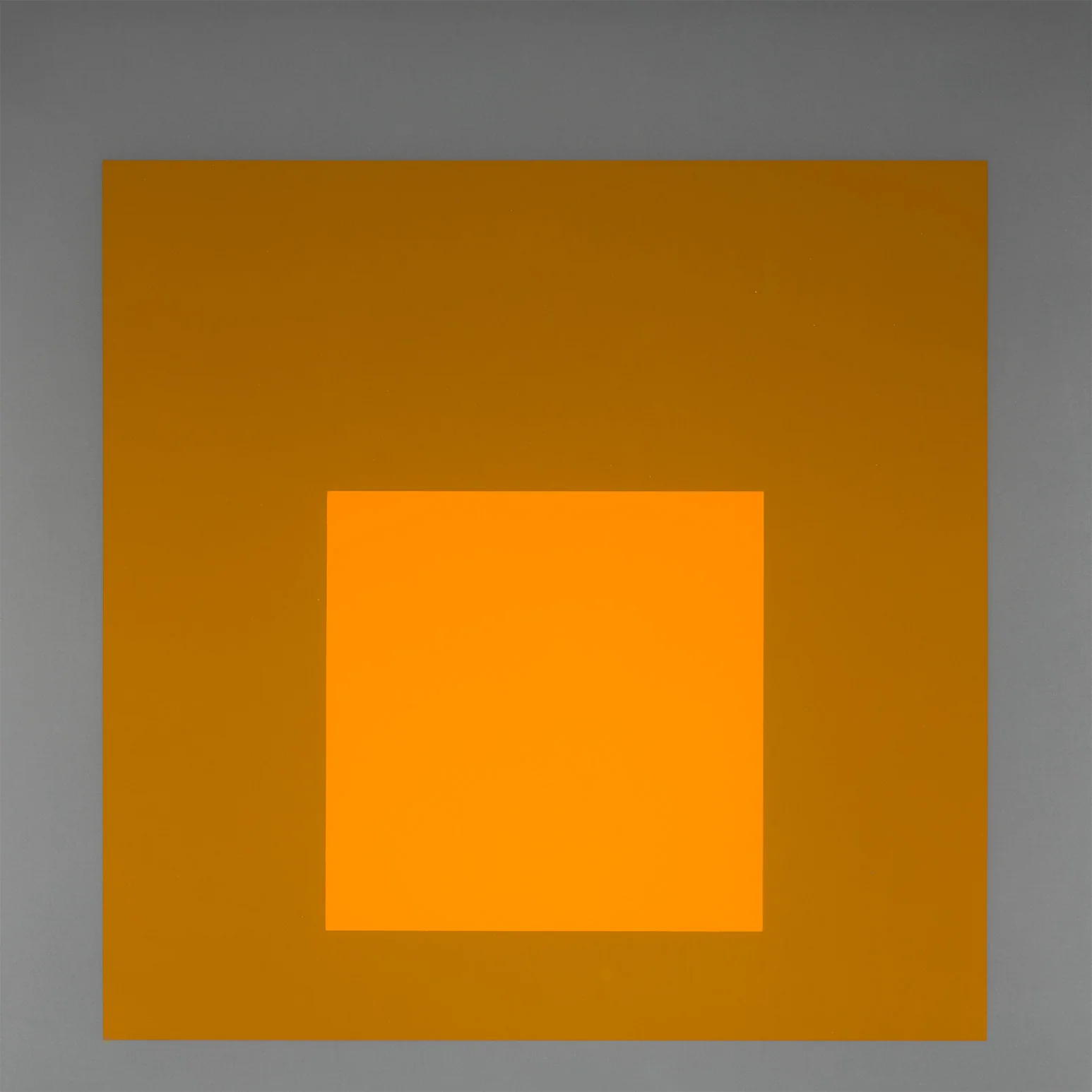
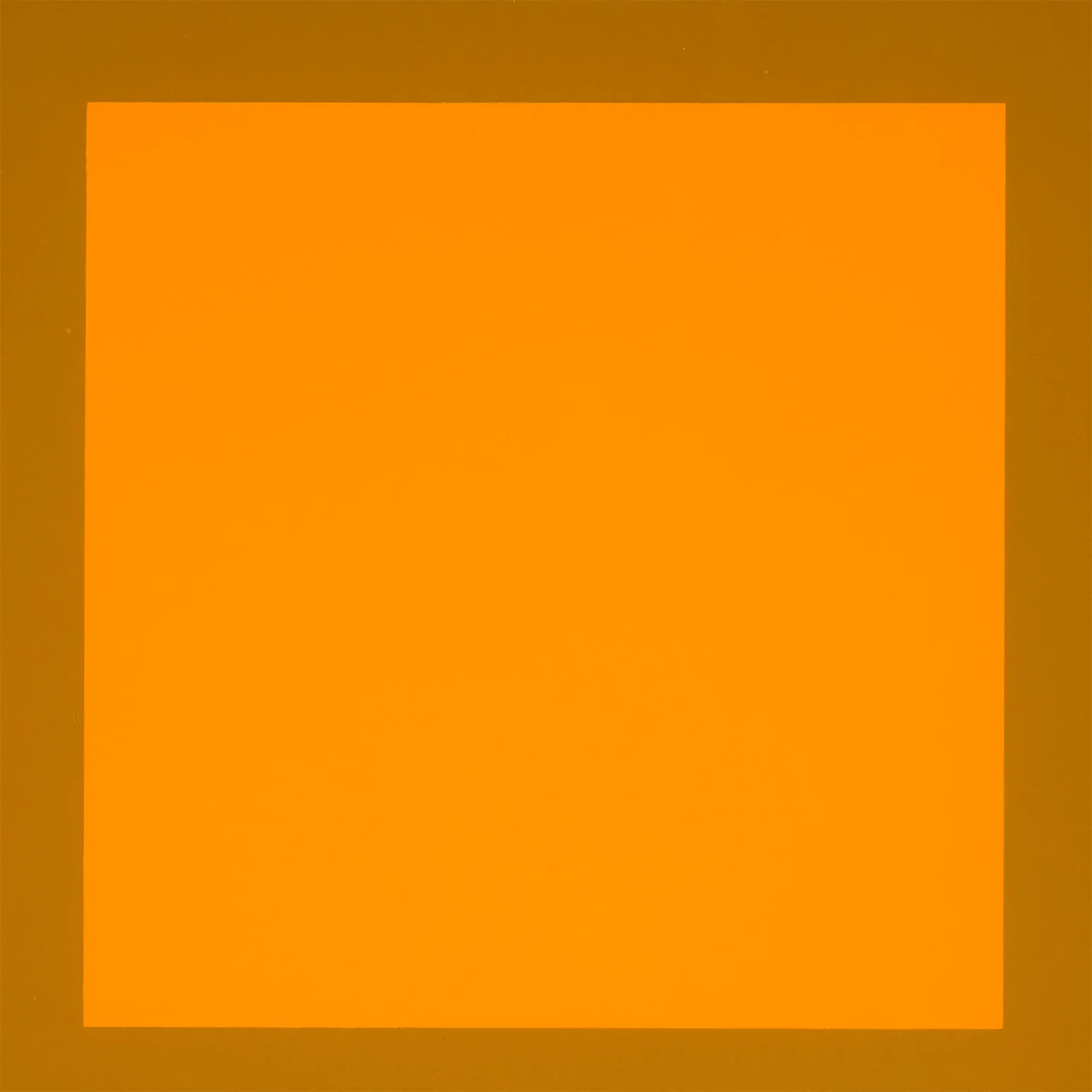
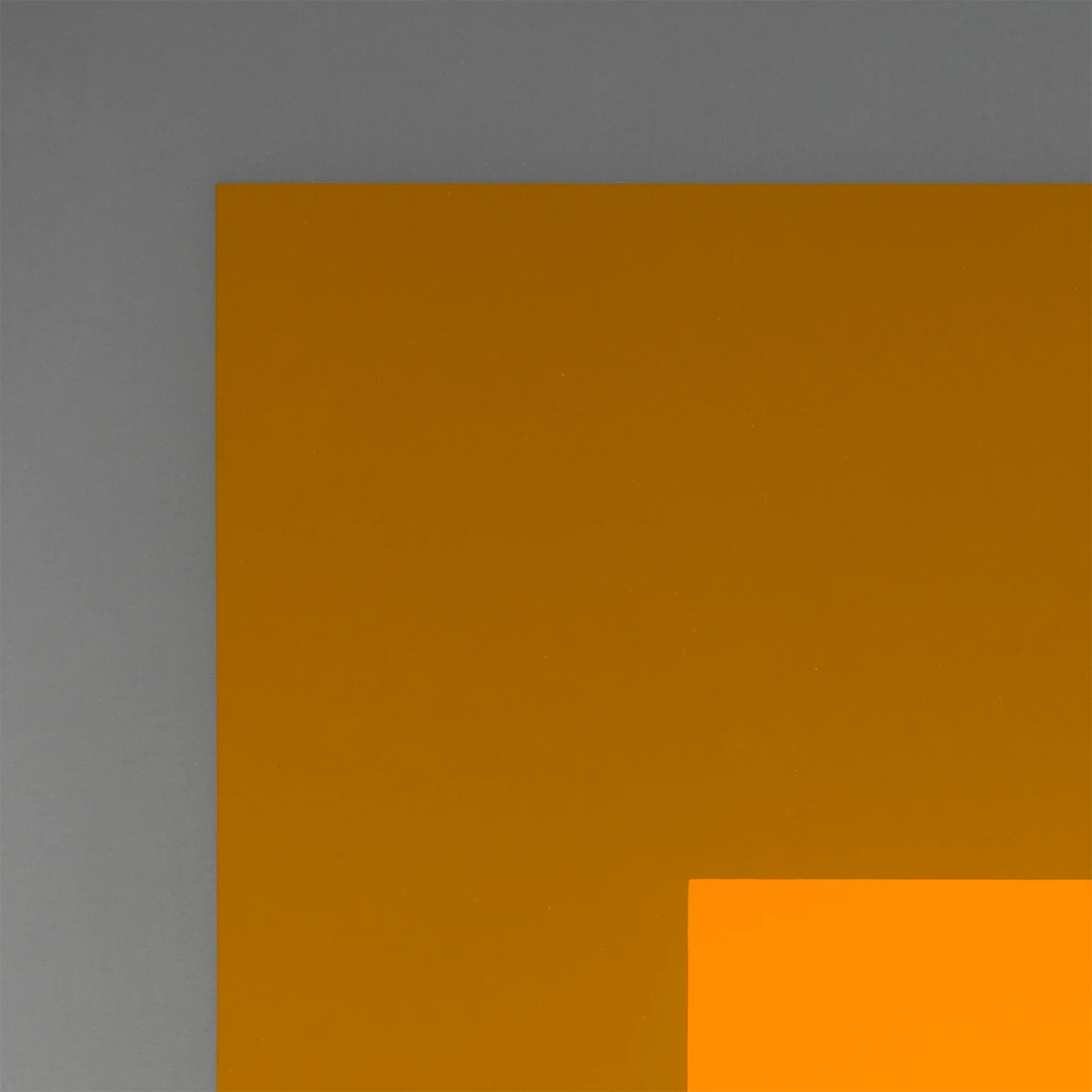
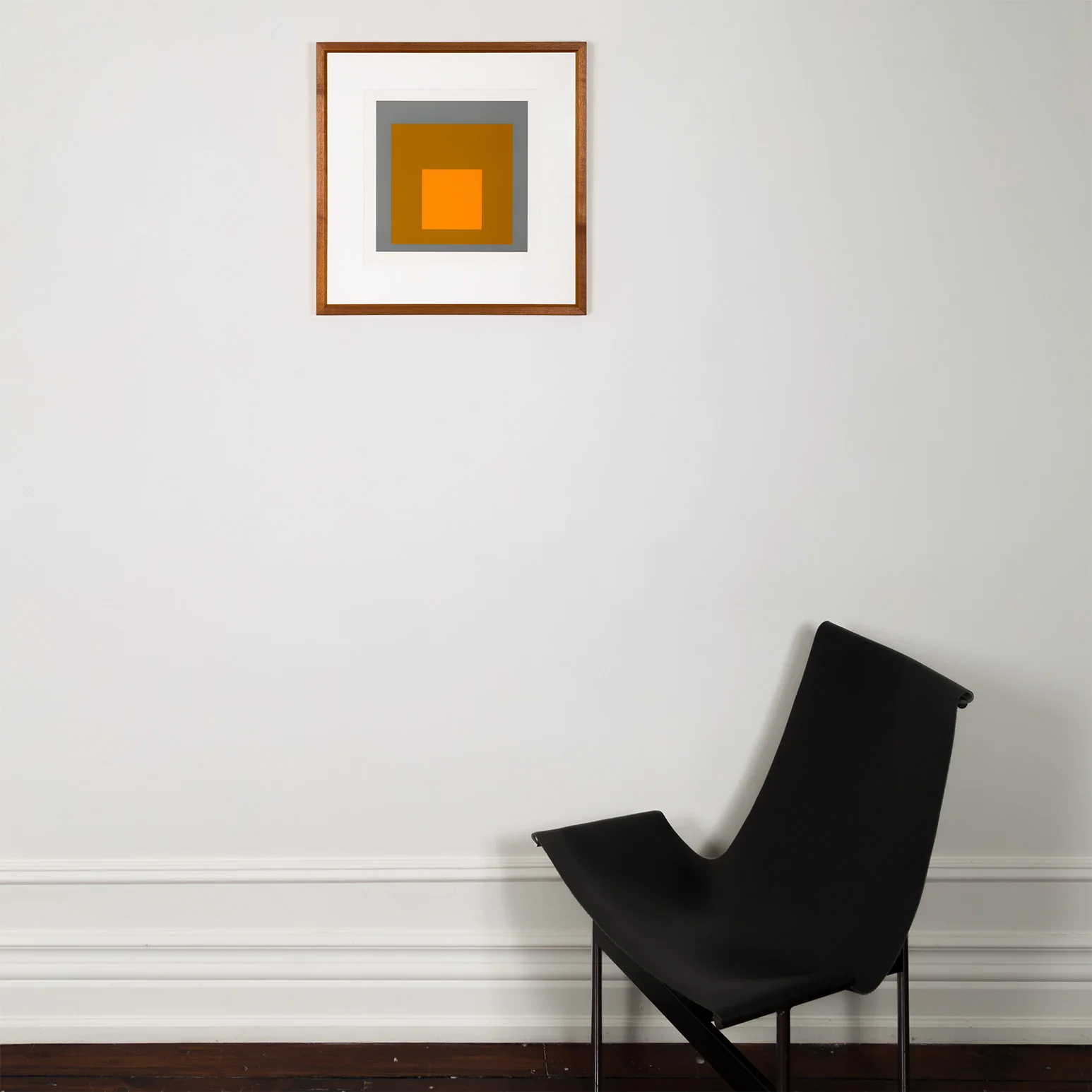
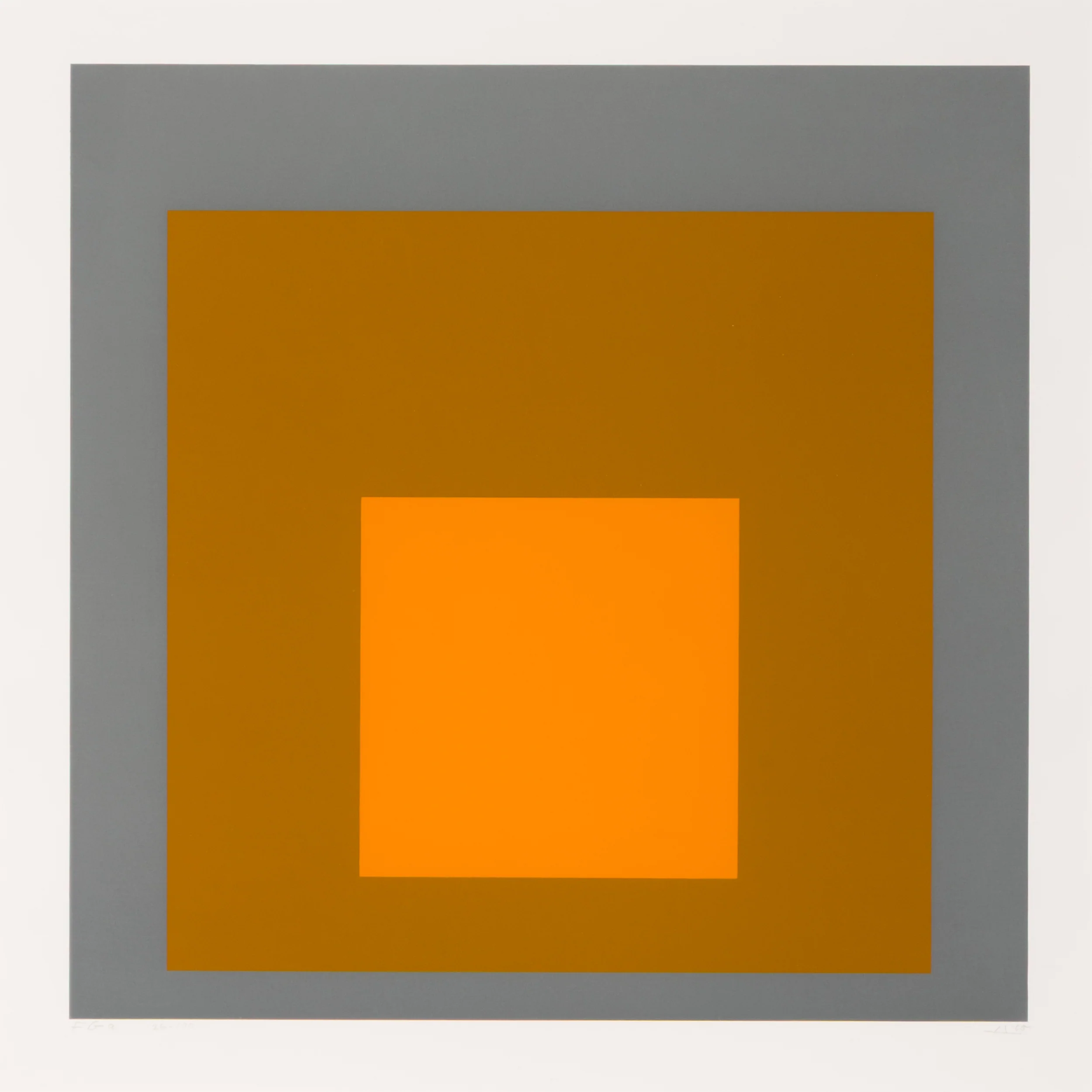
This piece is a classic and instantly recognizable example of Albers' signature motif from the 1960s. With a slate grey outer square at the extremity, and two varied orange hues in the centre, this composition offers a sophisticated color palette. Hypnotic, simple, and striking, Albers uses color and geometry to maximum effect, creating an image that seems to transmogrify itself with each passing moment.
In addition to being an influence on many artists, Albers was a pivotal mentor and teacher to major artists of the 20th century including Robert Rauschenberg, Cy Twombly, and Eva Hesse at Black Mountain College and Yale. His strict approach to abstraction inspired a generation of minimalists including Donald Judd and Robert Morris.
Questions about this piece? Contact us, call +1.416.704.1720, or visit our Toronto gallery.
“FGa”
Homage to the Square
USA, 1968
Screenprint
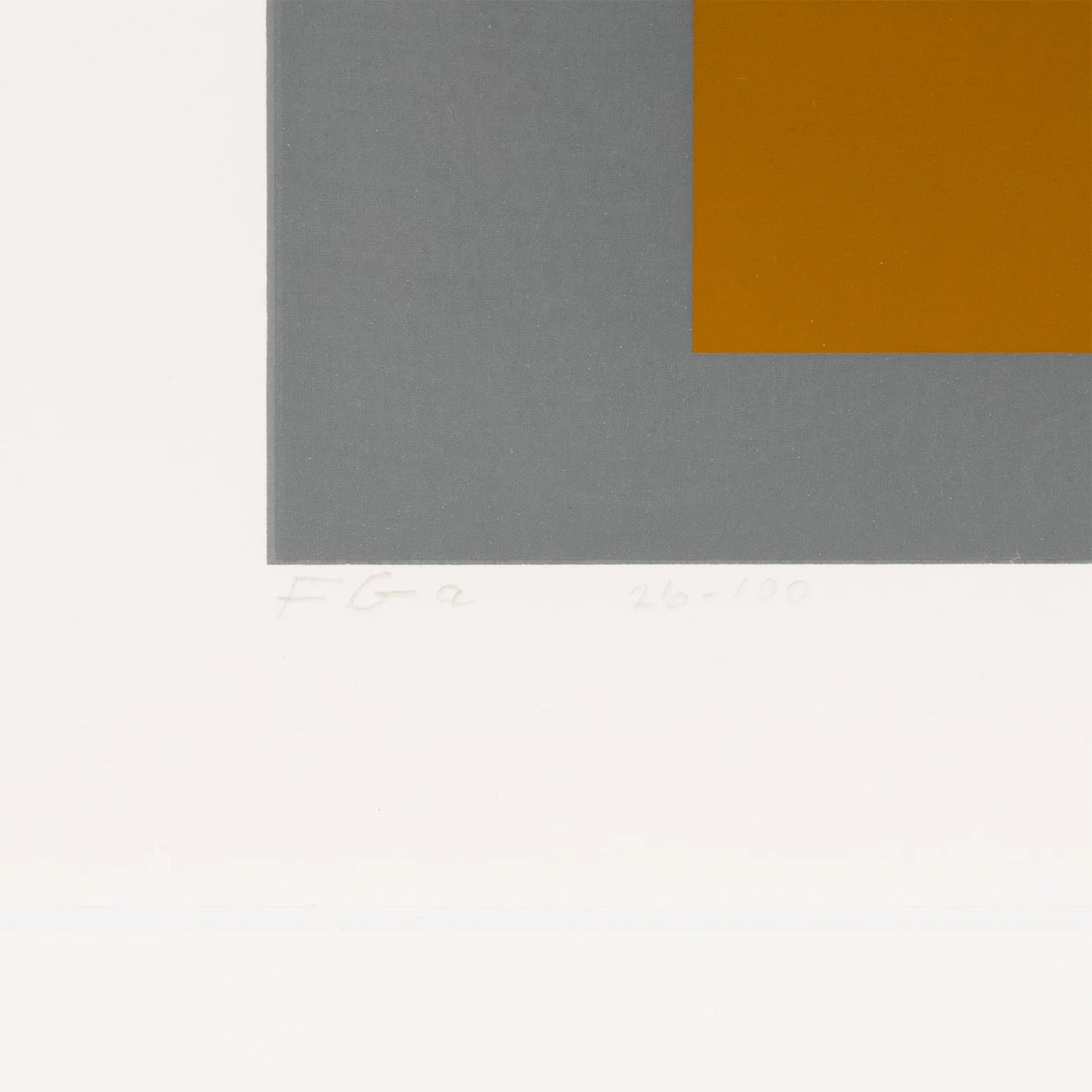
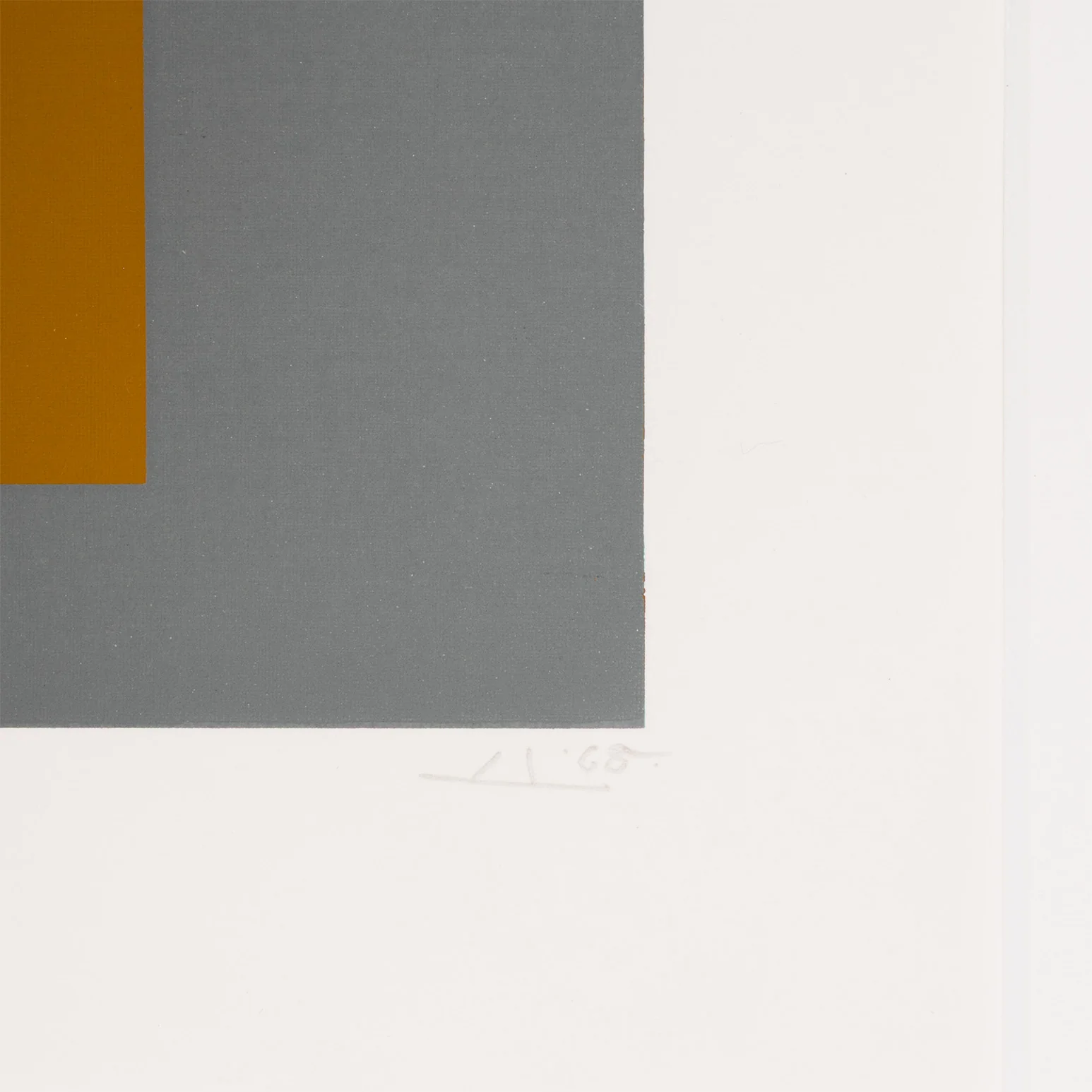
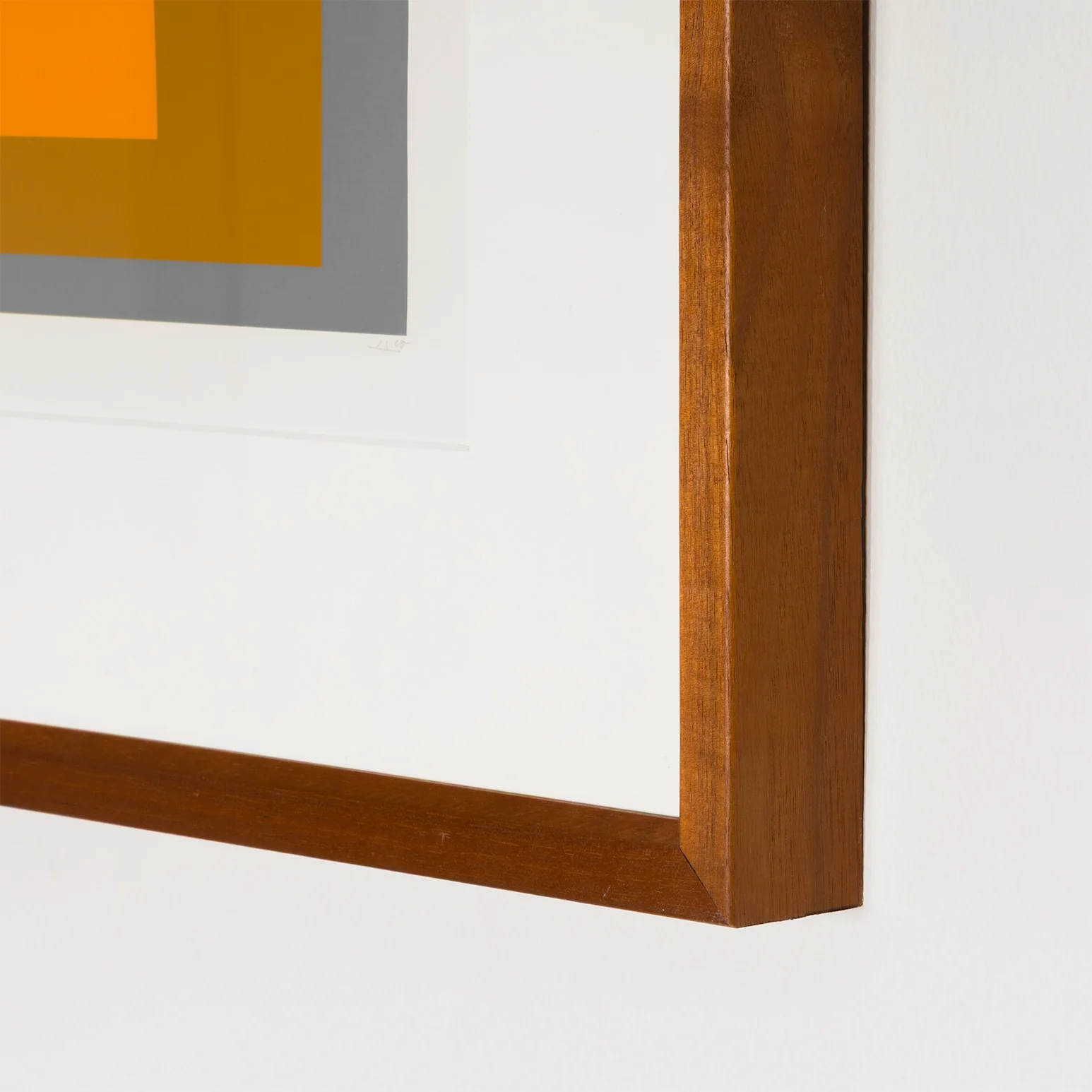
Signed, dated, and numbered by artist in pencil, lower edge
Number 26 from an edition of 100
11"H 11"W (image)
17"H 17"W (sheet)
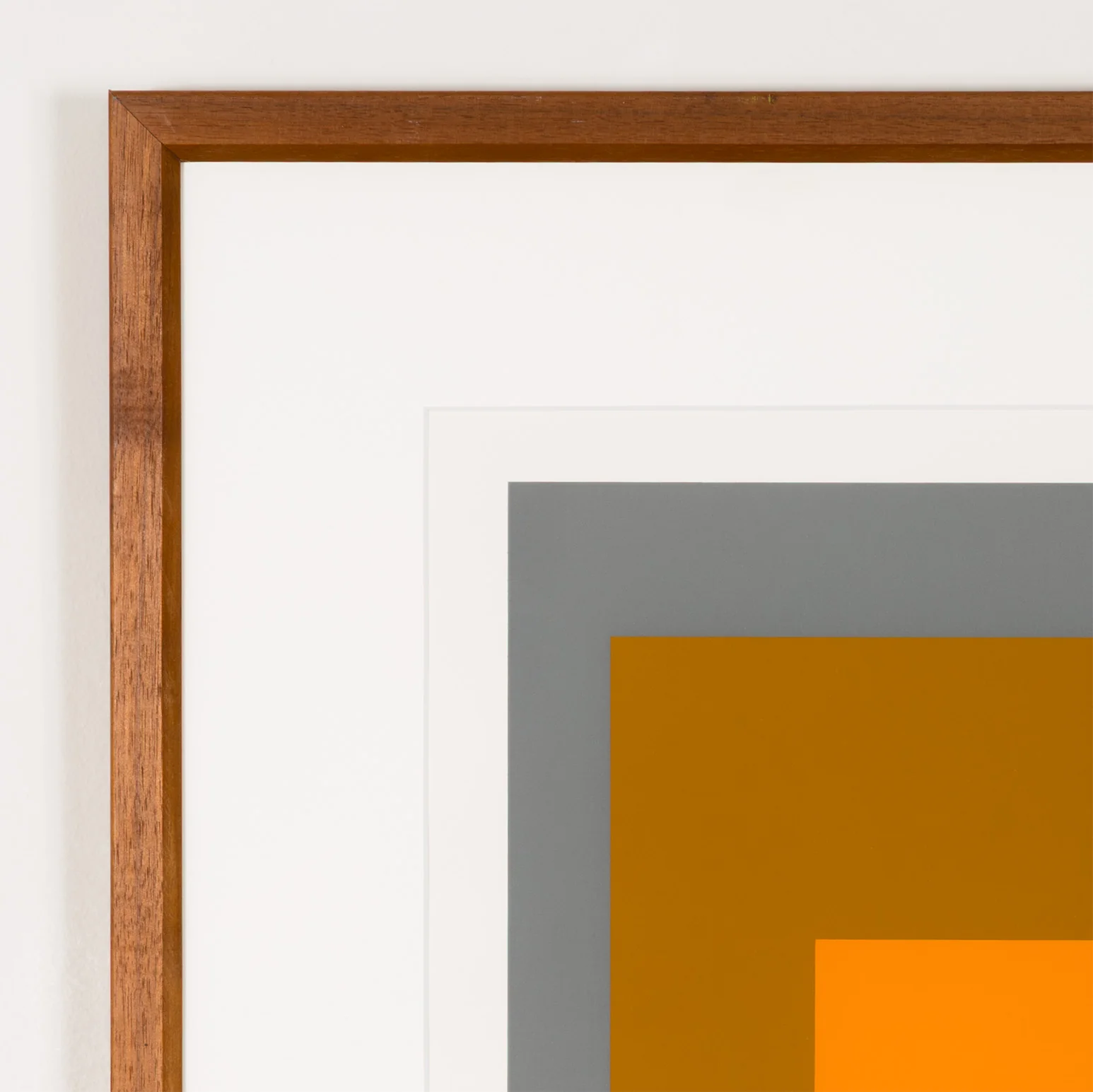
20"H 19.75"W (framed with museum glass)
Printed at Sirocco Screenprints, New Haven, CT
Published by Ives-Sillman, Inc., New Haven, for Richard Feigen Graphics, New York
Very good condition
Literature: Danilowitz 179.
Original: $6,000.00
-70%$6,000.00
$1,800.00More Images
JOSEF ALBERS "CADMIUM ORANGE" SERIGRAPH, 1968
Josef Albers (1888-1976) is affiliated with numerous defining movements of 20th century art. Historians credit Albers with fusing elements of American and European abstraction while influencing minimalism, hard-edge painting, and Op art.
Albers was both a student and professor at the Bauhaus in Germany. After the prestigious academy was closed by the Nazis, Albers and his wife Anni (a fantastically talented textile artist in her own right) emigrated to the United States.
This piece is a classic and instantly recognizable example of Albers' signature motif from the 1960s. With a slate grey outer square at the extremity, and two varied orange hues in the centre, this composition offers a sophisticated color palette. Hypnotic, simple, and striking, Albers uses color and geometry to maximum effect, creating an image that seems to transmogrify itself with each passing moment.
In addition to being an influence on many artists, Albers was a pivotal mentor and teacher to major artists of the 20th century including Robert Rauschenberg, Cy Twombly, and Eva Hesse at Black Mountain College and Yale. His strict approach to abstraction inspired a generation of minimalists including Donald Judd and Robert Morris.
Questions about this piece? Contact us, call +1.416.704.1720, or visit our Toronto gallery.
“FGa”
Homage to the Square
USA, 1968
Screenprint
Signed, dated, and numbered by artist in pencil, lower edge
Number 26 from an edition of 100
11"H 11"W (image)
17"H 17"W (sheet)
20"H 19.75"W (framed with museum glass)
Printed at Sirocco Screenprints, New Haven, CT
Published by Ives-Sillman, Inc., New Haven, for Richard Feigen Graphics, New York
Very good condition
Literature: Danilowitz 179.
Product Information
Product Information
Shipping & Returns
Shipping & Returns
Description
Josef Albers (1888-1976) is affiliated with numerous defining movements of 20th century art. Historians credit Albers with fusing elements of American and European abstraction while influencing minimalism, hard-edge painting, and Op art.
Albers was both a student and professor at the Bauhaus in Germany. After the prestigious academy was closed by the Nazis, Albers and his wife Anni (a fantastically talented textile artist in her own right) emigrated to the United States.
This piece is a classic and instantly recognizable example of Albers' signature motif from the 1960s. With a slate grey outer square at the extremity, and two varied orange hues in the centre, this composition offers a sophisticated color palette. Hypnotic, simple, and striking, Albers uses color and geometry to maximum effect, creating an image that seems to transmogrify itself with each passing moment.
In addition to being an influence on many artists, Albers was a pivotal mentor and teacher to major artists of the 20th century including Robert Rauschenberg, Cy Twombly, and Eva Hesse at Black Mountain College and Yale. His strict approach to abstraction inspired a generation of minimalists including Donald Judd and Robert Morris.
Questions about this piece? Contact us, call +1.416.704.1720, or visit our Toronto gallery.
“FGa”
Homage to the Square
USA, 1968
Screenprint
Signed, dated, and numbered by artist in pencil, lower edge
Number 26 from an edition of 100
11"H 11"W (image)
17"H 17"W (sheet)
20"H 19.75"W (framed with museum glass)
Printed at Sirocco Screenprints, New Haven, CT
Published by Ives-Sillman, Inc., New Haven, for Richard Feigen Graphics, New York
Very good condition
Literature: Danilowitz 179.