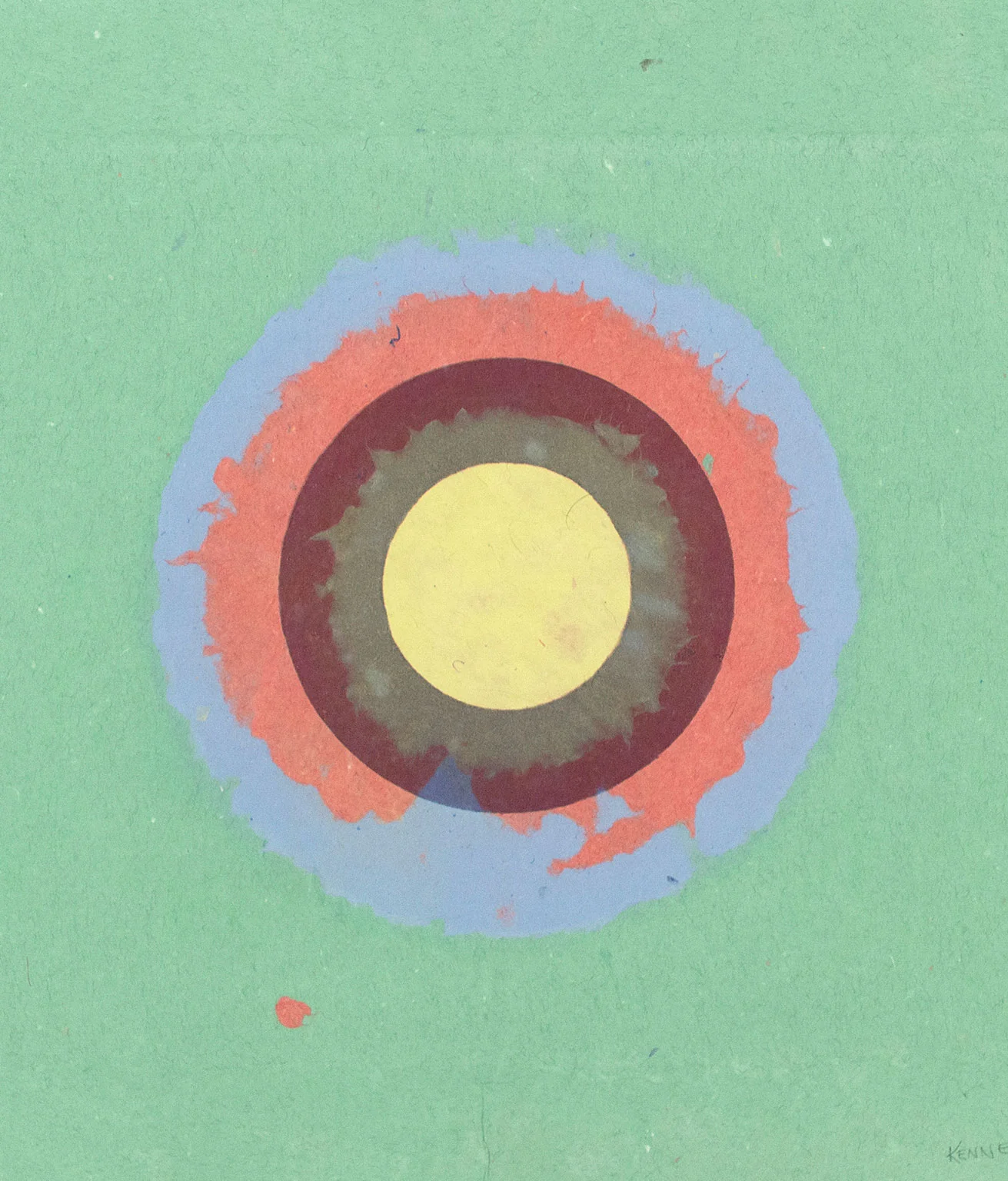
KENNETH NOLAND "SEA FOAM CIRCLE II", 1978
Kenneth Noland (1924 – 2010) is one of the most important artists and contributors to the evolution of American abstraction. He is one of the most beloved figures in the Color-Field movement.
Unlike many of his contemporaries, such as Helen Frankenthaler and Sam Gilliam, Noland was not interested in printmaking until later in his career. And once Noland began collaborating with the printmakers at Tyler Graphics (and other studios) he was more interested in using their applications to make unique one-of-a-kind artworks.
From April to August 1978, Noland had an intense and fruitful period of papermaking and printmaking at Tyler Graphics in Bedford, New York. During his time there he began with 30 colors (stored in buckets) that he turned into around 100 that appear in his circle or striped monotypes.
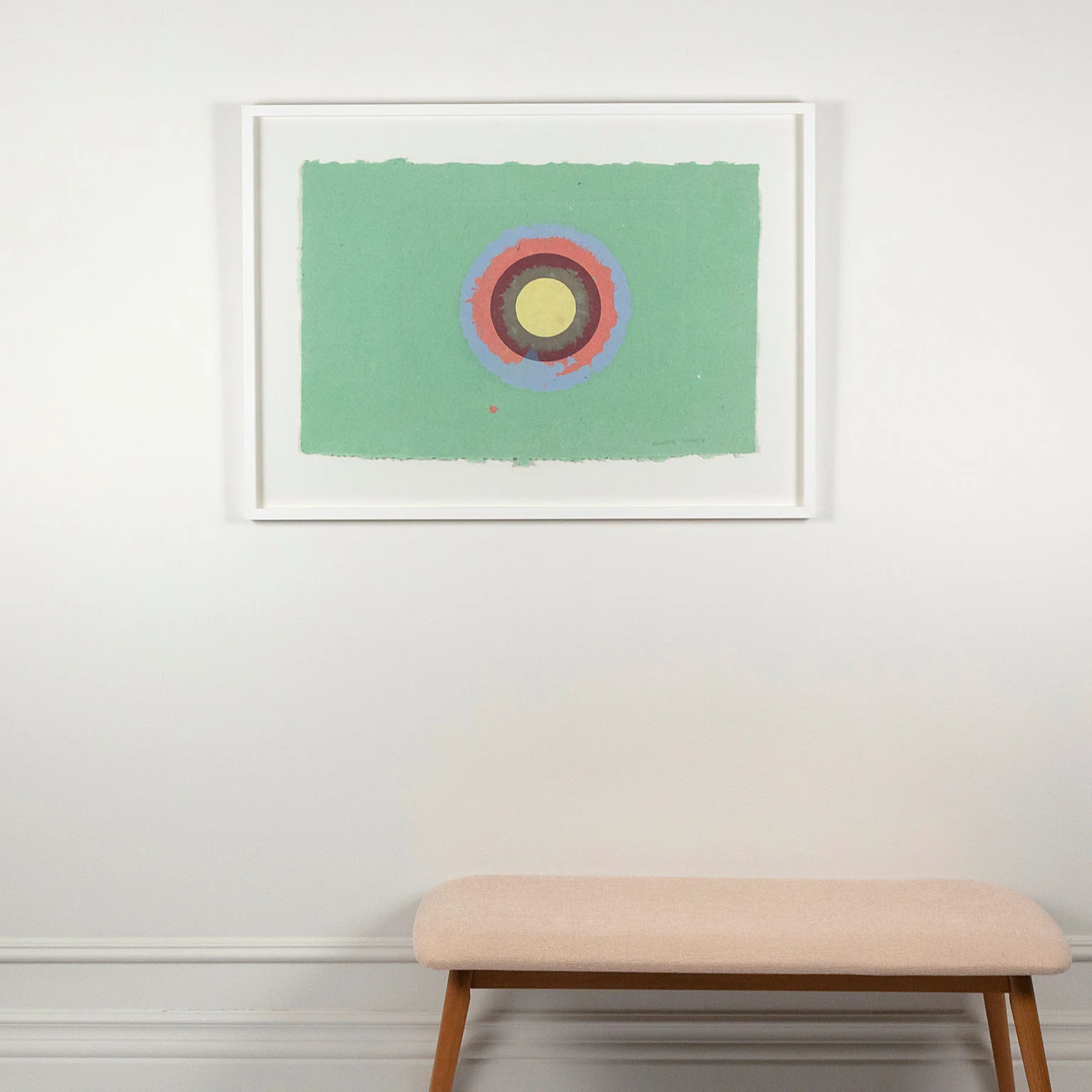
This example from the Circle II Series is a paradigm of Noland's work at Tyler Graphics. The work consists of five layers of colored pulp combined with lithography printing, showcasing his mastery of technique and composition.
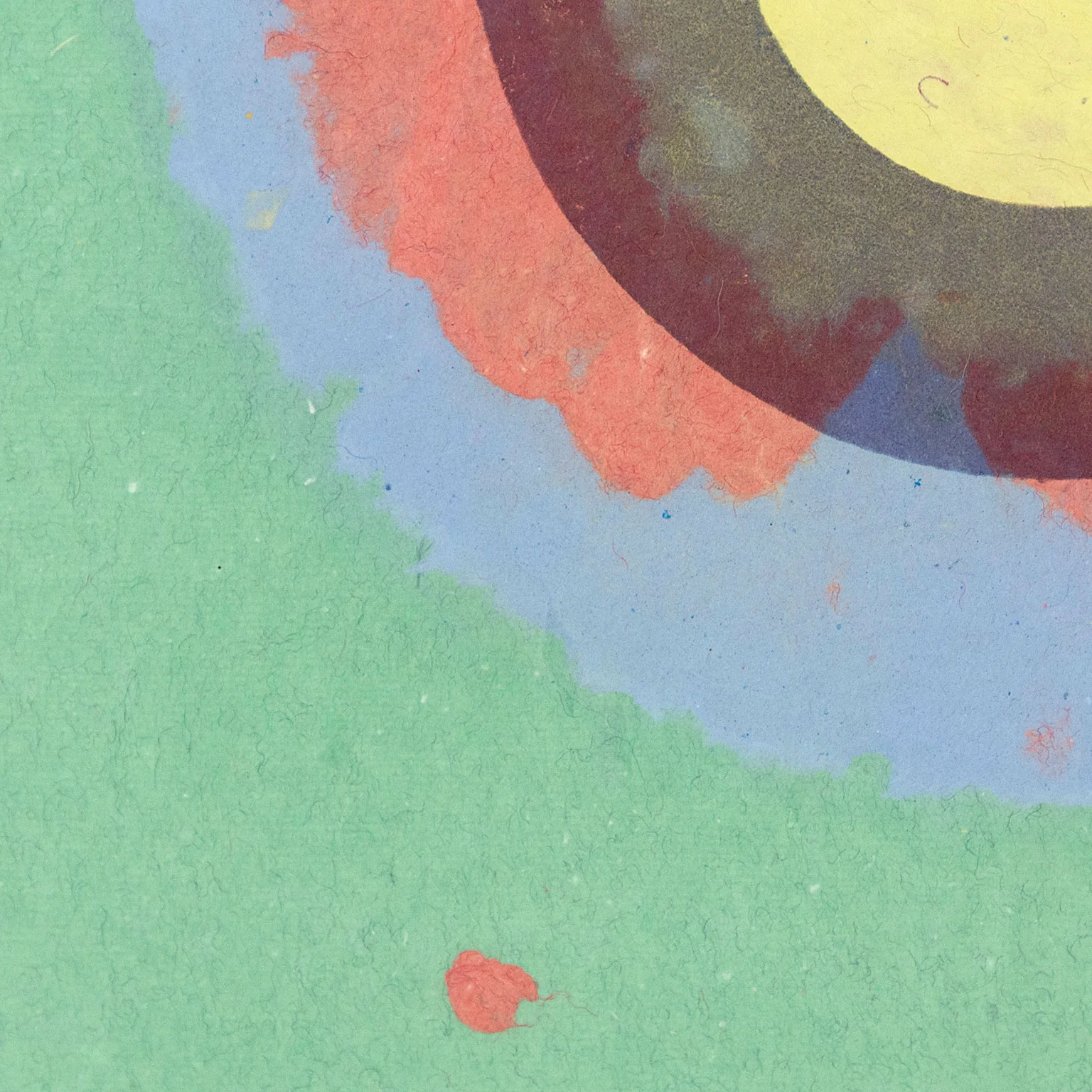
Each ring or circle in the composition was created using molds filled with color Noland would add by hand. He embraced this technique because of its physicality and intimacy. In contrast to painting, where the brush is the between the artist and composition, this method is truly "hands-on".
Noland is best known for his targets, also known as concentric circles, which stand out as some of the most iconic and sought-after works from his career. His auction record of $4.25 million is for this dynamic target entitled "Rocker" from 1958.
Regardless of the medium, this piece serves as a fine example of one of Noland's cherished targets, as well as a treasure from his experiments with creating monotypes.
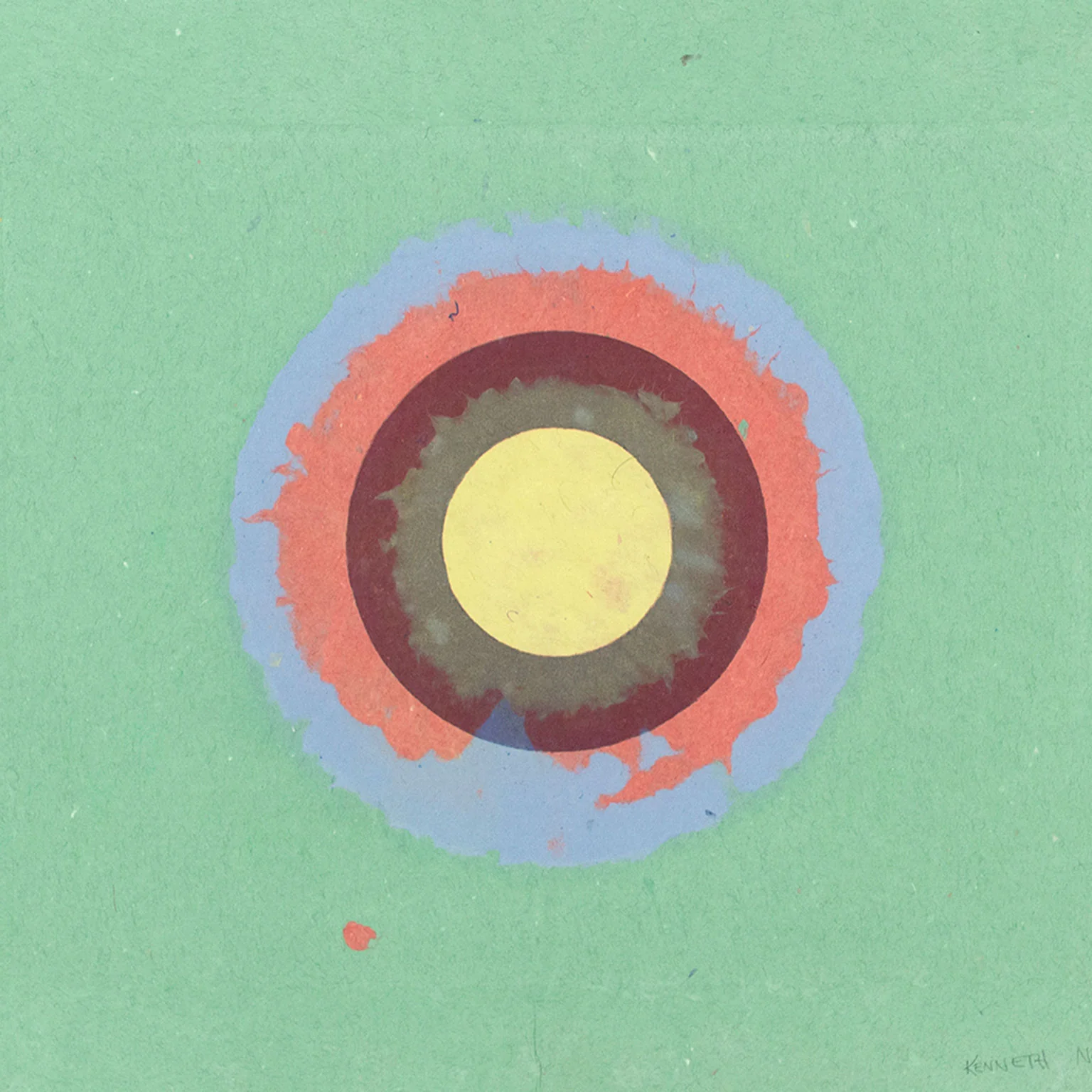
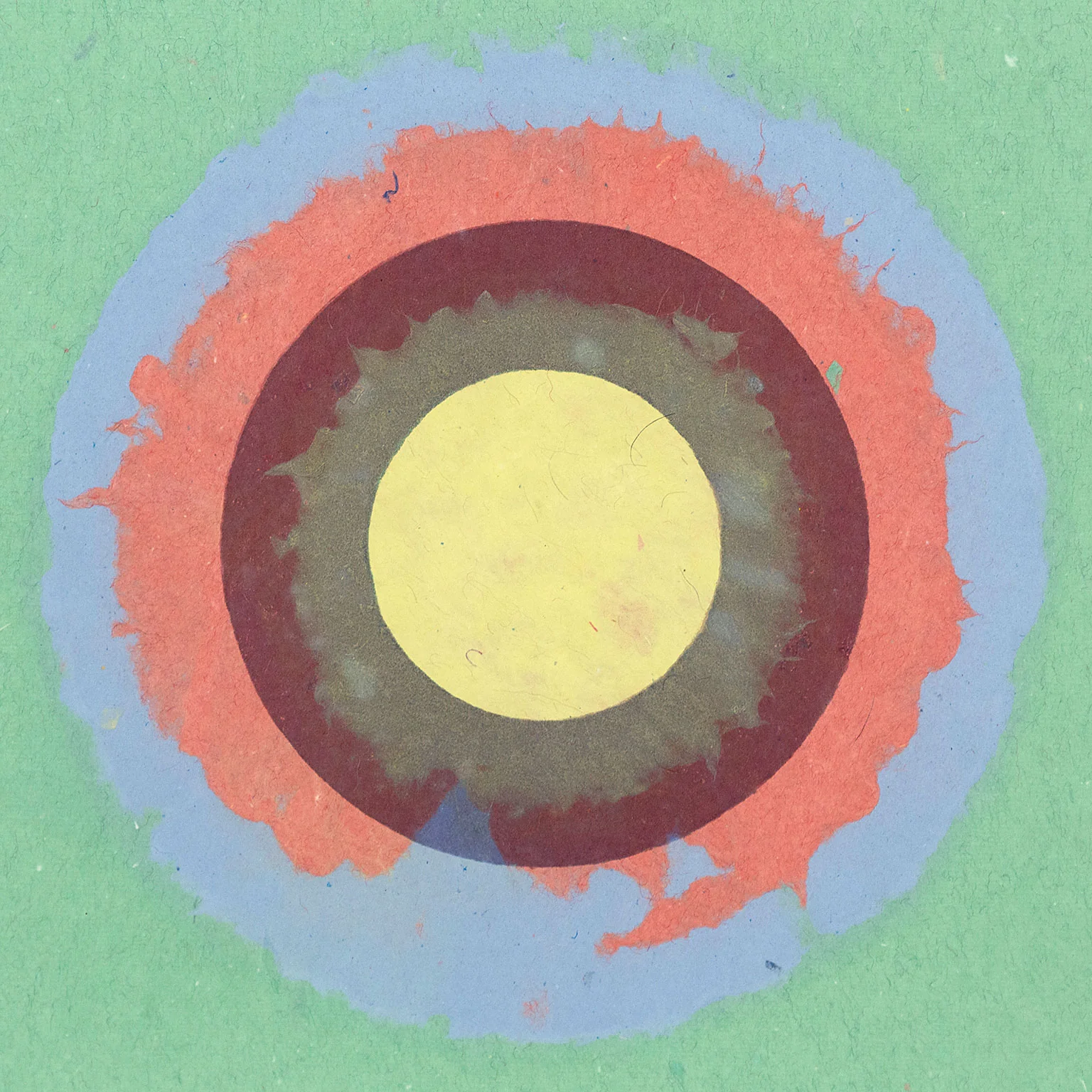
As a preeminent figure in Color Field exploration, Noland consistently showcases the dynamic interplay of color with its surroundings. His nuance is apparent in this piece, with the lush sea foam background presenting a gentle yet striking contrast to the delicate buttercream center and subsequent bands. The largest rings—soft periwinkle, coral, and deep Bordeaux—appear to blend, creating an incredible illusion of depth.
Questions about this piece? Contact us or call +1.416.704.1720
Visit our Toronto gallery on Thursdays or by appointment.
"Circle II" (Sea Foam Circle II)
Handmade paper composed of five layers of colored paper pulp with monotype lithograph printing
USA, 1978
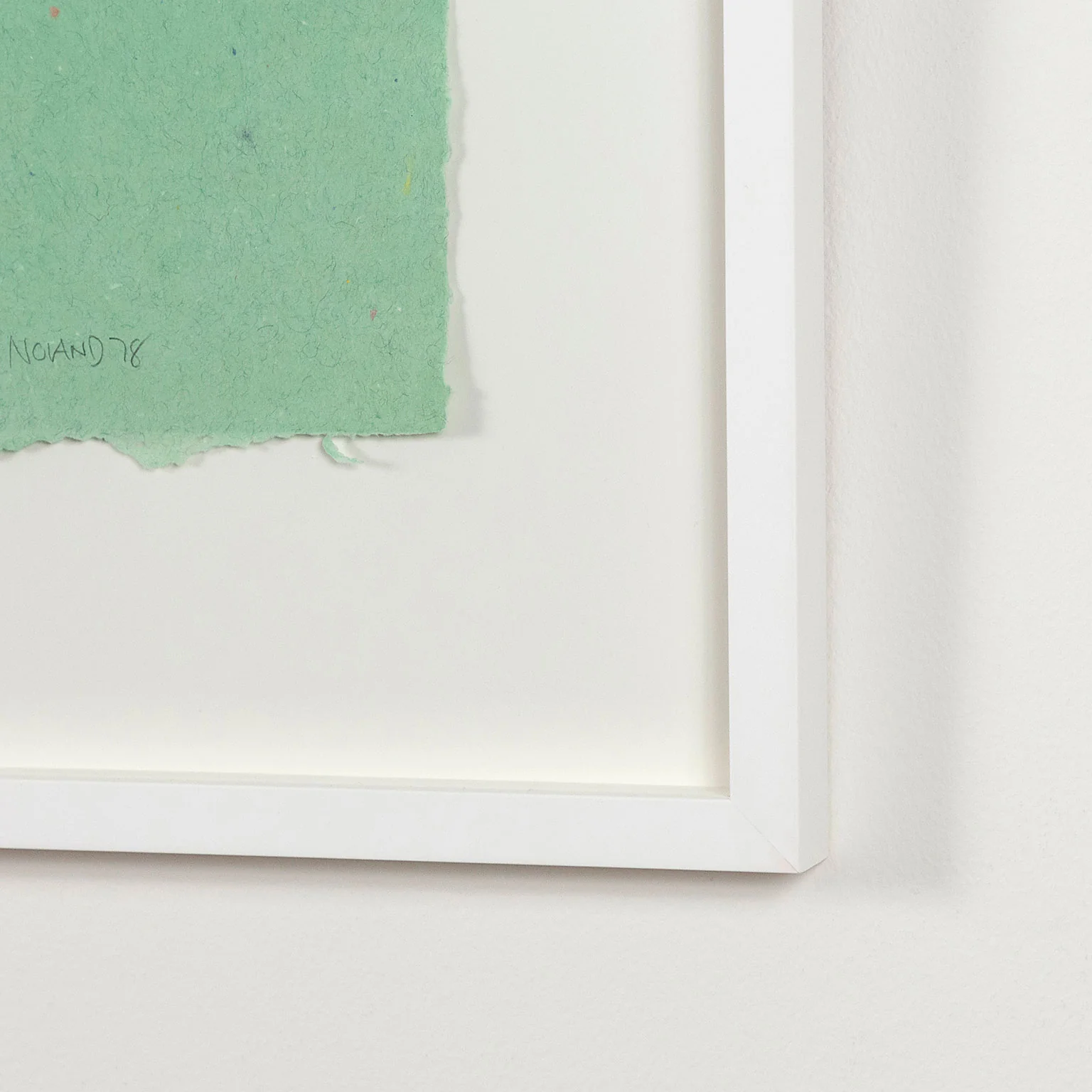
Signed and dated by the artist, bottom right
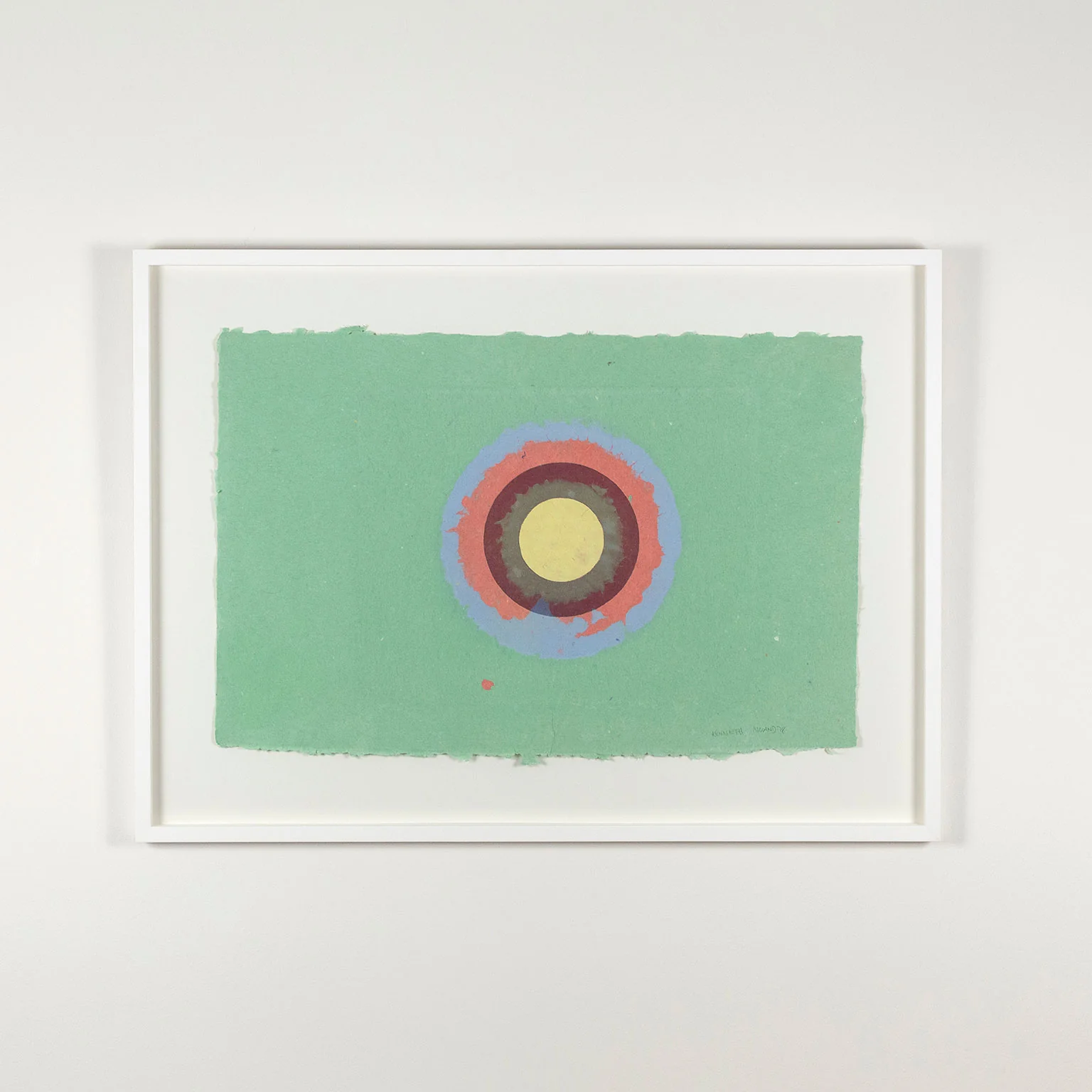
21"H 32"W (work, deckled edges)
32"H 42"W (Framed)
Framed with museum glass
Very good condition.
Literature: Architectural Digest, April 2006
More Images



KENNETH NOLAND "SEA FOAM CIRCLE II", 1978
Kenneth Noland (1924 – 2010) is one of the most important artists and contributors to the evolution of American abstraction. He is one of the most beloved figures in the Color-Field movement.
Unlike many of his contemporaries, such as Helen Frankenthaler and Sam Gilliam, Noland was not interested in printmaking until later in his career. And once Noland began collaborating with the printmakers at Tyler Graphics (and other studios) he was more interested in using their applications to make unique one-of-a-kind artworks.
From April to August 1978, Noland had an intense and fruitful period of papermaking and printmaking at Tyler Graphics in Bedford, New York. During his time there he began with 30 colors (stored in buckets) that he turned into around 100 that appear in his circle or striped monotypes.
This example from the Circle II Series is a paradigm of Noland's work at Tyler Graphics. The work consists of five layers of colored pulp combined with lithography printing, showcasing his mastery of technique and composition.
Each ring or circle in the composition was created using molds filled with color Noland would add by hand. He embraced this technique because of its physicality and intimacy. In contrast to painting, where the brush is the between the artist and composition, this method is truly "hands-on".
Noland is best known for his targets, also known as concentric circles, which stand out as some of the most iconic and sought-after works from his career. His auction record of $4.25 million is for this dynamic target entitled "Rocker" from 1958.
Regardless of the medium, this piece serves as a fine example of one of Noland's cherished targets, as well as a treasure from his experiments with creating monotypes.
As a preeminent figure in Color Field exploration, Noland consistently showcases the dynamic interplay of color with its surroundings. His nuance is apparent in this piece, with the lush sea foam background presenting a gentle yet striking contrast to the delicate buttercream center and subsequent bands. The largest rings—soft periwinkle, coral, and deep Bordeaux—appear to blend, creating an incredible illusion of depth.
Questions about this piece? Contact us or call +1.416.704.1720
Visit our Toronto gallery on Thursdays or by appointment.
"Circle II" (Sea Foam Circle II)
Handmade paper composed of five layers of colored paper pulp with monotype lithograph printing
USA, 1978
Signed and dated by the artist, bottom right
21"H 32"W (work, deckled edges)
32"H 42"W (Framed)
Framed with museum glass
Very good condition.
Literature: Architectural Digest, April 2006
Product Information
Product Information
Shipping & Returns
Shipping & Returns
Description
Kenneth Noland (1924 – 2010) is one of the most important artists and contributors to the evolution of American abstraction. He is one of the most beloved figures in the Color-Field movement.
Unlike many of his contemporaries, such as Helen Frankenthaler and Sam Gilliam, Noland was not interested in printmaking until later in his career. And once Noland began collaborating with the printmakers at Tyler Graphics (and other studios) he was more interested in using their applications to make unique one-of-a-kind artworks.
From April to August 1978, Noland had an intense and fruitful period of papermaking and printmaking at Tyler Graphics in Bedford, New York. During his time there he began with 30 colors (stored in buckets) that he turned into around 100 that appear in his circle or striped monotypes.
This example from the Circle II Series is a paradigm of Noland's work at Tyler Graphics. The work consists of five layers of colored pulp combined with lithography printing, showcasing his mastery of technique and composition.
Each ring or circle in the composition was created using molds filled with color Noland would add by hand. He embraced this technique because of its physicality and intimacy. In contrast to painting, where the brush is the between the artist and composition, this method is truly "hands-on".
Noland is best known for his targets, also known as concentric circles, which stand out as some of the most iconic and sought-after works from his career. His auction record of $4.25 million is for this dynamic target entitled "Rocker" from 1958.
Regardless of the medium, this piece serves as a fine example of one of Noland's cherished targets, as well as a treasure from his experiments with creating monotypes.
As a preeminent figure in Color Field exploration, Noland consistently showcases the dynamic interplay of color with its surroundings. His nuance is apparent in this piece, with the lush sea foam background presenting a gentle yet striking contrast to the delicate buttercream center and subsequent bands. The largest rings—soft periwinkle, coral, and deep Bordeaux—appear to blend, creating an incredible illusion of depth.
Questions about this piece? Contact us or call +1.416.704.1720
Visit our Toronto gallery on Thursdays or by appointment.
"Circle II" (Sea Foam Circle II)
Handmade paper composed of five layers of colored paper pulp with monotype lithograph printing
USA, 1978
Signed and dated by the artist, bottom right
21"H 32"W (work, deckled edges)
32"H 42"W (Framed)
Framed with museum glass
Very good condition.
Literature: Architectural Digest, April 2006