ROBERT MAPPLETHORPE "UNTITLED" COLLAGE 1968
Robert Mapplethorpe's (1946-1989) place in the canon was earned from his incredible output of images that ranged from beautiful to brutal.
Though known for his unrivalled output in photography, it was not Mapplethorpe's original intention to be a photographer. Between 1963 and 1969, he attended Pratt Institute in Brooklyn, studying advertising then graphic design and fine art. During these formative years, he worked using collage, incorporating imagery from books, magazines (often pornographic), found objects, and painting.
He eventually turned to using polaroids in his work, in order to have more control and freedom in the creation of image making. He also experimented with drawings and three-dimensional sculptures or assemblages in this early period. This work is notable for its strong combination of both elements.
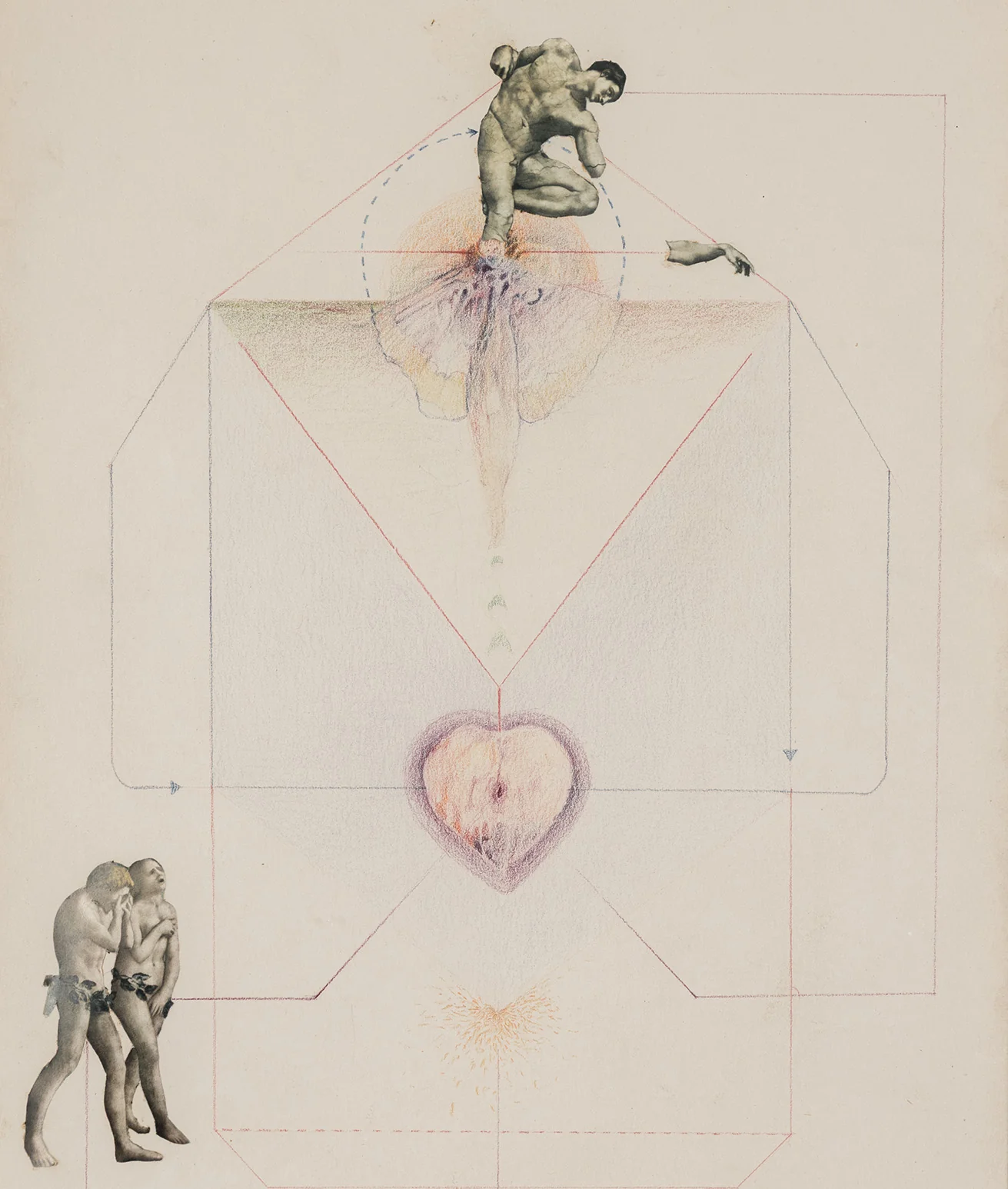
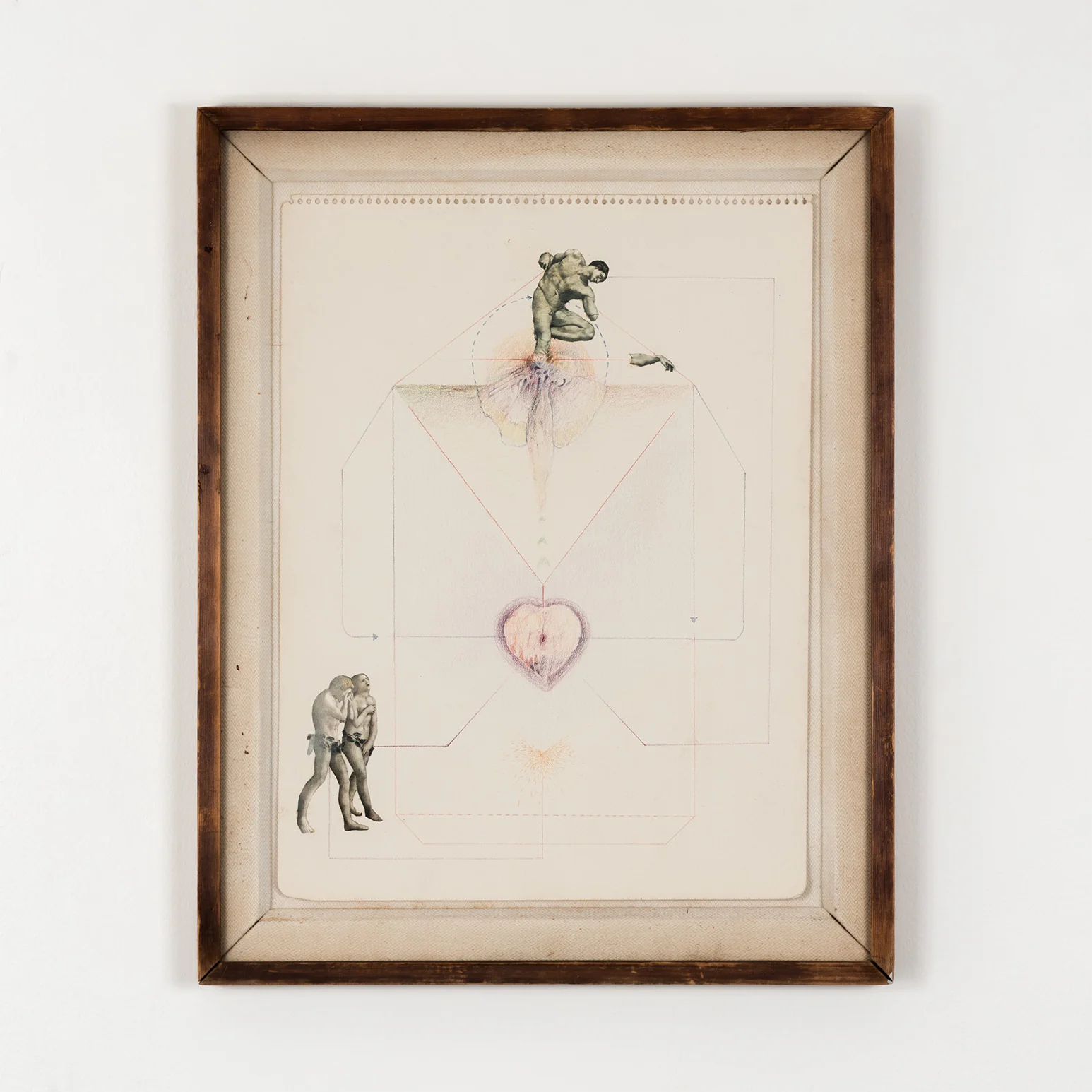
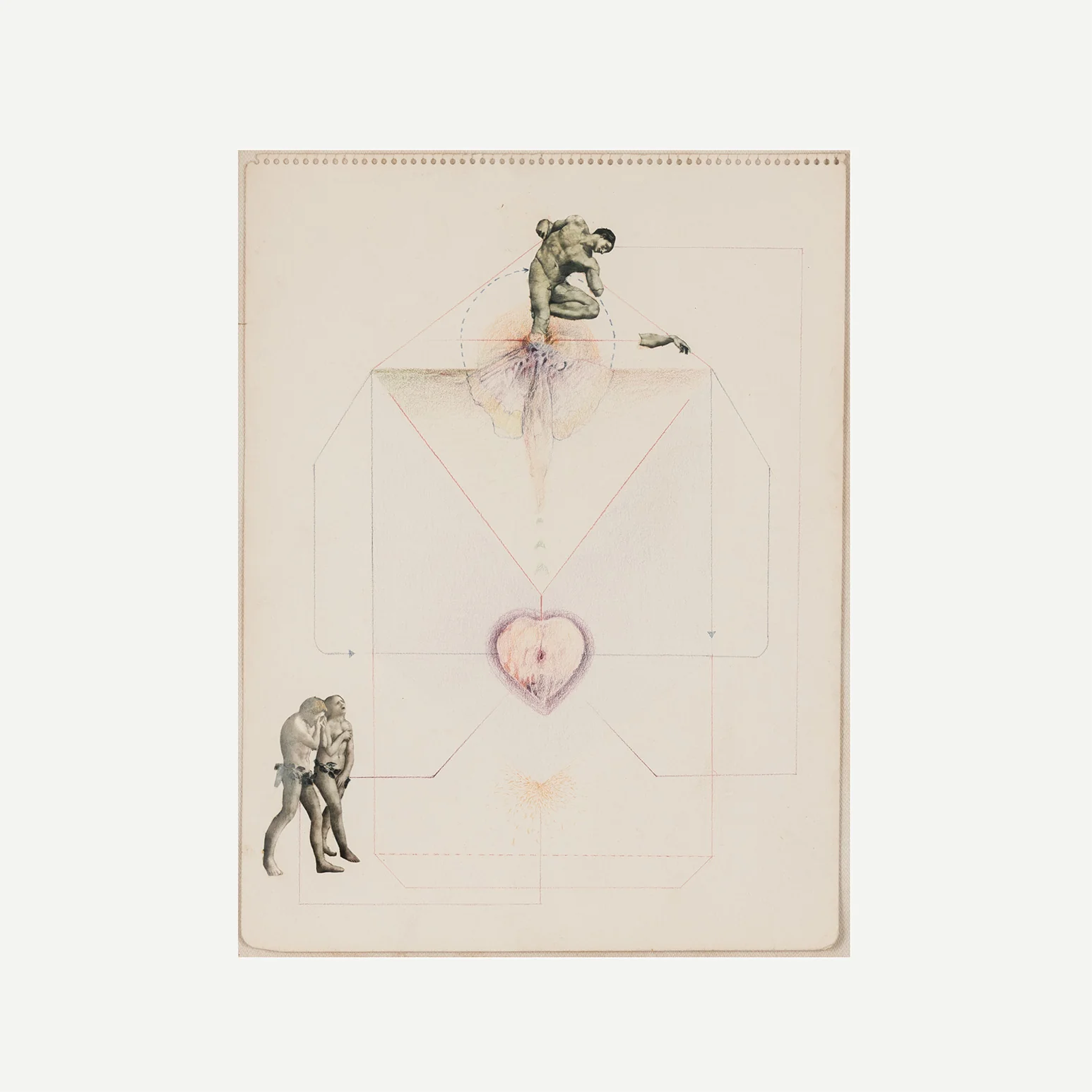
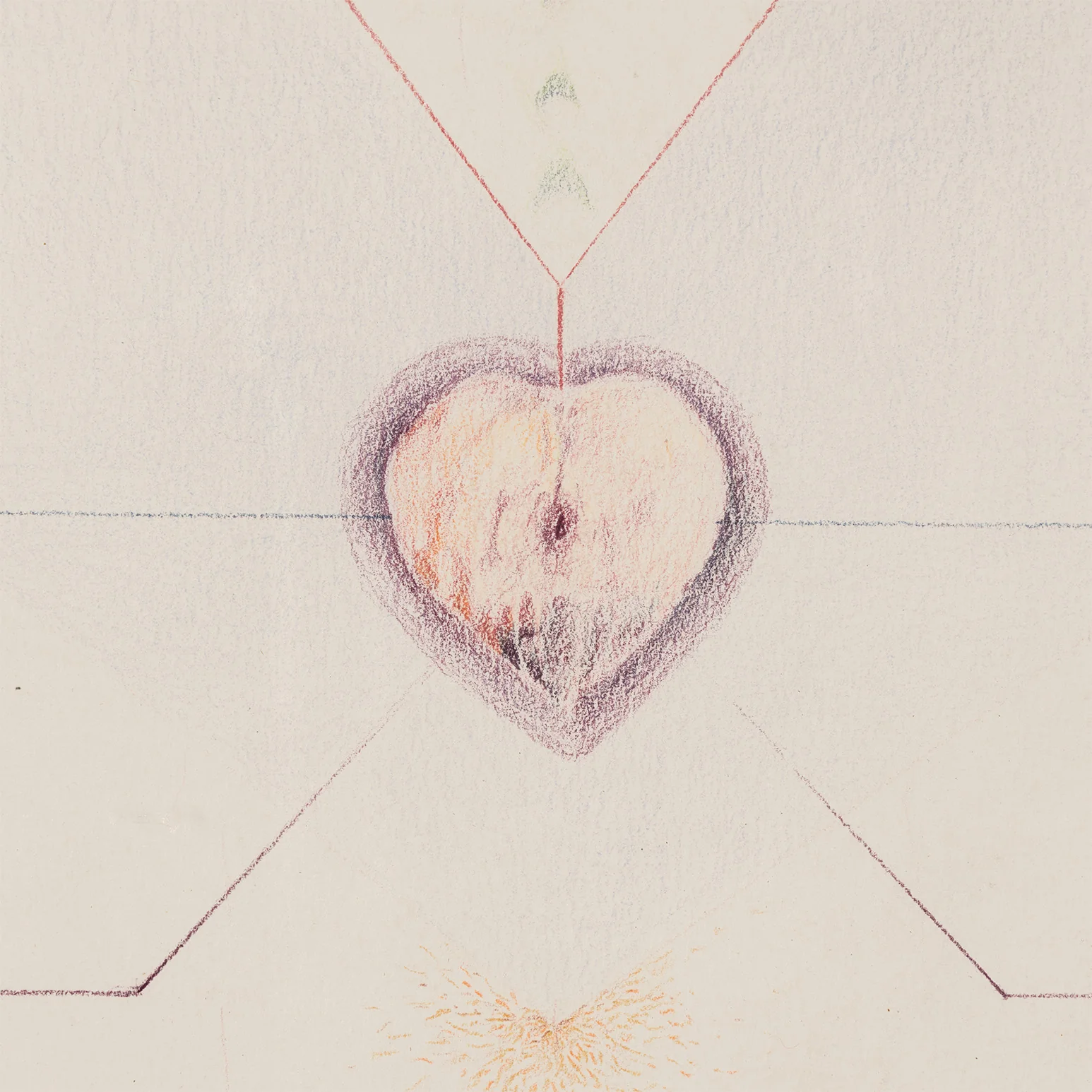
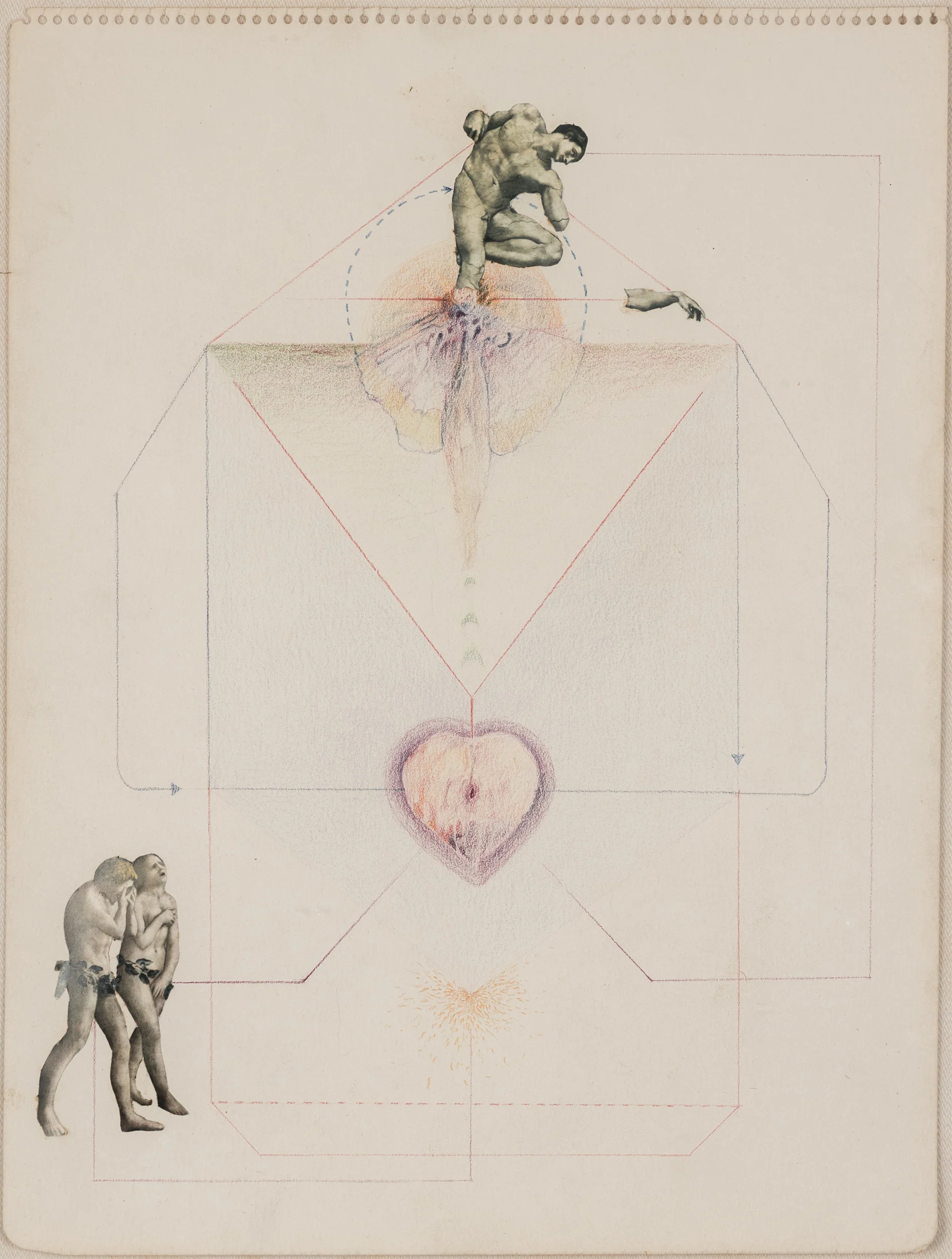
In the centre of this untitled collage, Mapplethrope has drawn a heart with what looks like a belly button in its centre. Branching out of this middle point are systematic lines, some with arrows, reminiscent of a diagram or train map.
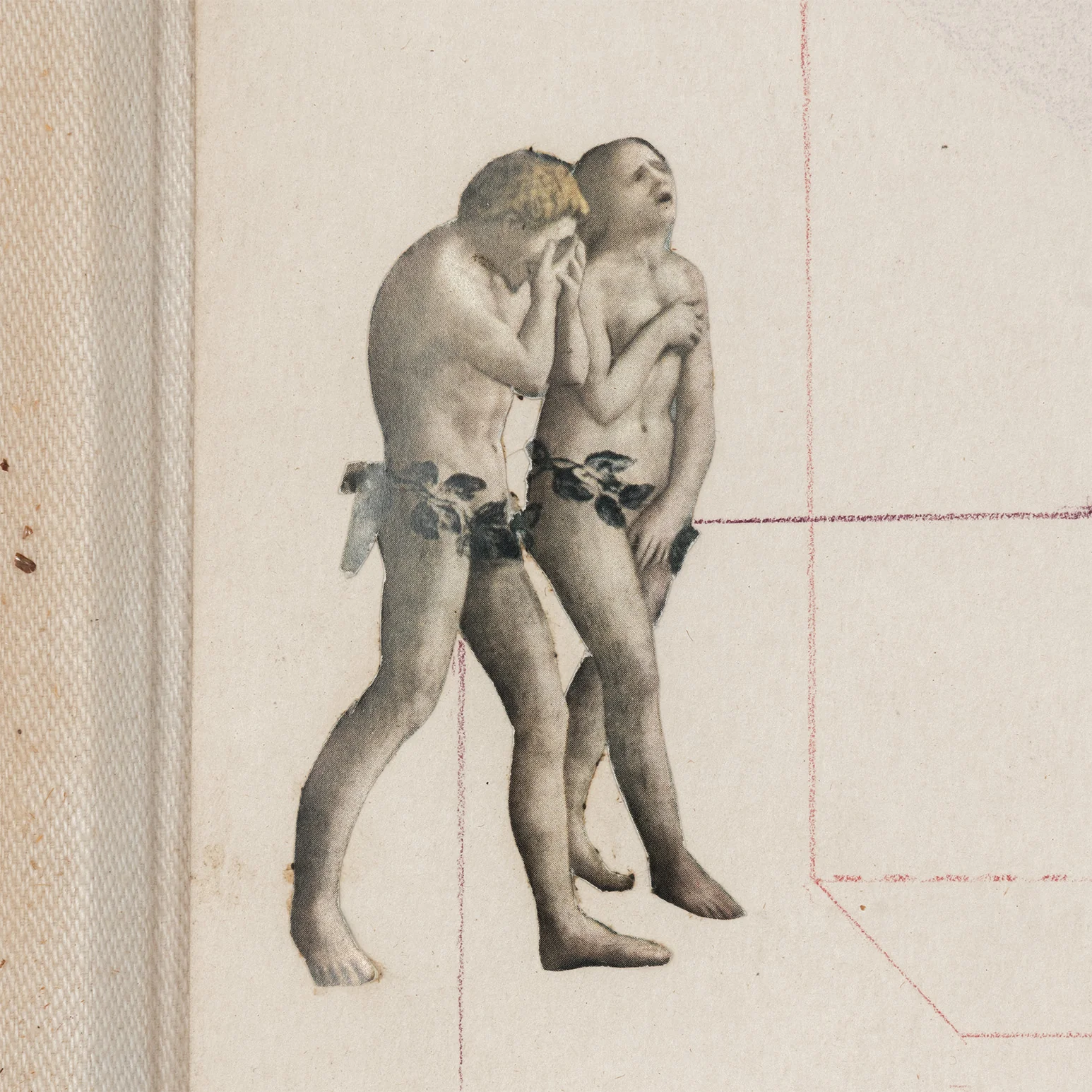
At the bottom left we find Adam and Eve, covering themselves up with leaves, and overcome with shame. The figures are clipped from an image of "Expulsion from the Garden of Eden," by Masaccio, in the Brancacci Chapel in Florence. The fresco has an intriguing history related to censorship, a notion that Mapplethorpe was no doubt interested in.
The original work was completed around 1425, depicting nude figures. In the 1700s, under Cosimo III de Medici's rule, the fresco was censored with foliage to conceal exposed genitals. During it's restoration in the 1980s, the leaves were removed and the figures were restored to their original nude states. We must wonder if Mapplethorpe chose this censored version of the fresco on purpose, as it is most always depicted with both versions in historical publications.
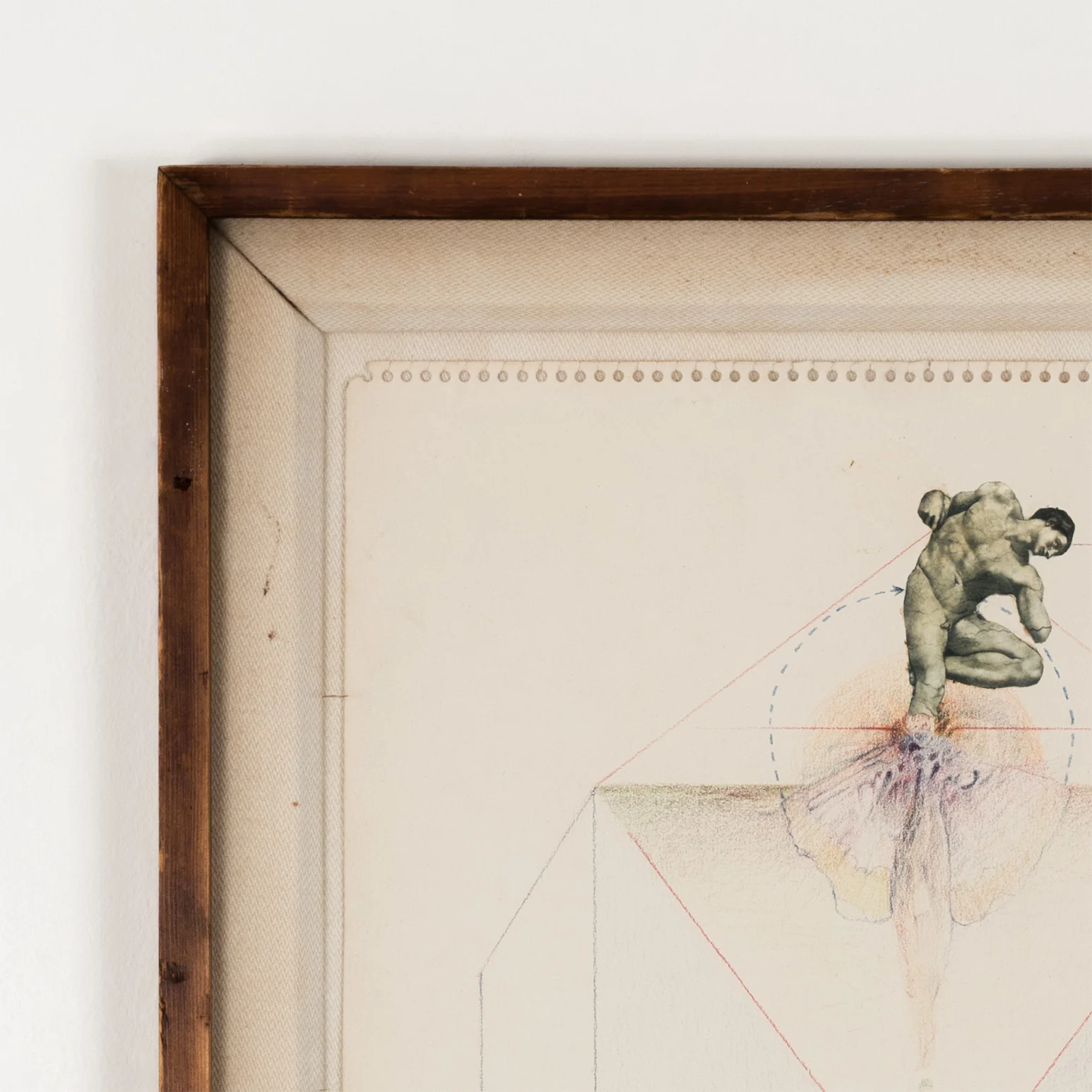
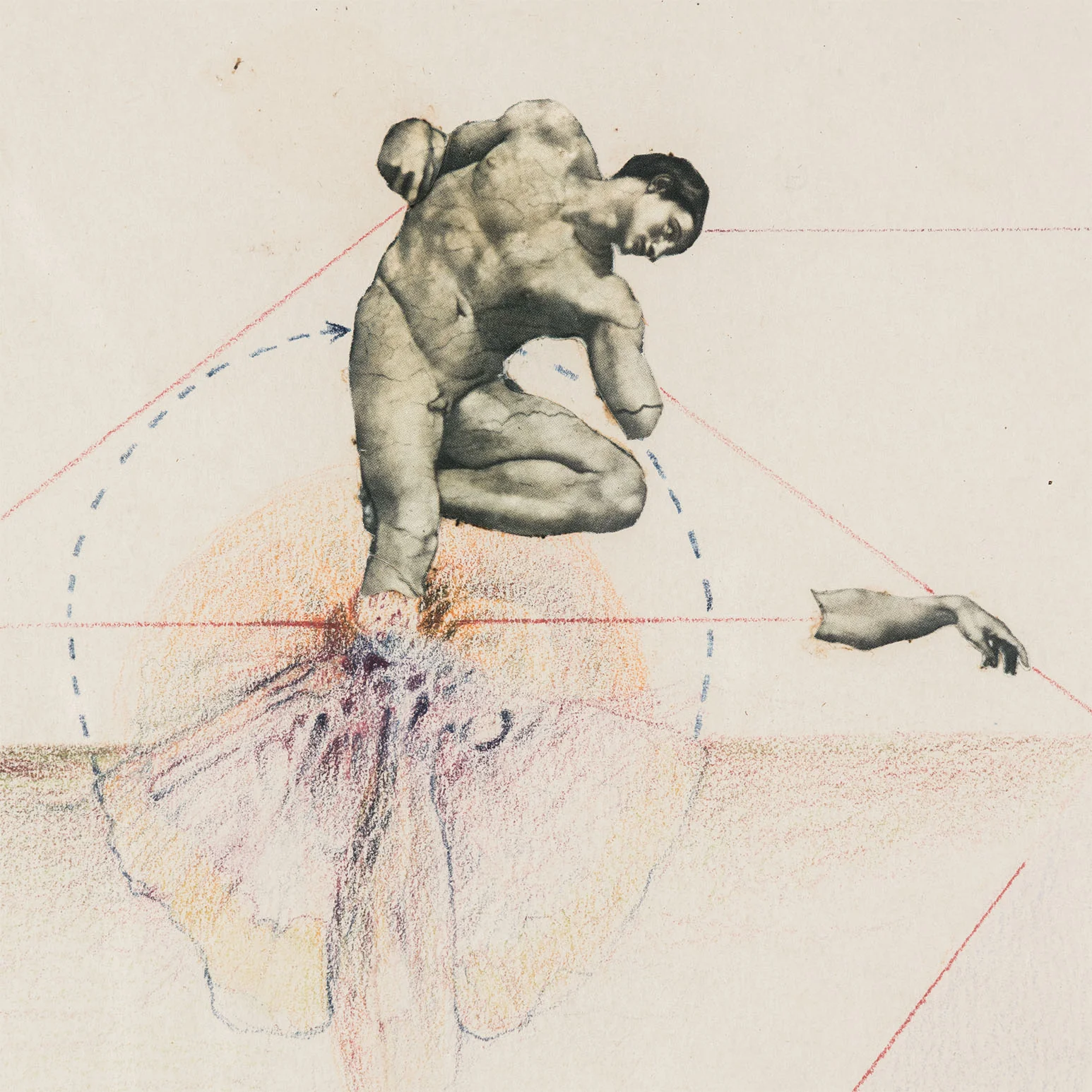
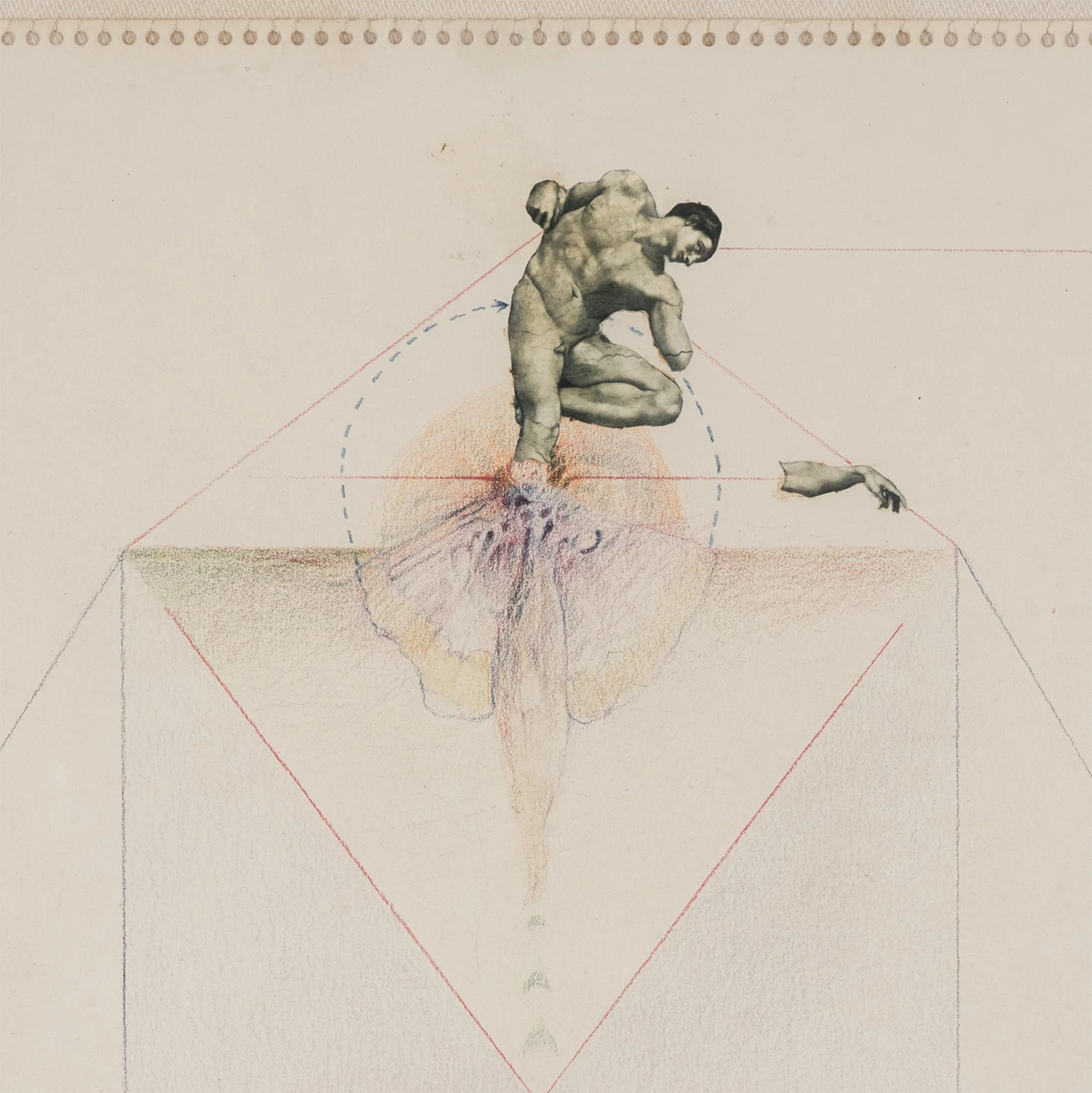
At the top of the page is a clipping from Michelangelo's rendition of Adam's creation, depicted in the Sistine Chapel. Mapplethorpe has applied Adam's splayed body into a drawn shape, that resembles a horseshoe crab, a moth, or a brain. His reaching forearm is severed from his torso, pointing down at an angle, with a drawn line following the direction of his first finger. The collage represents both Adam's creation and his downfall, an interesting juxtaposition for Mapplethorpe to have included.
Every detail in this work was carefully selected and applied, every line and element encouraging the viewers eyes to keep moving. Mapplethorpe's fascination with mysticism, esotericism, and worship can be inferred from the elements that he included in his unique montaged compositions.
Considered today as an essential part of his oeuvre, a selection of Mapplethorpe's early works have been recently jointly acquired by the J. Paul Getty Museum and the LACMA in Los Angeles.
In 2016, museums mounted the largest retrospective of the artist's to date, and one of the corresponding catalogues (Robert Mapplethorpe: The Archive published by the Getty Research Institute) is the first publication devoted to Mapplethorpe's formative period.
Mapplethorpe's work can be found in major museums globally including the Art Institute of Chicago, The Solomon R. Guggenheim Museum, the MET and the MOMA in New York, among many others.
Questions about this piece? Contact us or call +1.416.704.1720.
Visit our Toronto gallery on Thursdays or by appointment.
"Untitled"
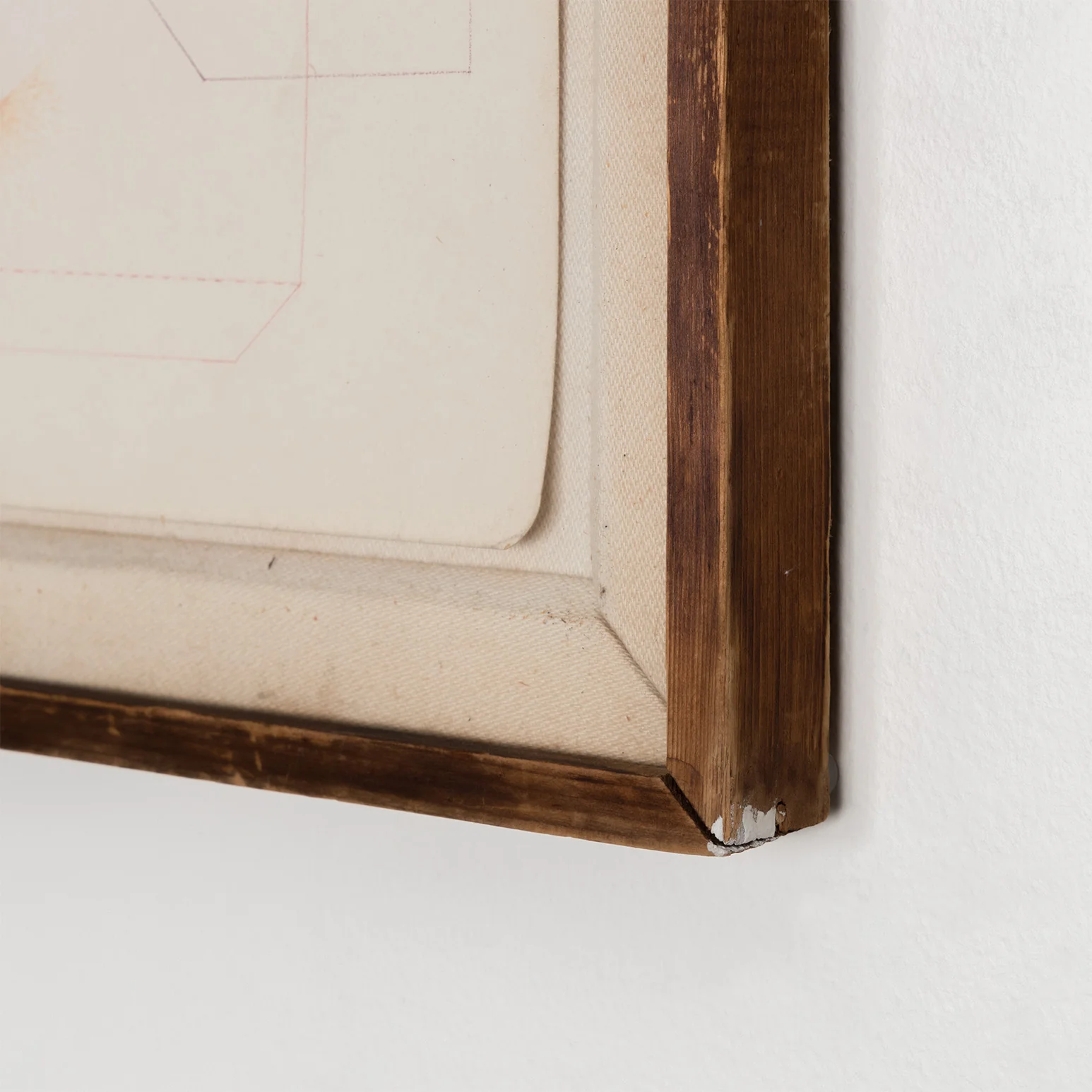
Collage in artist-made frame
USA, 1968
16"H 12"W (sheet)
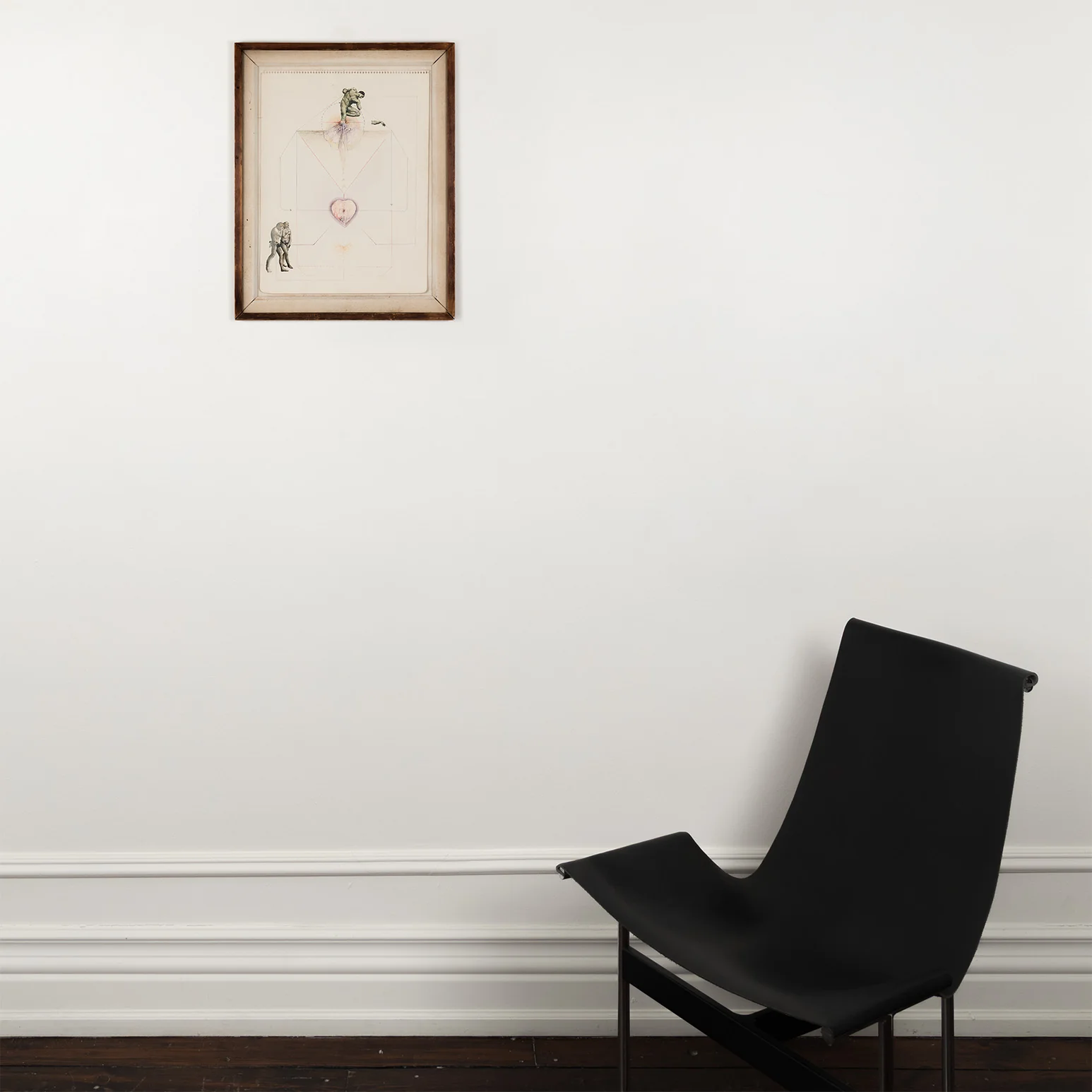
19.75"H 15.5"W (framed)
A copy of the letter of authenticity from the artist's estate is included.
Original: $32,000.00
-70%$32,000.00
$9,600.00More Images
ROBERT MAPPLETHORPE "UNTITLED" COLLAGE 1968
Robert Mapplethorpe's (1946-1989) place in the canon was earned from his incredible output of images that ranged from beautiful to brutal.
Though known for his unrivalled output in photography, it was not Mapplethorpe's original intention to be a photographer. Between 1963 and 1969, he attended Pratt Institute in Brooklyn, studying advertising then graphic design and fine art. During these formative years, he worked using collage, incorporating imagery from books, magazines (often pornographic), found objects, and painting.
He eventually turned to using polaroids in his work, in order to have more control and freedom in the creation of image making. He also experimented with drawings and three-dimensional sculptures or assemblages in this early period. This work is notable for its strong combination of both elements.
In the centre of this untitled collage, Mapplethrope has drawn a heart with what looks like a belly button in its centre. Branching out of this middle point are systematic lines, some with arrows, reminiscent of a diagram or train map.
At the bottom left we find Adam and Eve, covering themselves up with leaves, and overcome with shame. The figures are clipped from an image of "Expulsion from the Garden of Eden," by Masaccio, in the Brancacci Chapel in Florence. The fresco has an intriguing history related to censorship, a notion that Mapplethorpe was no doubt interested in.
The original work was completed around 1425, depicting nude figures. In the 1700s, under Cosimo III de Medici's rule, the fresco was censored with foliage to conceal exposed genitals. During it's restoration in the 1980s, the leaves were removed and the figures were restored to their original nude states. We must wonder if Mapplethorpe chose this censored version of the fresco on purpose, as it is most always depicted with both versions in historical publications.
At the top of the page is a clipping from Michelangelo's rendition of Adam's creation, depicted in the Sistine Chapel. Mapplethorpe has applied Adam's splayed body into a drawn shape, that resembles a horseshoe crab, a moth, or a brain. His reaching forearm is severed from his torso, pointing down at an angle, with a drawn line following the direction of his first finger. The collage represents both Adam's creation and his downfall, an interesting juxtaposition for Mapplethorpe to have included.
Every detail in this work was carefully selected and applied, every line and element encouraging the viewers eyes to keep moving. Mapplethorpe's fascination with mysticism, esotericism, and worship can be inferred from the elements that he included in his unique montaged compositions.
Considered today as an essential part of his oeuvre, a selection of Mapplethorpe's early works have been recently jointly acquired by the J. Paul Getty Museum and the LACMA in Los Angeles.
In 2016, museums mounted the largest retrospective of the artist's to date, and one of the corresponding catalogues (Robert Mapplethorpe: The Archive published by the Getty Research Institute) is the first publication devoted to Mapplethorpe's formative period.
Mapplethorpe's work can be found in major museums globally including the Art Institute of Chicago, The Solomon R. Guggenheim Museum, the MET and the MOMA in New York, among many others.
Questions about this piece? Contact us or call +1.416.704.1720.
Visit our Toronto gallery on Thursdays or by appointment.
"Untitled"
Collage in artist-made frame
USA, 1968
16"H 12"W (sheet)
19.75"H 15.5"W (framed)
A copy of the letter of authenticity from the artist's estate is included.
Product Information
Product Information
Shipping & Returns
Shipping & Returns
Description
Robert Mapplethorpe's (1946-1989) place in the canon was earned from his incredible output of images that ranged from beautiful to brutal.
Though known for his unrivalled output in photography, it was not Mapplethorpe's original intention to be a photographer. Between 1963 and 1969, he attended Pratt Institute in Brooklyn, studying advertising then graphic design and fine art. During these formative years, he worked using collage, incorporating imagery from books, magazines (often pornographic), found objects, and painting.
He eventually turned to using polaroids in his work, in order to have more control and freedom in the creation of image making. He also experimented with drawings and three-dimensional sculptures or assemblages in this early period. This work is notable for its strong combination of both elements.
In the centre of this untitled collage, Mapplethrope has drawn a heart with what looks like a belly button in its centre. Branching out of this middle point are systematic lines, some with arrows, reminiscent of a diagram or train map.
At the bottom left we find Adam and Eve, covering themselves up with leaves, and overcome with shame. The figures are clipped from an image of "Expulsion from the Garden of Eden," by Masaccio, in the Brancacci Chapel in Florence. The fresco has an intriguing history related to censorship, a notion that Mapplethorpe was no doubt interested in.
The original work was completed around 1425, depicting nude figures. In the 1700s, under Cosimo III de Medici's rule, the fresco was censored with foliage to conceal exposed genitals. During it's restoration in the 1980s, the leaves were removed and the figures were restored to their original nude states. We must wonder if Mapplethorpe chose this censored version of the fresco on purpose, as it is most always depicted with both versions in historical publications.
At the top of the page is a clipping from Michelangelo's rendition of Adam's creation, depicted in the Sistine Chapel. Mapplethorpe has applied Adam's splayed body into a drawn shape, that resembles a horseshoe crab, a moth, or a brain. His reaching forearm is severed from his torso, pointing down at an angle, with a drawn line following the direction of his first finger. The collage represents both Adam's creation and his downfall, an interesting juxtaposition for Mapplethorpe to have included.
Every detail in this work was carefully selected and applied, every line and element encouraging the viewers eyes to keep moving. Mapplethorpe's fascination with mysticism, esotericism, and worship can be inferred from the elements that he included in his unique montaged compositions.
Considered today as an essential part of his oeuvre, a selection of Mapplethorpe's early works have been recently jointly acquired by the J. Paul Getty Museum and the LACMA in Los Angeles.
In 2016, museums mounted the largest retrospective of the artist's to date, and one of the corresponding catalogues (Robert Mapplethorpe: The Archive published by the Getty Research Institute) is the first publication devoted to Mapplethorpe's formative period.
Mapplethorpe's work can be found in major museums globally including the Art Institute of Chicago, The Solomon R. Guggenheim Museum, the MET and the MOMA in New York, among many others.
Questions about this piece? Contact us or call +1.416.704.1720.
Visit our Toronto gallery on Thursdays or by appointment.
"Untitled"
Collage in artist-made frame
USA, 1968
16"H 12"W (sheet)
19.75"H 15.5"W (framed)
A copy of the letter of authenticity from the artist's estate is included.