SAM GILLIAM "CONFETTI HEX" RELIEF SCULPTURE, 1978
Sam Gilliam (1933–2022) is beloved as one of the 20th century's most important abstract artists. He was a true innovator in the evolution of American abstraction. Several groundbreaking techniques are credited to him, most notably removing the canvas from the stretcher and draping his paintings.
Born in Mississippi, Gilliam studied at the University of Louisville and later worked in Washington D.C. with the Washington Colour School among artists such as Morris Louis and Kenneth Noland.
Drapery, structure, texture and volume are just a few of the important elements that Gilliam’s practice confronts. Gilliam was consistently experimenting with structure and materiality, whether through his suspended drape paintings or his heavily layered collage/screenprints.
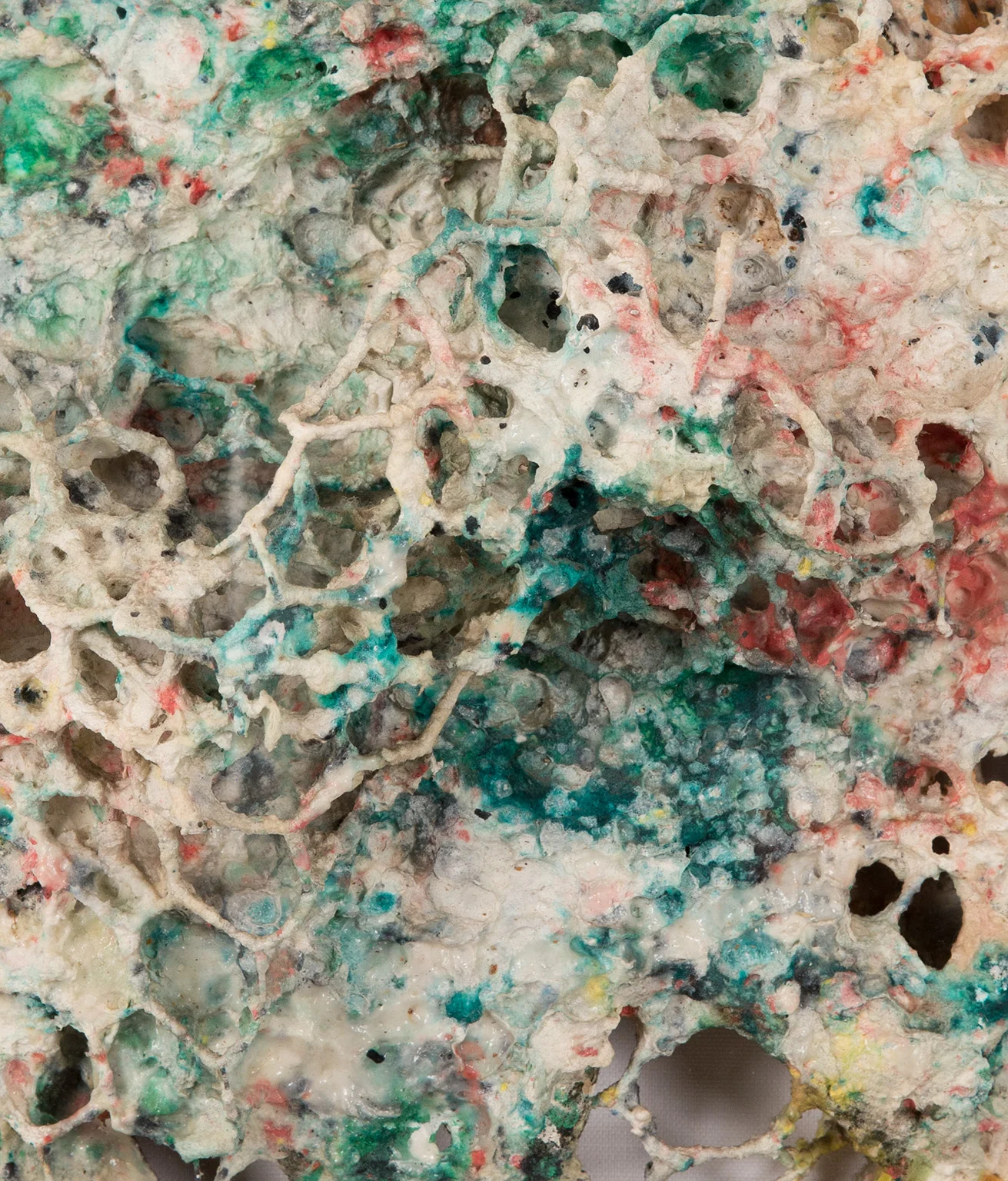
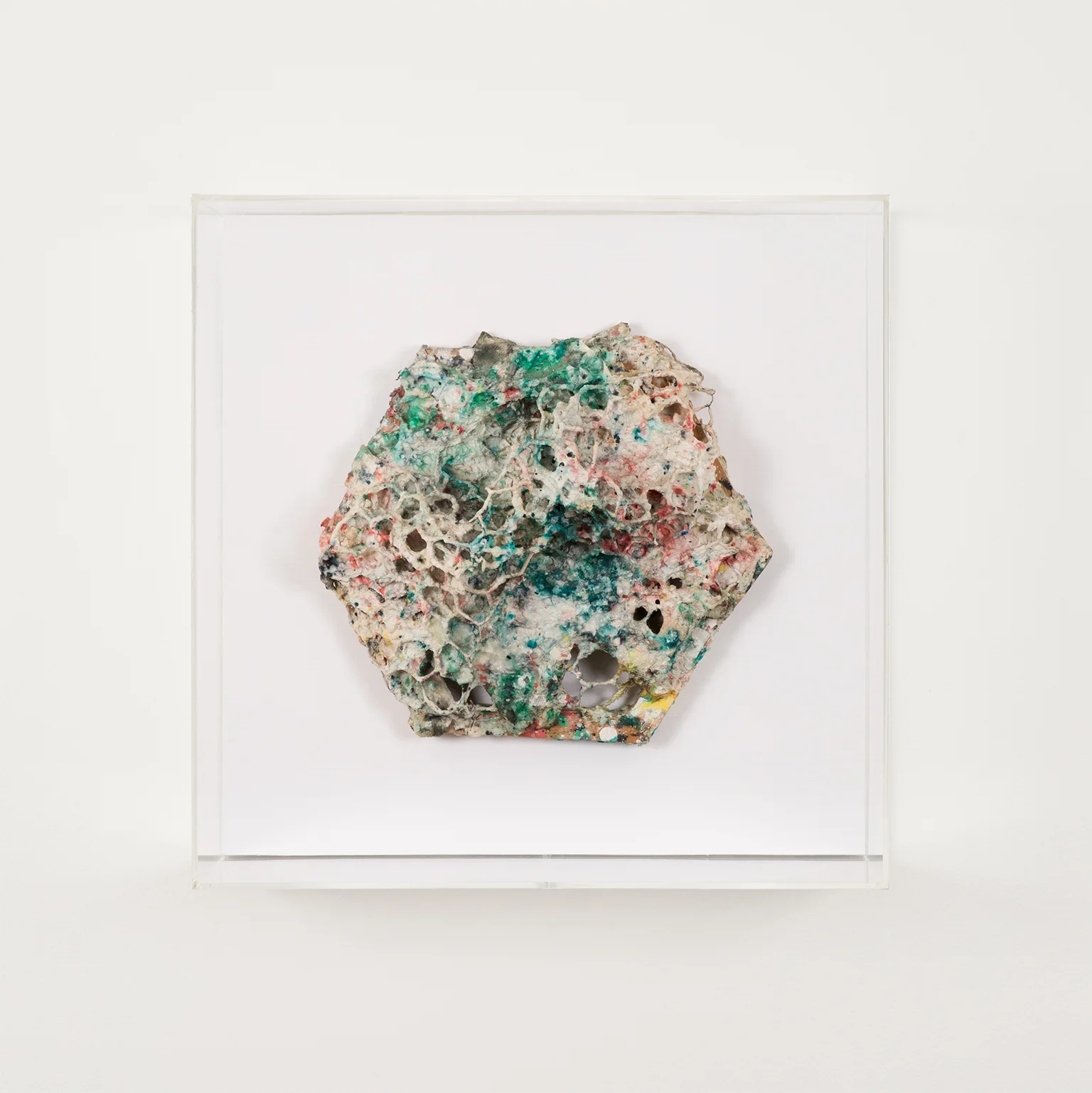
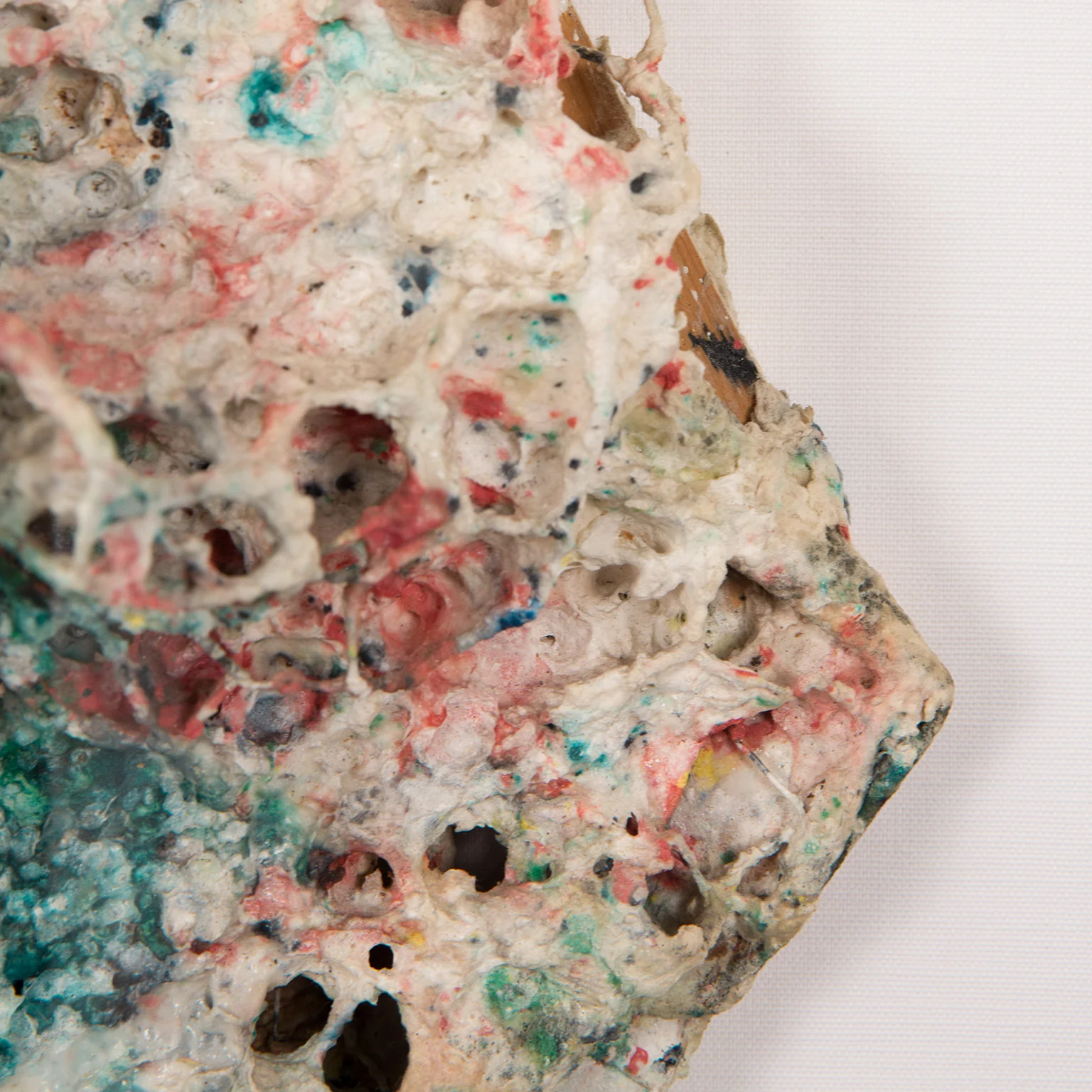
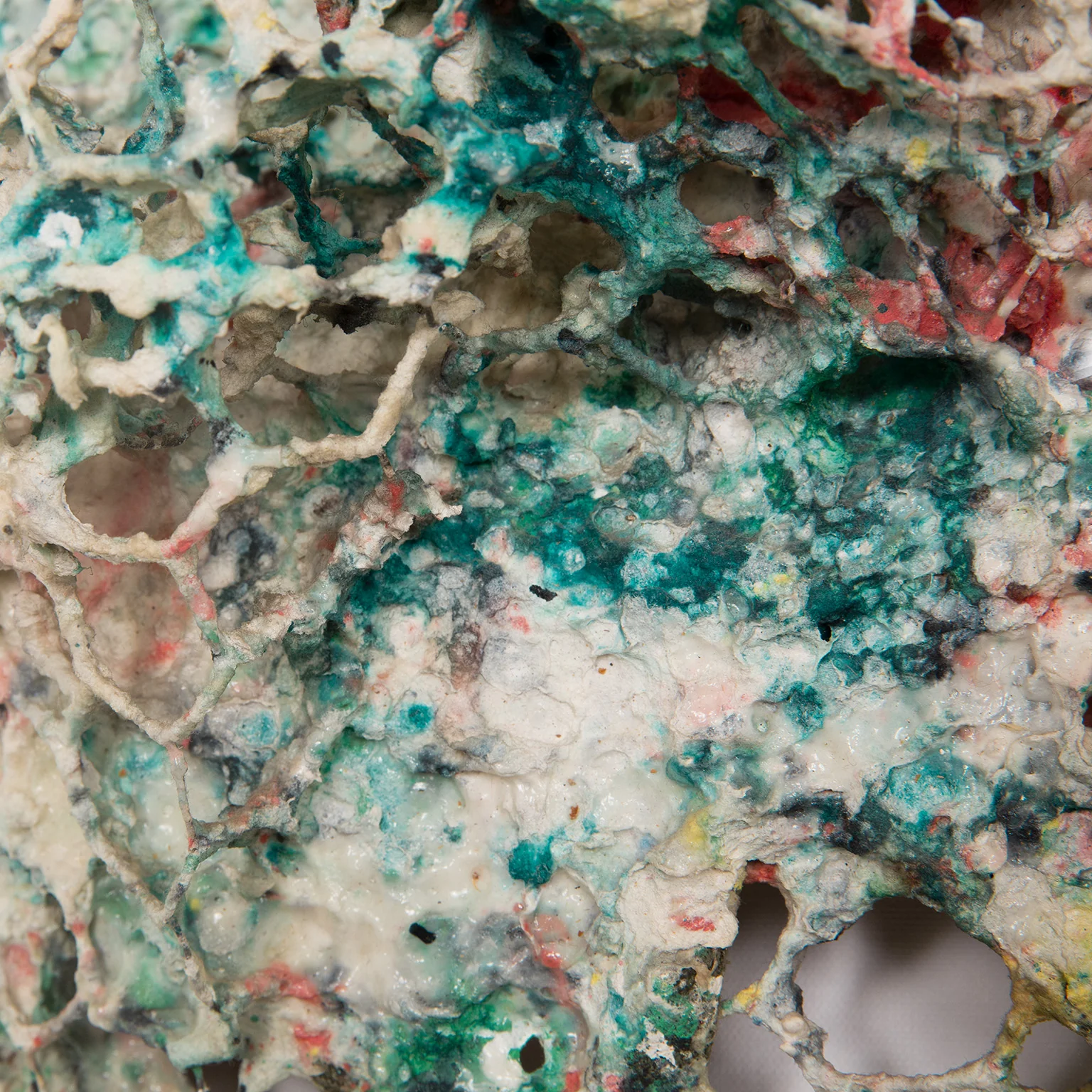
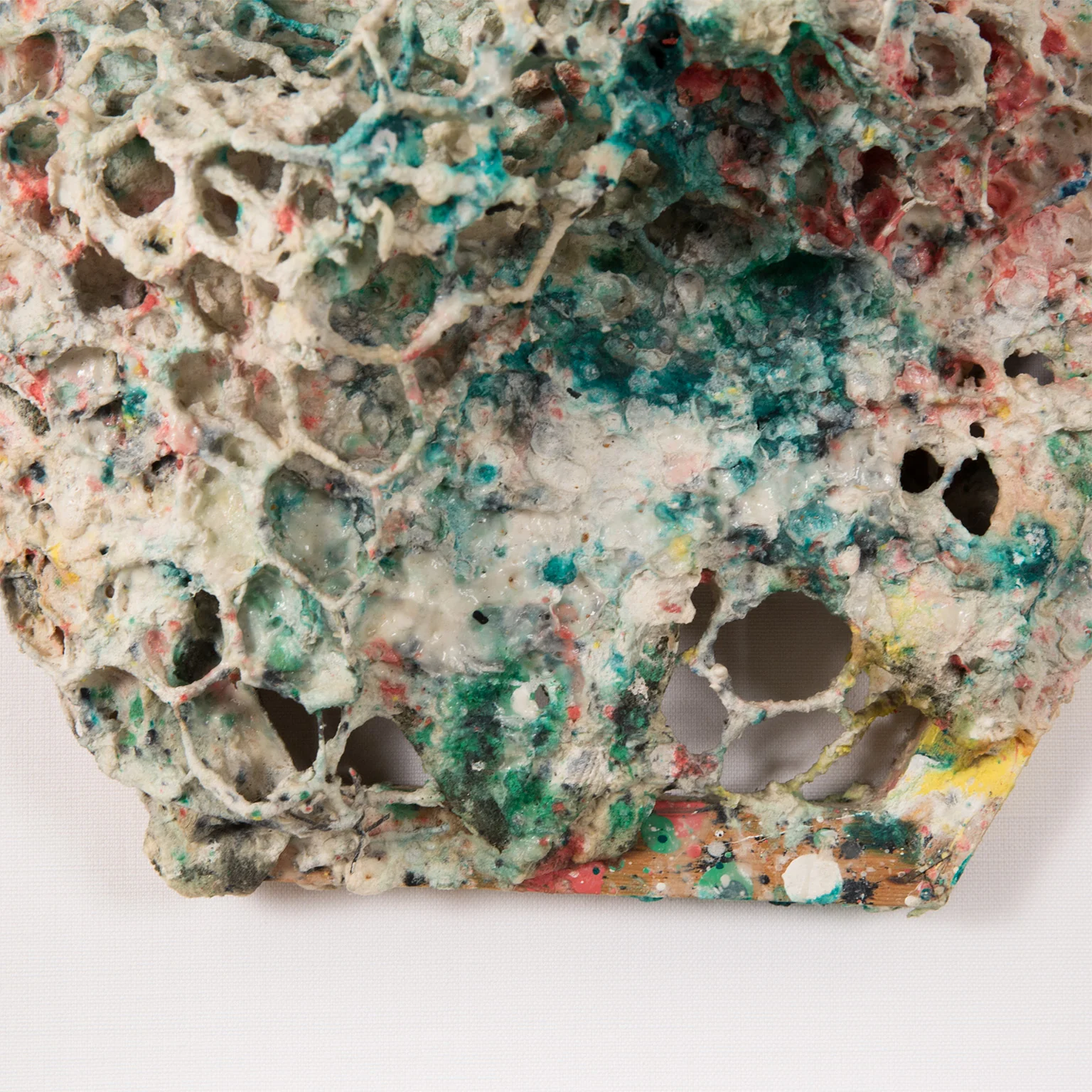
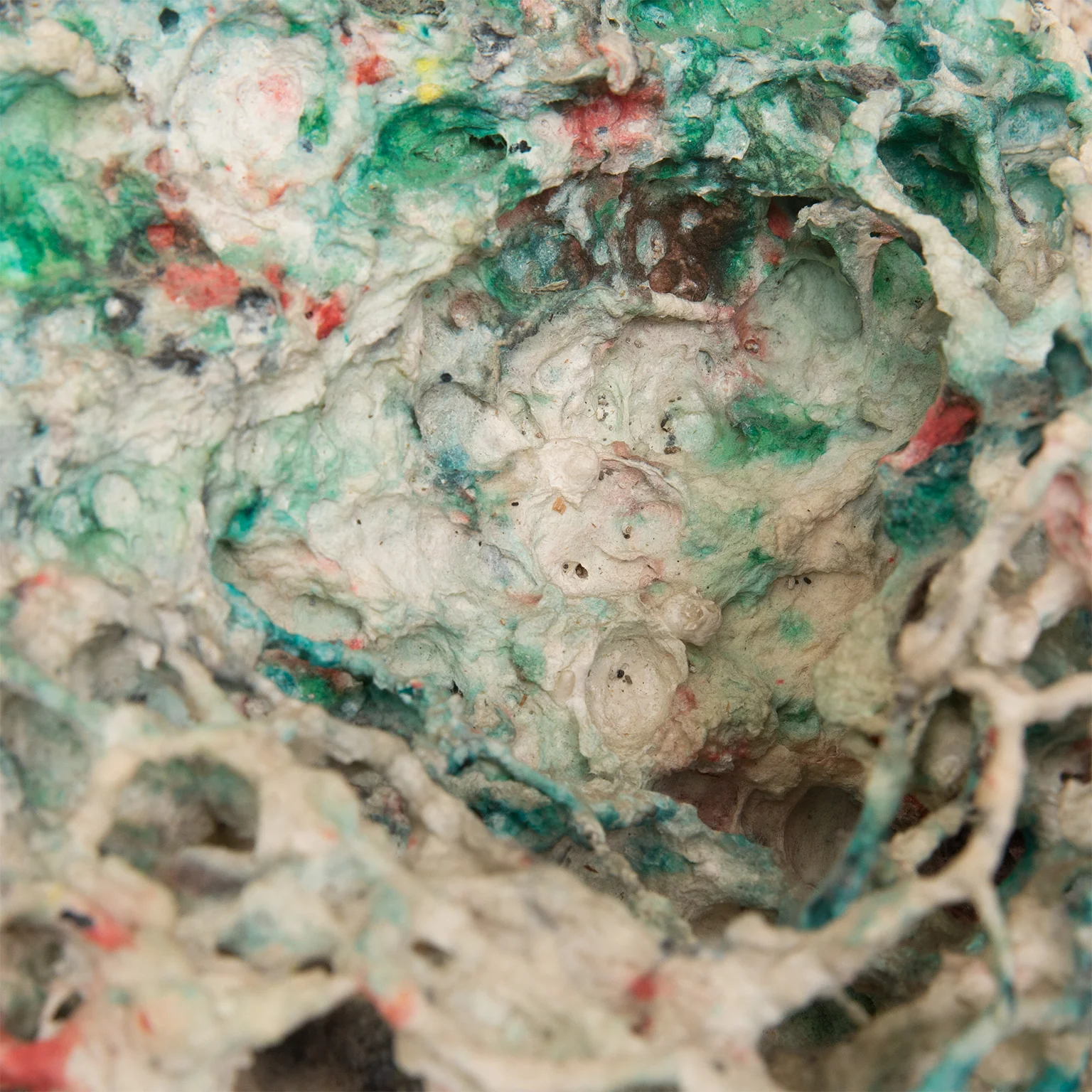
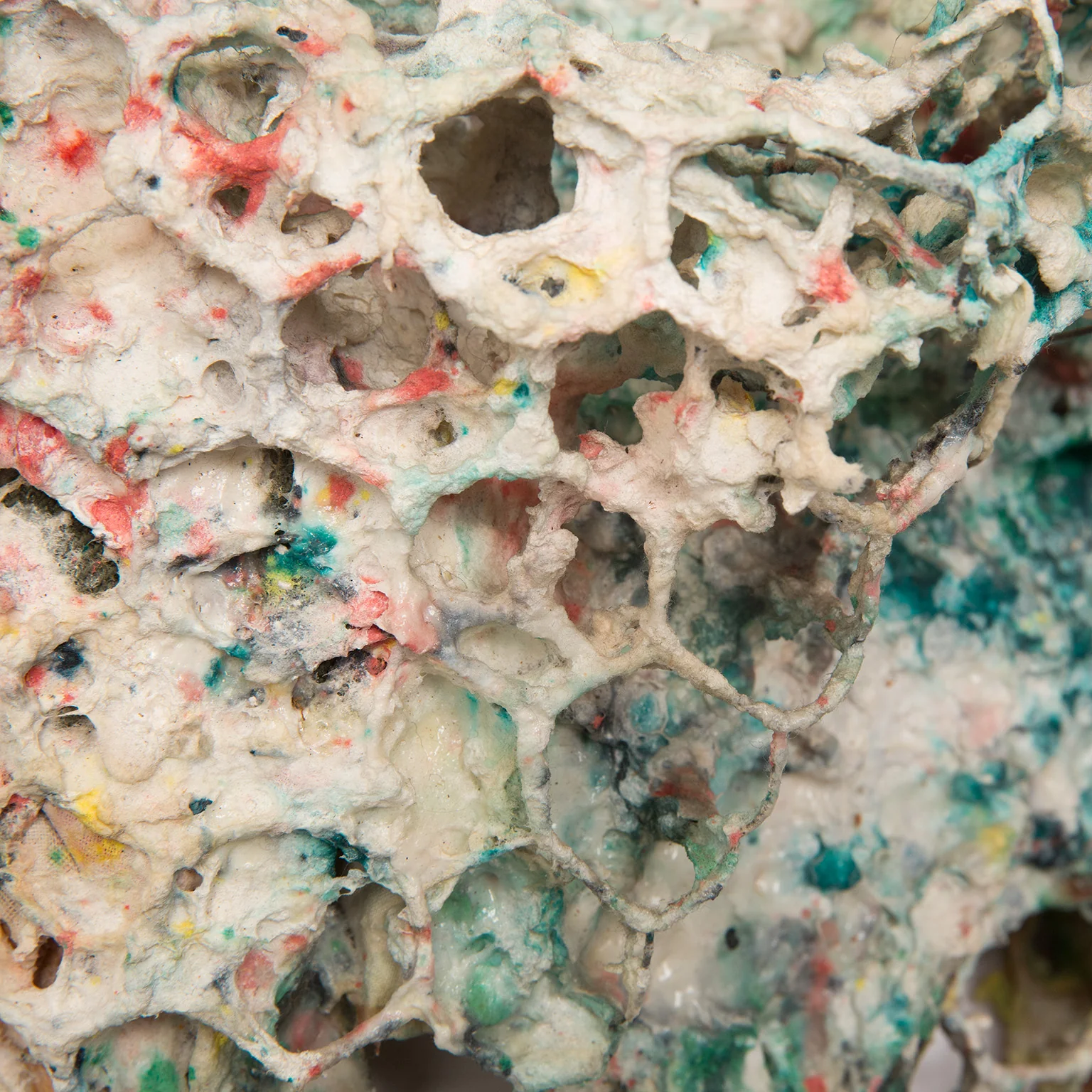
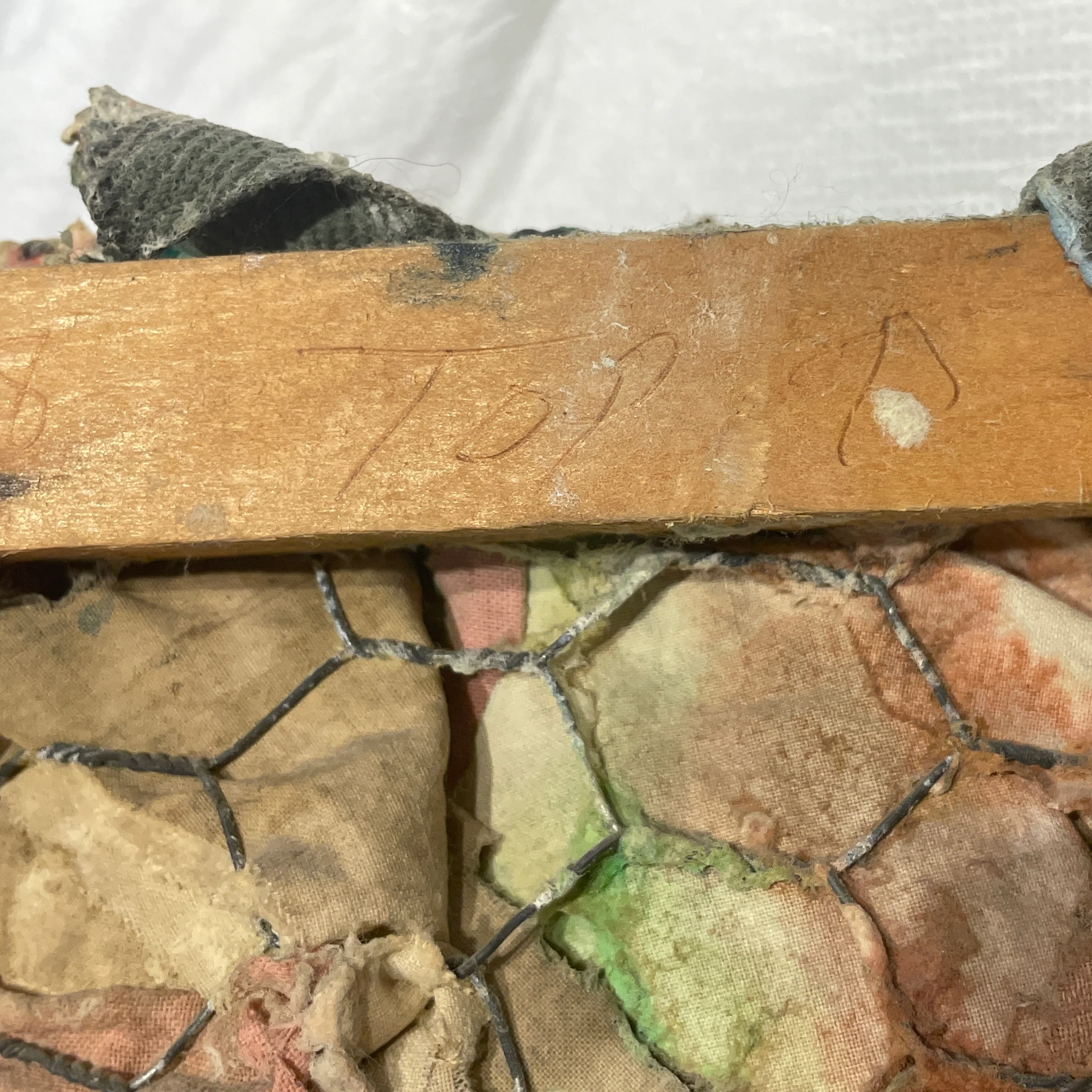
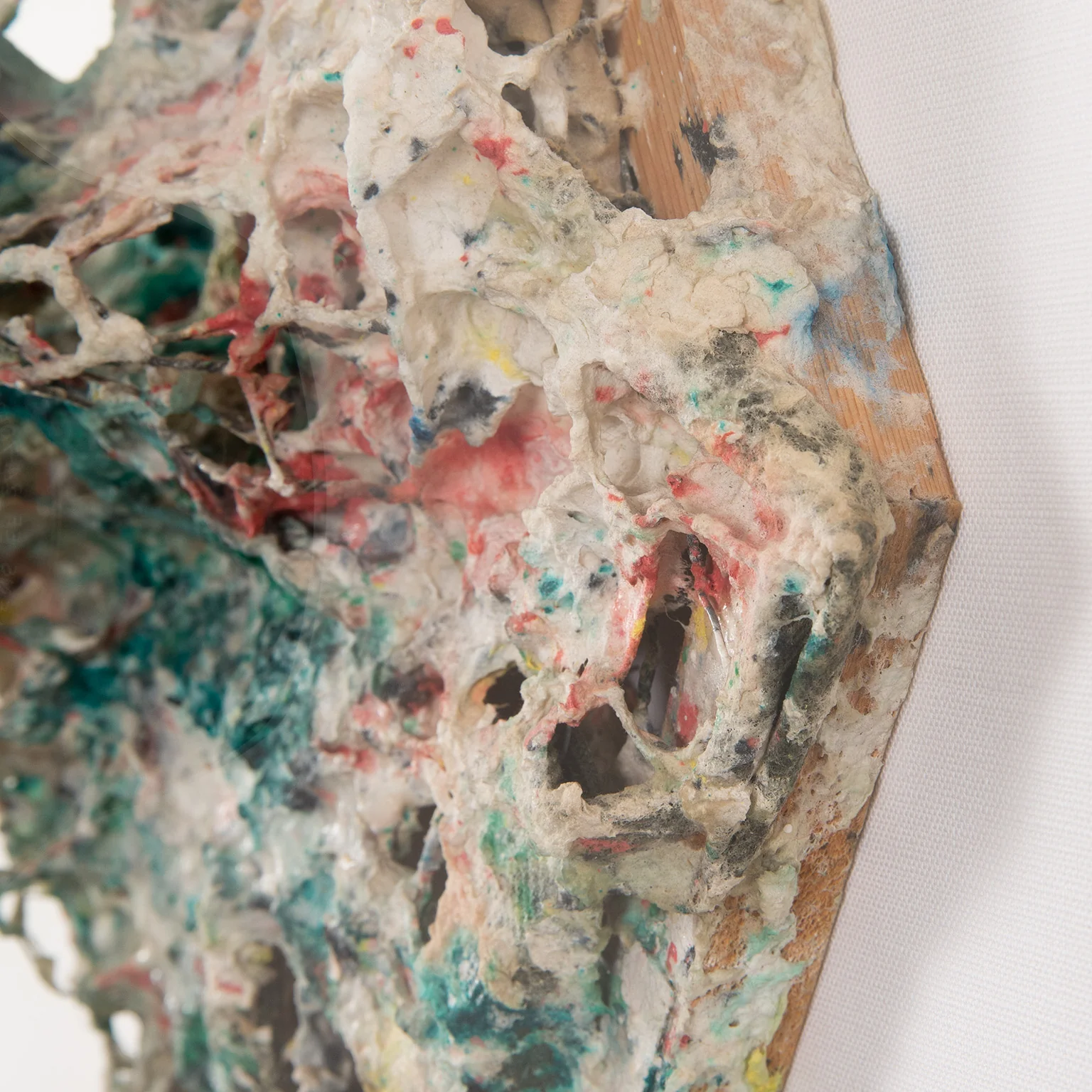
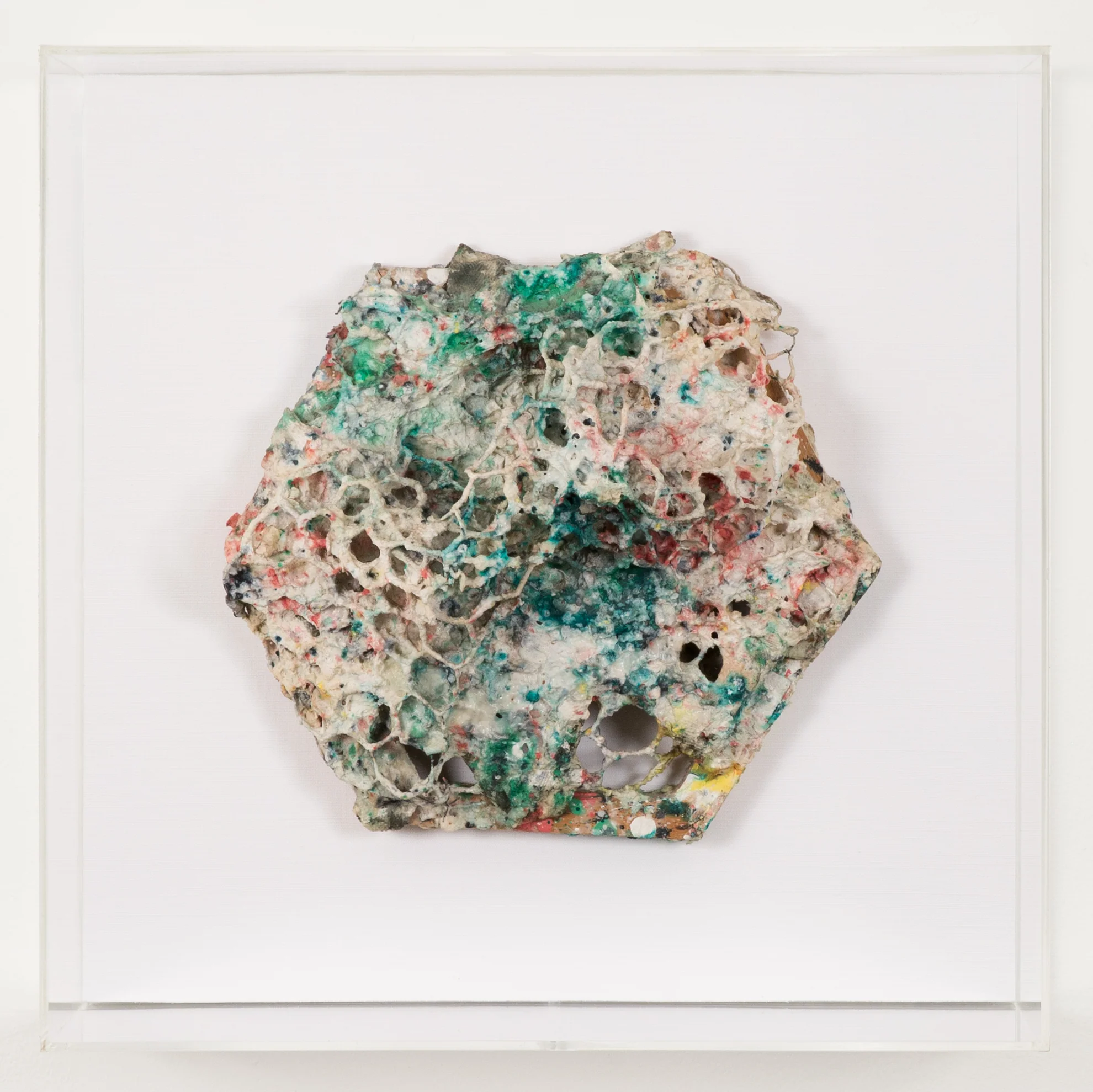
In this unique work, arguably considered as a relief sculpture, Gilliam begins with hexagon shaped-base. It is given volume and presence from hardware cloth, which is made of flexible but powerful galvanized steel wire twisted into linking hexagonal forms. The structure is covered in an enchanting richly colored paste of white, teal, clover green, rose, lemon, marigold that recalls icing or a confetti cake.
Click here to see another large-scale work where Gilliam embraces the hexagon.
The 1970s were a prolific and dynamic period for Gilliam. This piece is a fine example from his "Roll Giverny" series. His palette was bright and celebratory. He frequently used color in a gestural way, in line with the second generation abstract expressionist artists such as Sam Francis. Gilliam also experimented with textiles, shaped canvases, paper pulp and hand-made papers presenting these materials through wrapping, crunching and layering frequently in asymmetrical or unconventional shapes.
Click here to see another example of Sam Gilliam using comparable materials.
Today, Gilliam's work can be found in the permanent collections of institutions around the world. He has held solo exhibitions at MoMA (New York City), The Phillips Collection (Washington, D.C.), and Kunstmuseum Basel (Switzerland).
Questions about this piece? Contact us or call +1.416.704.1720
Visit our Toronto gallery on Thursdays or by appointment.
"Untitled" (aka Confetti Hex)
1978
Mixed media assemblage (acrylic, acrylic gel, hardware cloth, handmade paper and fabric)
Signed, oriented "Top" and dated by the artist, verso on the wood stretcher
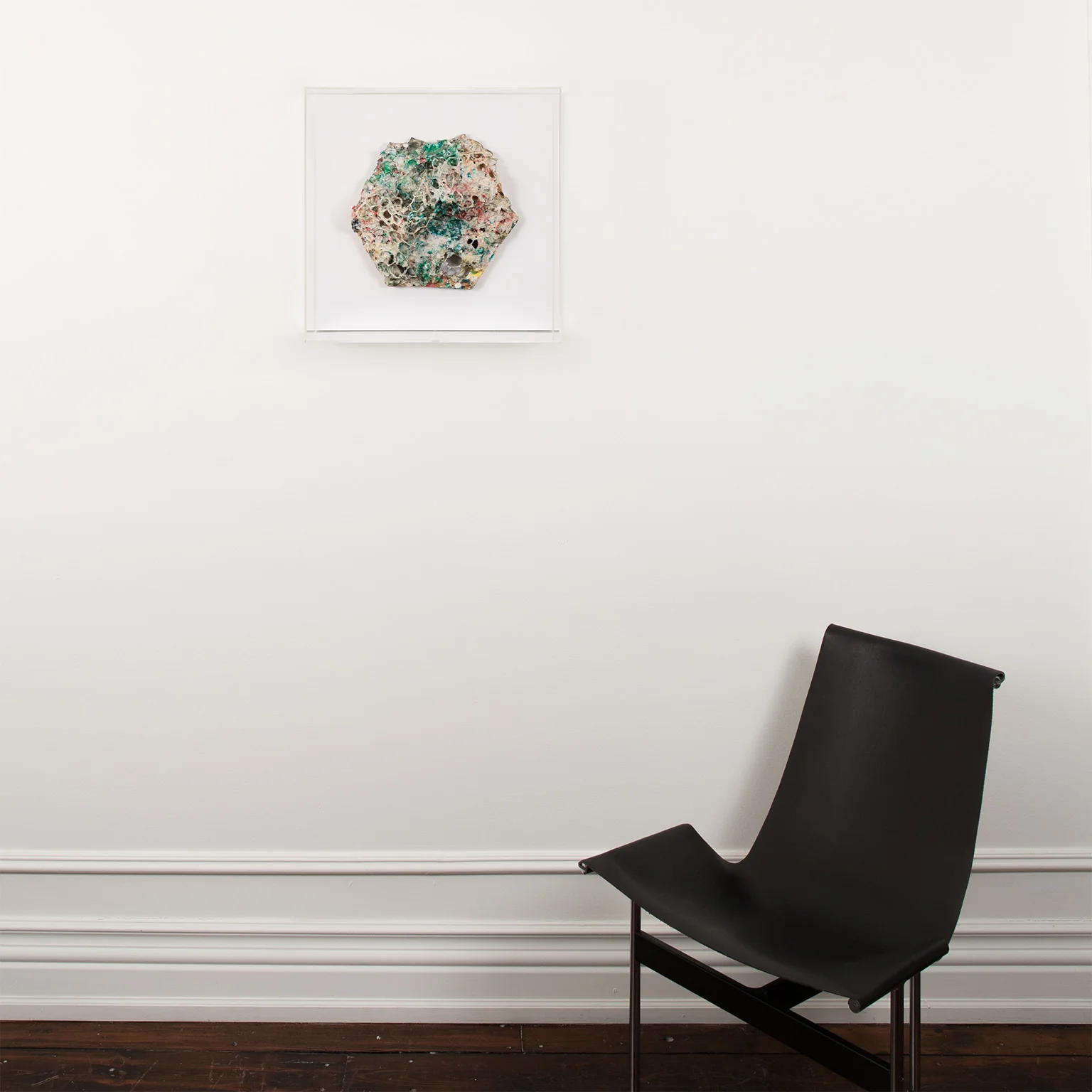
13"H 11"W 5"D (work)
18.5"H 18.5"W 7.5"D (box)
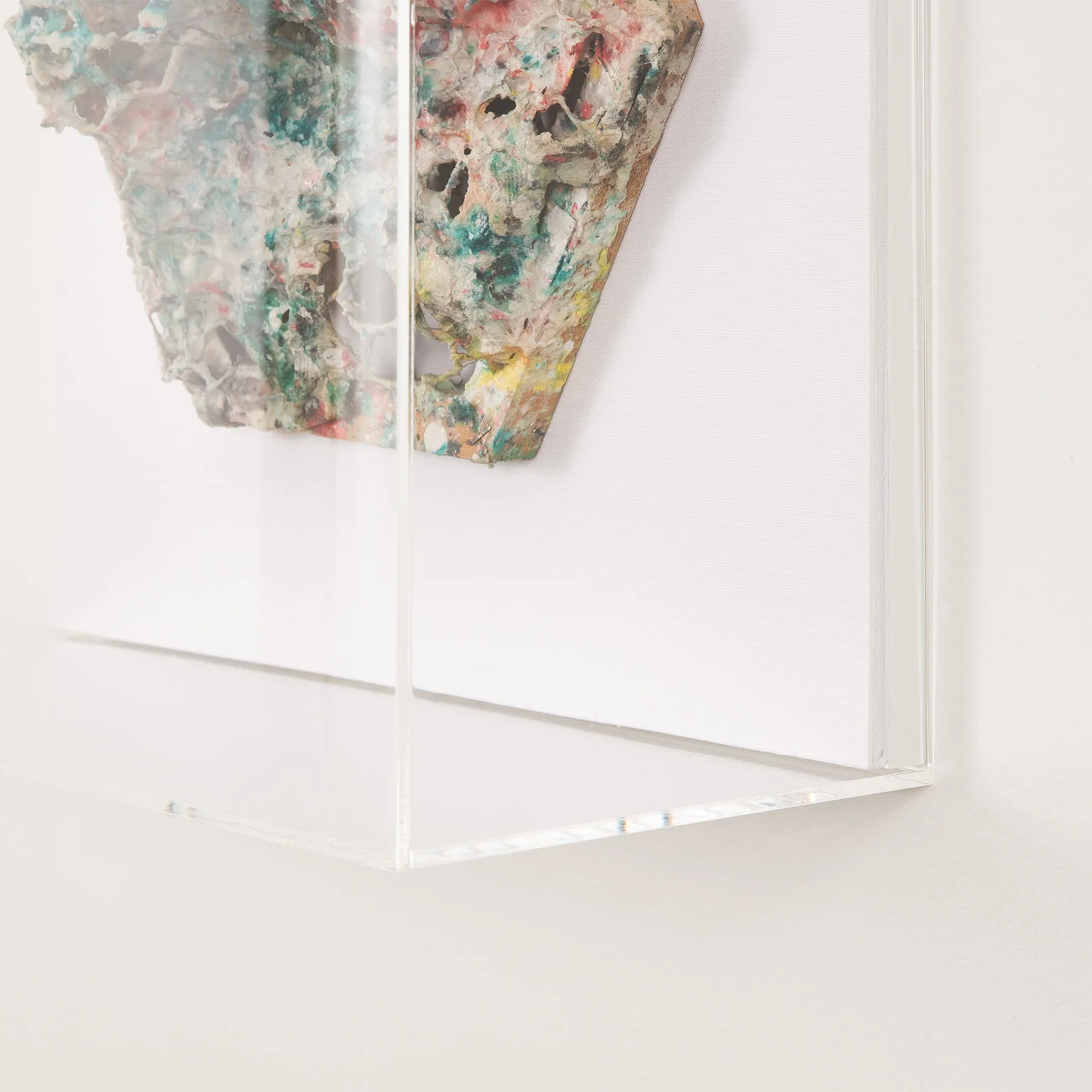
Newly framed in custom acrylic box
Very good condition
Provenance: Single owner, private collection Toronto. Acquired from the Nina Freudenheim Gallery (Buffalo), July 1979
Note: additional images of the verso pre-framing available by request
More Images


SAM GILLIAM "CONFETTI HEX" RELIEF SCULPTURE, 1978
Sam Gilliam (1933–2022) is beloved as one of the 20th century's most important abstract artists. He was a true innovator in the evolution of American abstraction. Several groundbreaking techniques are credited to him, most notably removing the canvas from the stretcher and draping his paintings.
Born in Mississippi, Gilliam studied at the University of Louisville and later worked in Washington D.C. with the Washington Colour School among artists such as Morris Louis and Kenneth Noland.
Drapery, structure, texture and volume are just a few of the important elements that Gilliam’s practice confronts. Gilliam was consistently experimenting with structure and materiality, whether through his suspended drape paintings or his heavily layered collage/screenprints.
In this unique work, arguably considered as a relief sculpture, Gilliam begins with hexagon shaped-base. It is given volume and presence from hardware cloth, which is made of flexible but powerful galvanized steel wire twisted into linking hexagonal forms. The structure is covered in an enchanting richly colored paste of white, teal, clover green, rose, lemon, marigold that recalls icing or a confetti cake.
Click here to see another large-scale work where Gilliam embraces the hexagon.
The 1970s were a prolific and dynamic period for Gilliam. This piece is a fine example from his "Roll Giverny" series. His palette was bright and celebratory. He frequently used color in a gestural way, in line with the second generation abstract expressionist artists such as Sam Francis. Gilliam also experimented with textiles, shaped canvases, paper pulp and hand-made papers presenting these materials through wrapping, crunching and layering frequently in asymmetrical or unconventional shapes.
Click here to see another example of Sam Gilliam using comparable materials.
Today, Gilliam's work can be found in the permanent collections of institutions around the world. He has held solo exhibitions at MoMA (New York City), The Phillips Collection (Washington, D.C.), and Kunstmuseum Basel (Switzerland).
Questions about this piece? Contact us or call +1.416.704.1720
Visit our Toronto gallery on Thursdays or by appointment.
"Untitled" (aka Confetti Hex)
1978
Mixed media assemblage (acrylic, acrylic gel, hardware cloth, handmade paper and fabric)
Signed, oriented "Top" and dated by the artist, verso on the wood stretcher
13"H 11"W 5"D (work)
18.5"H 18.5"W 7.5"D (box)
Newly framed in custom acrylic box
Very good condition
Provenance: Single owner, private collection Toronto. Acquired from the Nina Freudenheim Gallery (Buffalo), July 1979
Note: additional images of the verso pre-framing available by request
Product Information
Product Information
Shipping & Returns
Shipping & Returns
Description
Sam Gilliam (1933–2022) is beloved as one of the 20th century's most important abstract artists. He was a true innovator in the evolution of American abstraction. Several groundbreaking techniques are credited to him, most notably removing the canvas from the stretcher and draping his paintings.
Born in Mississippi, Gilliam studied at the University of Louisville and later worked in Washington D.C. with the Washington Colour School among artists such as Morris Louis and Kenneth Noland.
Drapery, structure, texture and volume are just a few of the important elements that Gilliam’s practice confronts. Gilliam was consistently experimenting with structure and materiality, whether through his suspended drape paintings or his heavily layered collage/screenprints.
In this unique work, arguably considered as a relief sculpture, Gilliam begins with hexagon shaped-base. It is given volume and presence from hardware cloth, which is made of flexible but powerful galvanized steel wire twisted into linking hexagonal forms. The structure is covered in an enchanting richly colored paste of white, teal, clover green, rose, lemon, marigold that recalls icing or a confetti cake.
Click here to see another large-scale work where Gilliam embraces the hexagon.
The 1970s were a prolific and dynamic period for Gilliam. This piece is a fine example from his "Roll Giverny" series. His palette was bright and celebratory. He frequently used color in a gestural way, in line with the second generation abstract expressionist artists such as Sam Francis. Gilliam also experimented with textiles, shaped canvases, paper pulp and hand-made papers presenting these materials through wrapping, crunching and layering frequently in asymmetrical or unconventional shapes.
Click here to see another example of Sam Gilliam using comparable materials.
Today, Gilliam's work can be found in the permanent collections of institutions around the world. He has held solo exhibitions at MoMA (New York City), The Phillips Collection (Washington, D.C.), and Kunstmuseum Basel (Switzerland).
Questions about this piece? Contact us or call +1.416.704.1720
Visit our Toronto gallery on Thursdays or by appointment.
"Untitled" (aka Confetti Hex)
1978
Mixed media assemblage (acrylic, acrylic gel, hardware cloth, handmade paper and fabric)
Signed, oriented "Top" and dated by the artist, verso on the wood stretcher
13"H 11"W 5"D (work)
18.5"H 18.5"W 7.5"D (box)
Newly framed in custom acrylic box
Very good condition
Provenance: Single owner, private collection Toronto. Acquired from the Nina Freudenheim Gallery (Buffalo), July 1979
Note: additional images of the verso pre-framing available by request